Executives at Elon Musk’s xAI have discussed the possibility that artificial general intelligence could surpass human capabilities as early as 2026, according to an internal account.
By Daniel Wright | Edited by Oleg Petrenko
Published:
Updated:
Executives at Elon Musk’s xAI have privately raised the prospect that artificial general intelligence could exceed human-level abilities as early as 2026, according to an internal source. Photo: Nahrizul Kadri / Unsplash
xAI executives are privately entertaining the possibility that artificial general intelligence, or AGI, could exceed human-level intelligence as soon as 2026, according to an insider familiar with internal discussions at the company.
The remarks, attributed to Elon Musk during a closed-door meeting, suggest a far more aggressive timeline for AGI than many public forecasts. AGI refers to a theoretical form of artificial intelligence capable of understanding, learning, and applying knowledge across the full range of intellectual tasks humans can perform, rather than operating within narrow, predefined domains.
The disclosure adds to mounting debate across Silicon Valley and global markets about whether recent advances in large-scale AI models are pushing the industry closer to a decisive technological inflection point.
Why xAI Sees AGI Arriving Faster
xAI was founded with the explicit goal of building advanced AI systems that can reason, adapt, and generalize across domains. People familiar with the company’s internal discussions say Musk has pointed to rapid gains in model reasoning, tool use, and autonomous decision-making as evidence that AGI may emerge sooner than expected.
Recent breakthroughs in multi-modal AI systems, long-context reasoning, and agent-based models have fueled this optimism. Industry benchmarks increasingly show AI outperforming human experts in coding, data analysis, and complex problem-solving tasks. Within xAI, leadership reportedly views these trends as compounding rather than linear.
Musk has previously warned that AI development is accelerating faster than regulatory frameworks and safety protocols. Internally, executives are said to be focused not only on capability gains, but also on alignment and control mechanisms that could prevent unintended consequences once systems approach or surpass human-level intelligence.
As previously covered, Musk has repeatedly argued that AGI represents both the greatest opportunity and the greatest existential risk facing humanity.
Implications for Markets, Policy, and Society
If AGI were to materialize on a 2026 timeline, the implications would be profound for labor markets, productivity, national security, and capital allocation. Entire categories of knowledge work could be automated at unprecedented speed, reshaping employment patterns and corporate cost structures.
For investors, expectations of near-term AGI could accelerate capital flows into AI infrastructure, data centers, advanced chips, and software platforms, while raising questions about long-term valuations across traditional industries. Policymakers would also face mounting pressure to define governance frameworks for systems capable of autonomous reasoning and decision-making.
At the same time, skepticism remains widespread. Many researchers argue that current AI systems, while powerful, still lack genuine understanding, self-directed learning, and robust generalization. They caution that extrapolating recent progress into firm AGI timelines risks overstating near-term capabilities.
Still, the fact that leading AI labs are openly discussing human-level AGI within the next two years highlights how dramatically expectations have shifted. Whether or not the 2026 target proves realistic, the conversation itself signals that the race toward general intelligence is entering a decisive phase.
OpenAI has rolled out ChatGPT Images, a next-generation image generation and editing model that significantly improves speed, precision, and visual consistency, while remaining free for all users.
By Michael Foster | Edited by Oleg Petrenko
Published:
Updated:
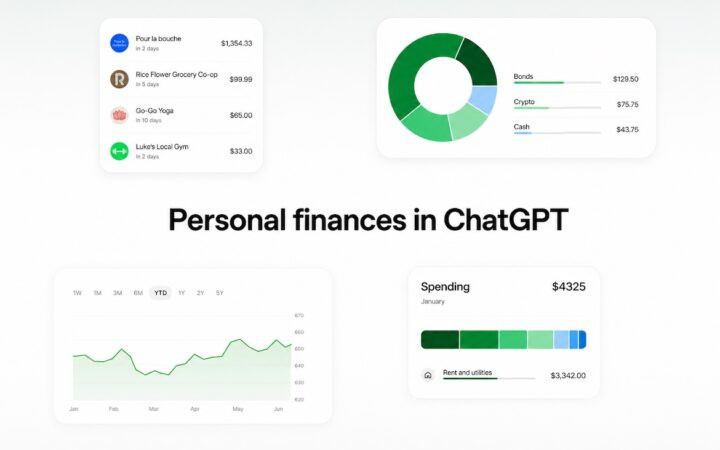
OpenAI has introduced ChatGPT Images, a new image generation and editing model that delivers faster performance, greater accuracy, and more consistent visuals, while remaining free to use for all users. Photo: OpenAI / X
OpenAI has introduced ChatGPT Images, its most powerful image generation and editing system to date, positioning the tool as a major upgrade for creatives, marketers, and product teams. Built on a new underlying model, the release marks a significant step toward making advanced visual creation as seamless and flexible as text-based AI tools.
Introducing ChatGPT Images, powered by our flagship new image generation model.
– Stronger instruction following
– Precise editing
– Detail preservation
– 4x faster than before
The new image generator is now available to all ChatGPT users at no cost, expanding access to capabilities that previously required specialized design software. OpenAI says the model delivers cleaner outputs, stronger prompt understanding, and more reliable visual consistency across edits.
A leap in speed, precision, and creative control
ChatGPT Images generates visuals up to four times faster than the previous model, significantly reducing iteration time for users working under tight deadlines. More importantly, OpenAI has improved the system’s ability to follow complex prompts, allowing for precise adjustments to poses, lighting, clothing, and backgrounds without disrupting the overall composition.
The model is designed to preserve fine details such as facial features, object structure, artistic style, and spatial relationships. Textures, lighting gradients, and small visual elements appear sharper and more coherent, addressing common issues that plagued earlier AI image generators.
OpenAI has emphasized that the tool functions as a “neural Photoshop,” enabling selective edits rather than forcing users to regenerate entire images. This makes it possible to refine visuals incrementally, a critical feature for professional workflows in design, branding, and user interface development.
Implications for creators, businesses, and AI competition
The release underscores OpenAI’s strategy of embedding advanced creative tools directly into ChatGPT, reducing reliance on external software and lowering barriers for non-technical users. Designers, marketers, social media managers, and UI/UX teams can now produce and refine visuals within a single AI-driven environment.
The move also intensifies competition in the generative AI space, where rivals are racing to offer faster, more controllable multimodal models. By making ChatGPT Images free, OpenAI is signaling confidence in scale and ecosystem lock-in rather than short-term monetization.
For businesses, the tool has the potential to compress production cycles, reduce outsourcing costs, and democratize access to high-quality visual assets. As previously covered, OpenAI has increasingly focused on practical, workflow-oriented AI products rather than experimental demos.
With ChatGPT Images, OpenAI is betting that image creation and editing will become a core everyday AI use case, much like writing and coding, further blurring the line between creative software and conversational AI.
Elon Musk has become the first individual in history to surpass a $600 billion net worth after a major increase in SpaceX’s valuation, pushing his fortune to unprecedented levels.
By Michael Foster | Edited by Oleg Petrenko
Published:
Updated:
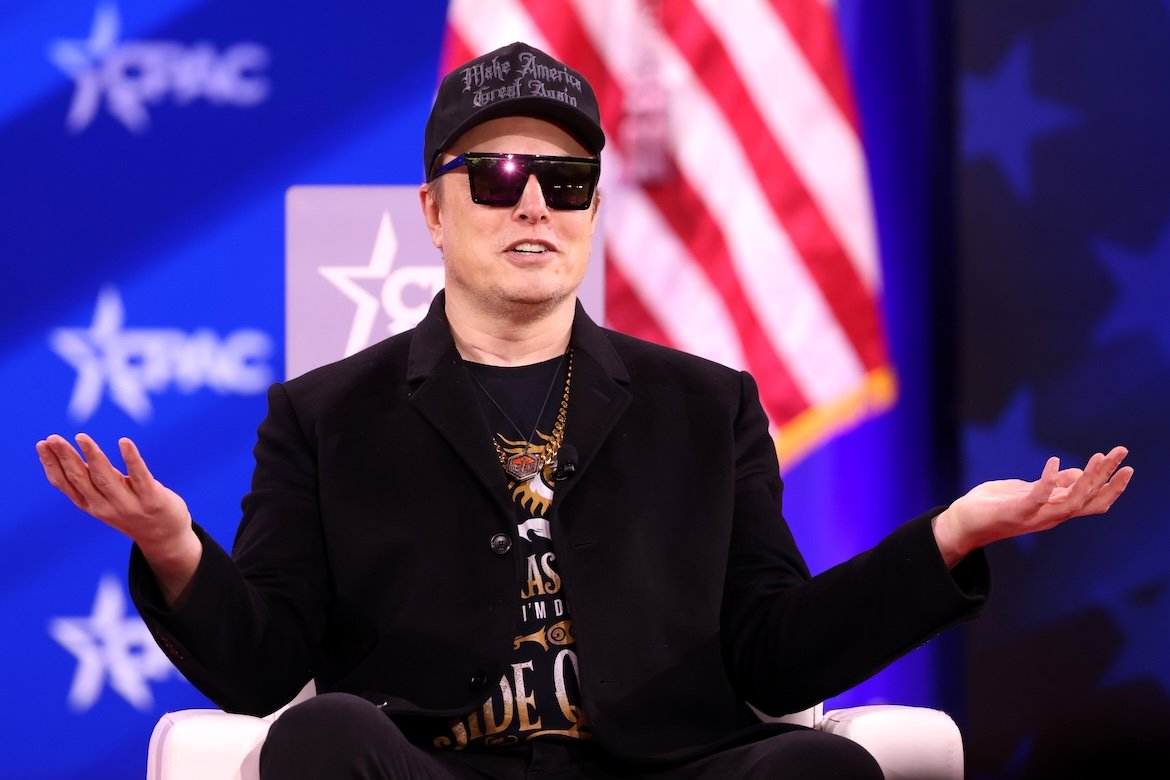
Elon Musk has made history by becoming the first person to exceed a $600 billion net worth, driven by a sharp rise in SpaceX’s valuation that propelled his wealth to record levels. Photo: Gage Skidmore / Wikimedia
Elon Musk has crossed a historic financial milestone, becoming the first person ever with a net worth exceeding $600 billion, following a dramatic jump in the valuation of SpaceX. The increase underscores both the scale of private market enthusiasm for space technology and Musk’s growing dominance among global billionaires.
The wealth surge comes after SpaceX completed a tender offer earlier this month that valued the company at approximately $800 billion, doubling its valuation from August. Musk owns an estimated 42% of the rocket maker, and the revaluation added roughly $168 billion to his personal fortune, lifting his estimated net worth to around $677 billion.
Why SpaceX Is Driving Musk’s Wealth Surge
SpaceX has rapidly become the centerpiece of Musk’s fortune, overtaking his holdings in Tesla as his most valuable asset. At the current valuation, Musk’s stake in SpaceX alone is estimated at about $336 billion. The company’s growth has been fueled by strong demand for launch services, the expansion of its satellite business, and expectations of long-term government and commercial contracts.
The tender offer also revived speculation around a future initial public offering. SpaceX is targeting an IPO as early as 2026, with internal discussions pointing to a potential valuation of up to $1.5 trillion. If achieved, such a listing could push Musk into trillionaire territory, a level of wealth never before reached.
As previously covered, private-market valuations in high-growth technology sectors have rebounded sharply, reflecting renewed investor appetite for large-scale innovation platforms with global reach.
Broader Implications for Markets and Wealth Concentration
Musk’s wealth surge highlights a broader trend of extreme wealth concentration driven by private technology companies. While public markets remain volatile, private valuations for dominant platforms have accelerated, often disconnected from near-term profitability.
Tesla remains a significant part of Musk’s portfolio, with his roughly 12% stake valued at about $197 billion. Additional upside remains possible through a controversial long-term compensation plan approved by shareholders, which could grant Musk substantial additional equity if Tesla meets aggressive performance targets over the next decade.
The milestone has reignited debate around executive compensation, private-market transparency, and the growing gap between ultra-wealthy founders and the broader economy. Analysts note that while such valuations reflect optimism around future technologies, they also increase systemic exposure to a small number of individuals and companies.
With SpaceX’s IPO plans advancing and Tesla pursuing ambitious growth goals, Musk’s financial trajectory continues to challenge historical benchmarks for personal wealth, reshaping discussions around capital markets and economic power.
Volkswagen will close its Dresden factory, marking the first shutdown of a German plant in the automaker’s 88-year history, as energy costs, trade pressures, and falling competitiveness hit the industry.
By Daniel Wright | Edited by Oleg Petrenko
Published:
Updated:
Volkswagen is set to shut its Dresden plant, marking the first closure of a German factory in the automaker’s 88-year history, as high energy costs, trade headwinds, and weakening competitiveness weigh on the industry. Photo: Volkswagen / X
Volkswagen is set to close its Dresden automobile plant, marking the first shutdown of a production facility in Germany in the company’s 88-year history. The move underscores the growing strain on Europe’s largest economy as manufacturers grapple with higher costs, weaker demand, and shifting global trade dynamics.
The Dresden factory, once a symbol of German engineering prowess, produced up to 200,000 vehicles annually at its peak. Its closure represents not only a milestone for Volkswagen but also a broader signal of the challenges facing Germany’s industrial sector.
Economic and Energy Pressures Mount
Volkswagen cited a combination of economic and energy-related factors behind the decision. Germany’s loss of access to inexpensive energy has sharply increased production costs, squeezing margins across energy-intensive industries such as automotive manufacturing.
These pressures have been compounded by a broader economic slowdown and declining competitiveness. Volkswagen has already reduced its workforce significantly, with approximately 35,000 jobs cut as part of wider restructuring efforts. The Dresden shutdown is seen as a continuation of that cost-cutting drive rather than an isolated decision.
Trade developments have also weighed on the outlook. Additional U.S. tariffs on European-made vehicles have added to export challenges, while the knock-on effects of sanctions on Russia have disrupted traditional energy and supply relationships. As previously covered, Germany’s manufacturing sector has struggled to adapt quickly to this new operating environment.
Implications for Germany’s Industrial Model
The closure raises broader questions about the future of Germany’s export-driven industrial model. Long reliant on affordable energy, stable trade ties, and high-value manufacturing, the country now faces a recalibration as global supply chains fragment and geopolitical risks rise.
For Volkswagen, the move reflects a strategic shift toward concentrating production in more cost-efficient locations while accelerating investment in electrification and digitalization. However, analysts warn that continued plant closures could erode Germany’s role as the core manufacturing hub of Europe.
Investors and policymakers alike are watching closely. The shutdown may intensify calls for government support measures, including energy price relief and industrial policy reforms, aimed at restoring competitiveness. Without structural changes, economists caution that similar decisions could follow across other manufacturers.
The Dresden plant’s closure stands as a stark reminder that even the most established industrial champions are not immune to prolonged economic and energy shocks.
Apple CEO Tim Cook earns more in seven hours than the average American makes in a year, underscoring the growing divide between executive compensation and household income.
By Daniel Wright | Edited by Oleg Petrenko
Published:
Updated:
Apple CEO Tim Cook makes more in just seven hours than the typical U.S. worker earns in an entire year, highlighting the widening gap between executive pay and household incomes. Photo: Tim Cook / X
Apple Chief Executive Officer Tim Cook’s compensation has once again drawn attention to the scale of income inequality in the United States, after new comparisons showed he earns more in just seven hours than the average American makes in an entire year.
Based on Apple’s latest disclosed compensation figures, Cook received nearly $75 million in total pay last year, including salary, stock awards, and incentives. By contrast, the typical U.S. worker earns roughly $62,000 annually. At that pace, Cook effectively matches an average annual salary before the workday is even over.
The disparity becomes even more striking when translated into everyday purchases. Cook earns enough in just over 20 minutes to buy a $3,000 MacBook Pro, and less than eight minutes to afford a $1,100 iPhone Pro. In roughly two days of work, his compensation equals the price of an average U.S. home, currently estimated at around $439,000.
Executive Pay vs. Household Income
Cook’s compensation reflects Apple’s continued financial strength, with the company generating hundreds of billions of dollars in annual revenue and maintaining one of the largest market capitalizations globally. Apple’s board has repeatedly argued that Cook’s pay aligns with shareholder interests, as the bulk of his compensation is tied to long-term stock performance and operational targets.
Still, the comparison highlights a broader trend across corporate America. Executive pay has risen sharply over the past several decades, while wage growth for many workers has struggled to keep pace with inflation, housing costs, and healthcare expenses. Studies consistently show that CEO-to-worker pay ratios have expanded significantly, particularly in large technology firms.
Supporters of high executive compensation argue that leading a global company like Apple involves extraordinary responsibility, strategic decision-making, and accountability to investors. Critics counter that the scale of the gap reflects structural imbalances in how value is distributed across the economy.
Broader Implications for Inequality Debate
The timing of the renewed scrutiny comes as policymakers and economists debate income inequality, labor market resilience, and the sustainability of consumer spending. While unemployment remains relatively low, many households face affordability pressures, particularly in housing and education.
High-profile pay comparisons, such as Cook’s, often reignite discussions around executive compensation governance, tax policy, and corporate responsibility. Some shareholders and advocacy groups have pushed for greater transparency and restraint, while others focus on tying pay more closely to long-term performance and workforce outcomes.
As previously covered, technology leaders have increasingly become symbols in the broader conversation about wealth concentration in the digital economy. Cook’s earnings are not unusual among top executives, but they offer a stark illustration of how far compensation at the top has diverged from the experience of the average worker.
Google has begun testing real-time speech translation in Google Translate using its Gemini AI model, enabling live conversations through any wireless headphones across more than 70 languages.
By Benjamin Harper | Edited by Oleg Petrenko
Published:
Updated:
Google has started testing a Gemini-powered real-time speech translation feature in Google Translate, allowing live multilingual conversations through any wireless headphones in over 70 languages. Photo: Google / X
Google is taking a major step toward frictionless global communication by introducing real-time speech translation that works with any wireless headphones. The new feature, powered by the company’s Gemini artificial intelligence model, is currently being tested on Android devices in the United States, India, and Mexico, with support for more than 70 languages.
Plus, we’re rolling out a beta version of live translation that brings real-time, natural-sounding translations to your headphones with the help of Gemini’s native speech-to-speech translation capabilities. 🎧 See everything that’s new in Google Translate ↓…
The update allows users to hear live translations directly through Bluetooth headphones during conversations, removing the need to constantly look at a phone screen. Google says the goal is to make multilingual communication feel more natural and continuous, especially in everyday scenarios such as travel, work meetings, and casual interactions.
Google Is Expanding Real-Time Translation
The move highlights Google’s strategy to differentiate itself through platform-agnostic AI tools rather than hardware exclusivity. Unlike Apple’s approach, where similar real-time translation features are limited to a small number of AirPods models, Google’s solution works across virtually all wireless headphones.
By leveraging Gemini, Google has improved speech recognition accuracy, context awareness, and response speed, making translations feel closer to real conversations rather than delayed interpretations. The system processes spoken input, translates it in real time, and delivers the output audio with minimal lag.
This broader compatibility could give Google a significant advantage in global markets, particularly in regions where users rely on a wide variety of affordable wireless audio devices. It also reinforces Google Translate’s position as one of the most widely used language tools worldwide.
What It Means for Users and the AI Race
For consumers, the feature lowers barriers to cross-language communication without requiring new hardware purchases. Google has confirmed that a wider global rollout is planned, along with an iOS version expected in 2026, which would extend the feature beyond the Android ecosystem.
From a competitive standpoint, the update underscores how AI is reshaping consumer software. Real-time translation is no longer a niche capability but a core feature in the race to build everyday AI assistants. As previously covered, Google has been rapidly integrating Gemini across its products, from search to productivity tools, positioning AI as a foundational layer rather than an add-on.
If widely adopted, real-time translation through common headphones could change how people interact across borders, reducing language barriers in both professional and personal settings. It also raises the bar for rivals, who may face pressure to offer similarly open and scalable solutions.
A 20-year-old Canadian lottery winner declined a $1 million lump-sum payout in favor of a guaranteed $1,000 weekly lifetime annuity, a choice financial experts say offers long-term stability and protection from impulse spending.
By Emma Clarke | Edited by Oleg Petrenko
Published:
Updated:
A 20-year-old Canadian lottery winner turned down a $1 million lump-sum payment and instead chose a guaranteed $1,000 weekly annuity for life - a move financial experts say provides greater long-term security and reduces the risk of impulsive overspending. Photo: Loto-Québecy / X
A 20-year-old Canadian woman who won the “Gagnant à Vie” lottery has chosen to forgo a $1 million lump-sum payout and instead receive $1,000 per week for life, a decision that has captured widespread attention for its unusually disciplined financial approach. The lifetime annuity, which equals $52,000 per year before taxes, will surpass the $1 million option in just under two decades and will continue generating income indefinitely.
The winner told officials she opted for the lifetime income structure to secure a more stable financial future, including saving for a home, rather than facing the pressure and risks that often accompany sudden wealth. Her decision stands in contrast to the common narrative of young lottery winners quickly spending their windfalls, a pattern well-documented by financial planners.
Why the Winner Passed on $1 Million Upfront
The “Gagnant à Vie” lottery allows winners to choose between a lump sum or guaranteed ongoing weekly payments. While the $1 million upfront appears more dramatic, financial advisers say the lifetime annuity offers several structural advantages – especially for someone at the very start of adulthood.
Experts note that a 20-year-old receiving $1,000 per week for life is effectively locking in an income stream that could total several million dollars over the long term, depending on life expectancy. For many young winners, the annuity acts as a guardrail, reducing the risk of overspending and providing built-in budgeting discipline.
Advisers also point to the rising cost of housing in Canada. A consistent income floor, they argue, may improve the winner’s ability to qualify for future mortgages, plan for recurring expenses, and avoid the rapid depletion of a lump-sum payout.
Financial Planning Implications and Long-Term Benefits
The decision reflects a broader trend in personal finance: younger generations increasingly prioritize reliable income over large, one-time windfalls. Annuity-based lottery payouts have historically been most appealing to older winners planning for retirement, but financial planners say today’s economic uncertainty has made guaranteed cash flow more attractive to younger adults as well.
Structured payouts also mitigate behavioral risks. Research cited by planners shows that lump-sum winners are far more likely to exhaust their funds within a decade, often due to emotional spending or poor investment decisions. By contrast, annuities enforce pacing and leave room for future financial learning without jeopardizing the entire prize.
For this winner, the guaranteed weekly payments could serve as a long-term savings engine, a down-payment strategy for homeownership, and a buffer against inflation or unexpected expenses. With decades ahead of her, the annuity may ultimately deliver significantly more lifetime value than the lump-sum option she declined.
Warren Buffett will step down as CEO of Berkshire Hathaway at year-end, with Vice Chairman Greg Abel set to assume leadership in 2026 as the conglomerate enters a new era after decades under Buffett’s direction.
By Oleg Petrenko
Published:
Updated:
Warren Buffett will transfer the CEO role at Berkshire Hathaway to Greg Abel in 2026, marking a pivotal leadership transition for the $1 trillion conglomerate. Photo: Oleg Petrenko / MarketSpeaker
Berkshire Hathaway is preparing for a historic leadership handover as Warren Buffett steps down as chief executive on January 1, 2026. Greg Abel, who oversees Berkshire’s non-insurance operations, will assume the CEO role, becoming the first successor to lead the conglomerate after Buffett’s nearly 60-year tenure.
Buffett, who will remain chairman, transformed Berkshire Hathaway from a struggling textile mill into a diversified conglomerate valued at more than $1 trillion, with major holdings spanning energy, transportation, insurance, manufacturing, and a sizable equity portfolio. His investment philosophy and public presence helped shape Berkshire into one of the most closely watched companies in the world.
Why Abel’s Succession Matters
Greg Abel, 63, is widely regarded as a disciplined operator with decades of experience running energy and infrastructure businesses. His ascent to CEO reflects Berkshire’s preference for continuity and long-term stewardship. Investors see him as a steady hand capable of maintaining Berkshire’s decentralized governance model while managing an increasingly complex portfolio of businesses.
The transition also marks a cultural shift. Buffett has long been the face of Berkshire – writing annual letters studied by investors globally and setting the tone for capital allocation. Abel is expected to bring a more structured leadership approach, with analysts anticipating clearer communication around strategy, investment priorities, and the deployment of Berkshire’s large cash reserves.
Recent internal reorganizations signal a company preparing for generational change. New leadership appointments across insurance, aviation, and financial operations are designed to support Abel as he moves into the top role. While Buffett retains significant voting influence due to his share structure, day-to-day decision-making will increasingly fall to Abel.
Implications for Berkshire and Investors
The succession comes at a time when Berkshire’s ability to outperform broad market indexes has naturally slowed due to its size. Many investors believe Abel’s operational expertise may drive efficiency improvements in core businesses, particularly in energy and transportation, where cost discipline and regulatory strategy play key roles.
However, the market will closely watch how Berkshire handles capital allocation – an area long synonymous with Buffett’s judgment. The company’s substantial cash position, evolving competitive landscape, and growing investor calls for transparency all raise new expectations for the post-Buffett era.
Shareholders broadly view the transition as orderly and well-planned, consistent with Buffett’s longstanding commitment to succession clarity. The key challenge ahead will be maintaining the trust Berkshire built under Buffett while guiding the company through a more complex economic and regulatory environment.
OpenAI unveiled GPT-5.2, its new flagship model designed for agents, automation, and advanced coding tasks, with expanded reasoning controls and a higher API price point.
By Oleg Petrenko
Published:
OpenAI introduced GPT-5.2, its new flagship model built for agents, automation, and advanced coding workflows, featuring upgraded reasoning controls and a higher API cost. Photo: Emiliano Vittoriosi / Unsplash
OpenAI has introduced GPT-5.2, a next-generation flagship model aimed at high-performance enterprise AI, advanced coding, and autonomous agent workflows. The system is now available through the API at a premium price of $1.75 per million input tokens, up from $1.25 for the standard GPT-5 model. The higher pricing underscores the company’s push toward more powerful, specialized models built for production-grade workloads.
The launch expands OpenAI’s capabilities across reasoning, tool use, and multimodal processing while also supporting one of the largest API context windows currently available. Developers are positioning the upgrade as a significant step forward for complex automation, technical workflows and real-world decision-making systems.
Breakthroughs in Reasoning, Coding and Agent Performance
OpenAI says GPT-5.2 delivers its strongest reasoning performance to date and is the first model to outperform human experts in real-task benchmarks, including achieving a 70% win rate in the GDPval evaluation, a test of applied business problem-solving.
The model introduces a refined reasoning parameter, enabling developers to dial cognitive depth up or down depending on the workload. Low settings prioritize speed and cost efficiency, while high settings expand the model’s analytic capabilities for multi-step or highly technical problems.
GPT-5.2 also sets a new standard in software development tasks. The model is especially strong in front-end development, 3D programming, and code patch generation, improving accuracy and reducing the need for human review. Additionally, its tool-use performance reaches 98.7% accuracy in complex chained operations, reinforcing OpenAI’s emphasis on agentic workflows that can manage APIs, execute tasks, and self-correct.
A 400,000-token context window further allows GPT-5.2 to operate across large codebases, extensive reports, data rooms, and multi-document reasoning tasks. The model ships with knowledge updated through August 2025, narrowing the recency gap for enterprise users who rely on factual accuracy.
Implications for Enterprise AI and Developer Adoption
For businesses, GPT-5.2 represents a shift toward models capable of automating high-skilled tasks traditionally performed by analysts, coordinators, and technical specialists. The upgrade enhances the model’s ability to generate presentations, spreadsheets, and executive-level reports, positioning it as a tool for streamlining white-collar workflows at scale.
The pricing increase suggests OpenAI anticipates strong demand among enterprise clients who prioritize capability over cost, similar to early adoption trends seen with GPT-4 and GPT-5. Companies evaluating automation strategies may find GPT-5.2 better aligned with complex, decision-heavy workloads than earlier generations.
Developers also gain expanded multimodal capabilities and native code patch support, allowing the model to interact more naturally with integrated development environments and structured version-control systems. Combined with the improved tool-use accuracy, these features could accelerate adoption in software engineering, modeling, and product development pipelines.
With competition intensifying across frontier AI, GPT-5.2 positions OpenAI to retain its lead in agentic systems – a category viewed by many in the industry as a key battleground for next-generation AI platforms.
European markets slipped on Thursday as the Swiss National Bank kept rates at 0% and investors digested the Federal Reserve’s latest quarter-point cut alongside signals that further easing may prove difficult.
By Benjamin Harper | Edited by Oleg Petrenko
Published:
Updated:
European stocks edged lower on Thursday as the Swiss National Bank held interest rates at 0% and investors absorbed the Fed’s latest quarter-point cut, paired with warnings that additional easing may be harder to justify. Photo: Conceptuel / Wikimedia
European equities opened slightly lower on Thursday after the Swiss National Bank held its benchmark interest rate at 0% and global investors continued to parse the U.S. Federal Reserve’s latest policy move. The Stoxx 600 slipped around 0.1% in early trading as markets evaluated a widening gap in monetary paths across major economies.
The Swiss central bank said inflation had eased more than expected, allowing policymakers to keep rates unchanged. Despite signs of global resilience – including stronger-than-anticipated third-quarter output – officials warned that U.S. tariffs and elevated trade uncertainty remain a drag on global momentum.
The decision arrived less than 24 hours after the Federal Reserve delivered its third consecutive 25-basis-point rate cut, lowering the federal funds rate to 3.5%–3.75%. Fed Chair Jerome Powell described the policy stance as “well-positioned” to observe incoming data, while noting that inflation pressures continue to be influenced by U.S. trade measures. With only three policy meetings left in Powell’s term, attention is now shifting toward how President Donald Trump’s next appointee may shape future decision-making.
Fed Signals Tougher Road Ahead for Further Cuts
Investors are debating how much further the Fed can ease given persistent inflation, mixed labor-market indicators, and tariff-driven cost pressures. Powell reiterated that progress on inflation has slowed, even as hiring cools and layoff signals have begun to rise.
Economists expect the central bank to approach further cuts cautiously. As previously covered, Fed officials have been increasingly divided over the pace of policy normalization – a dynamic that is likely to continue into early 2026. Analysts highlighted that additional easing may require clearer evidence of weakening activity or sharper disinflation.
The Swiss National Bank’s stance contrasts with ongoing uncertainty in the U.S., as stable inflation conditions have allowed Switzerland to maintain a 0% policy rate without signaling near-term adjustments. The divergence adds another layer to global rate expectations as central banks navigate differing domestic pressures.
Europe Looks to ECB and BOE Decisions Next Week
Eyes now turn to the European Central Bank and the Bank of England, both set to announce policy decisions on Dec. 18. Economists broadly expect the ECB to hold steady, viewing the bloc’s inflation path as largely neutral and the easing cycle as complete for now. Analysts say the Fed’s cut is unlikely to influence the ECB’s near-term stance.
Despite subdued growth, some strategists see signs of improvement ahead. Outlooks for 2026 have brightened as Germany prepares for major infrastructure and defense-focused spending initiatives. Defense stocks have been standout performers this year, with the Stoxx 600 Aerospace & Defense Index up 52% year-to-date. Shares of Rheinmetall gained 1.3% following reports of renewed acquisition interest in rival KNDS.
Oracle shares tumbled more than 11% after quarterly revenue fell short of expectations, triggering a broader pullback in AI-linked stocks including Nvidia and AMD. The weak top-line results weighed on futures and reignited concerns over the durability of enterprise AI spending.
By Oleg Petrenko
Published:
Updated:
Oracle shares fell more than 11% after the company missed quarterly revenue estimates, sparking a wider sell-off in AI-related stocks such as Nvidia and AMD. Photo: Oracle / Facebook
Oracle Corp.’s shares plunged more than 11% on Wednesday after the company reported quarterly revenue that missed Wall Street expectations, triggering a sharp sell-off across artificial intelligence–linked equities. The disappointing results rattled confidence in enterprise AI demand, a cornerstone of the sector’s 2025 market rally.
Oracle posted revenue of $16.06 billion, falling short of the $16.21 billion consensus estimate. Earnings, however, were stronger than expected at $2.26 per share, well above analyst forecasts of $1.64. Despite the profit beat, investors focused squarely on the softer sales figure, which pointed to slower-than-hoped-for cloud and AI workload adoption.
U.S. equity futures slipped about 1% following the report, reflecting broader caution toward AI-driven growth narratives.
Oracle’s Miss Triggered a Sector-Wide Pullback
Oracle has been aggressively positioning itself as a key infrastructure provider for AI training and inference workloads, partnering with firms such as Nvidia and CoreWeave. As previously covered, AI infrastructure demand has been a critical support for the sector’s soaring valuations.
But Wednesday’s report suggested that enterprise budgets may be tightening, or that AI-related revenue is materializing more slowly than expected. For a market priced for rapid acceleration, even a narrow revenue miss can influence sentiment.
Nvidia and AMD, two bellwether semiconductor names, each slipped roughly 1% in early trading. AI cloud provider CoreWeave, which relies heavily on hyperscaler and enterprise demand, also saw pressure.
Analysts noted that Oracle’s results come at a delicate moment for AI markets, with investors debating whether 2025’s explosive capex cycle is sustainable. Any sign of slowing customer uptake reinforces concerns about overcapacity or delayed monetization.
Market Implications
The reaction underscores how tightly interconnected AI infrastructure stocks have become. Even companies with minimal direct exposure to Oracle are now sensitive to signals about enterprise software and cloud spending trends.
The immediate question for investors is whether this is a one-off disappointment or an early indication that AI demand is normalizing. Upcoming earnings from other cloud and chip companies will offer additional clarity.
For now, the market appears to be re-pricing near-term growth expectations while maintaining confidence in longer-term AI infrastructure spending. The durability of that narrative will hinge on whether revenue acceleration returns in upcoming quarters.
A re-circulating case from Texas shows how Joan R. Ginther, a PhD statistician, won the lottery four times by exploiting structural flaws and statistical patterns – not luck – accumulating $21 million in legal winnings.
By Oleg Petrenko
Published:
Updated:
A resurfacing Texas case highlights how Joan R. Ginther - a statistician with a PhD - legally won the lottery four times by identifying structural flaws and statistical patterns rather than relying on luck, ultimately amassing $21 million in winnings. Photo: Oleg Petrenko / MarketSpeaker
A viral story has resurfaced about Joan R. Ginther, a Stanford-educated statistician who won the Texas lottery four times between 1993 and 2008, collecting a combined $21 million. Her extraordinary run – $5.4 million, then $2 million, then $3 million, and finally a $10 million jackpot has reignited debate over whether lottery randomness is as foolproof as advertised.
Ginther did not credit luck. Instead, she relied on advanced probability theory, the mathematics of distribution patterns, and insights into how scratch-off algorithms and ticket batches were manufactured. Her approach, entirely legal, quietly challenged long-held assumptions about unpredictability in state-run lotteries.
While the story originally drew attention in 2011, its resurgence today reflects growing public interest in data-driven decision-making – particularly as more individuals turn to analytics for investing, gaming, and risk management.
How a Statistician Turned Lottery Design Into a Probability Puzzle
Scratch-off lotteries are not fully random. Payouts are preallocated to specific batches, distribution centers, and retail clusters. According to past interviews with statisticians who studied the Ginther case, she appears to have analyzed the underlying structure rather than individual ticket odds.
Ginther held a PhD in statistics from Stanford University, specializing in probability models. Public records suggest she focused on identifying predictable issuance cycles, payout clustering, and the statistical “noise” created by manufacturing processes that unintentionally signaled where winning tickets might be concentrated.
Instead of buying occasional tickets, Ginther purchased strategically – only during windows when her calculations indicated a higher-than-normal likelihood of encountering a top-rated ticket batch. Former professors noted that, based on her background, she had the expertise to spot flaws invisible to typical players.
Her wins were spread across more than a decade, indicating not repeated luck but repeated detection of structural misalignments in the lottery’s design.
The Case Still Resonates Today
The resurgence of Ginther’s story underscores a broader point about financial behavior: intelligence, analysis, and disciplined execution often outperform intuition, both in lotteries and in markets.
The episode exposed vulnerabilities within lottery systems, prompting regulators to increase transparency around ticket distribution and payout algorithms. It also demonstrated that “games of chance” can behave more like “games of incomplete information,” where those who understand the mechanics gain a measurable advantage.
For consumers, the takeaway extends beyond lotteries. In investing and personal finance, relying on structured analysis – rather than emotion or randomness – can dramatically shift outcomes. Ginther’s approach mirrors modern quantitative investing: identifying overlooked inefficiencies, applying mathematical rigor, and executing consistently when probabilities favor a meaningful edge.
Her story remains one of the clearest real-world examples of how analytical thinking can legally outperform systems assumed to be governed by luck alone.
Goldman Sachs says China’s yuan is roughly 25% undervalued on a trade-weighted basis and is likely to appreciate more than current 2026 forward pricing suggests.
By Oleg Petrenko
Published:
Goldman Sachs estimates that China’s yuan is about 25% undervalued on a trade-weighted basis and is poised to strengthen more than 2026 forward markets currently imply. Photo: Rob / Unsplash
Goldman Sachs says China’s yuan is trading far below its fair value, estimating the currency is about 25% undervalued when measured against economic fundamentals such as stable prices, balanced trade flows and long-term growth potential. The bank called the yuan one of its “highest conviction” global currency trades and said market pricing for 2026 does not reflect the strength it expects.
According to Goldman’s modeling, the yuan’s optimal exchange rate is materially higher than current levels, implying forward markets are discounting too much structural weakness in China’s economy and underestimating potential policy support. The bank expects appreciation beyond what existing contracts signal for the coming two years.
Goldman Says the Yuan Is Mispriced
The bank’s analysis focuses on China’s underlying external accounts, which remain broadly stable despite headline concerns about slowing growth. As previously covered, Chinese authorities have leaned on targeted stimulus, currency management and credit support to stabilize activity. Goldman argues that these measures, alongside still-solid export competitiveness, point to a fundamentally healthier exchange-rate outlook than markets currently assume.
The yuan’s softness in recent years has been shaped largely by diverging monetary policy between China and the United States, heavy capital outflows from global funds and concerns surrounding China’s property downturn. But Goldman’s models suggest the current level overshoots the degree of justified depreciation.
The bank also sees room for Beijing to lean toward currency stability as part of broader economic management, particularly if deflationary pressures ease and domestic demand slowly recovers. That backdrop, Goldman says, strengthens the case for a medium-term rebound.
What a Yuan Rebound Would Mean for Markets
A stronger yuan could reshape capital flows across Asia and influence near-term currency dynamics for regional peers. It may also help ease imported cost pressures for Chinese manufacturers, potentially supporting margins as supply chains continue normalizing. For global investors, renewed yuan appreciation would alter relative return expectations for emerging-market currencies and could dampen dollar strength in select trade pairs.
Still, risks remain. China’s growth outlook is uncertain, property-sector stress persists, and global financial conditions may tighten again if inflation proves sticky. Goldman notes that these factors could slow the pace of appreciation, even if the long-term path looks stronger.
For now, the bank maintains the yuan is materially undervalued and expects a meaningful re-pricing as confidence gradually returns. How aggressively policymakers guide the currency in 2026 will be central to whether that outlook materializes.
SpaceX’s decision to move toward a long-anticipated IPO has reignited expectations for a global listings rebound, potentially unlocking as much as $2.9 trillion in delayed public offerings.
By Oleg Petrenko
Published:
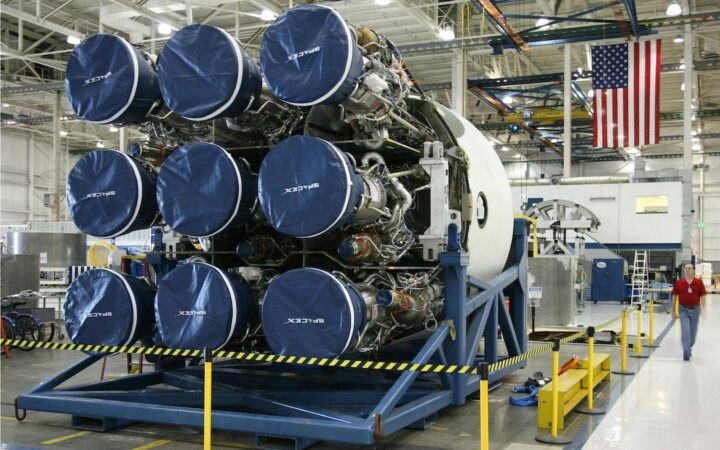
SpaceX’s upcoming IPO is rekindling expectations that as much as $2.9 trillion in delayed global listings could return to the market amid improving sentiment. Photo: SpaceX / Unsplash
SpaceX’s expected move toward a public listing is reshaping sentiment across global capital markets, reigniting hopes that a long-frozen IPO pipeline worth an estimated $2.9 trillion could finally begin to thaw. The potential offering from Elon Musk’s space company would be one of the most highly anticipated listings in years and is already prompting renewed interest from private companies that delayed going public amid volatile markets and high interest rates.
A SpaceX IPO – likely centered around its satellite internet unit, Starlink – is being viewed by bankers and investors as a possible turning point for the broader new-issuance market. After two years of subdued activity, risk appetite is improving, valuations are stabilizing, and global exchanges are preparing for a more active 2026.
Why SpaceX’s Move Matters for Global Issuance
For much of the past three years, companies across sectors have postponed listings amid elevated borrowing costs, geopolitical uncertainty and uneven market liquidity. As previously covered, only a small share of mega-valuations actually reached public markets during this period, creating one of the largest IPO backlogs in decades.
SpaceX, valued privately at more than $200 billion, carries a level of investor credibility and demand that few companies can match. Bankers say its IPO could reset pricing expectations, encourage institutional buyers back into large-scale offerings, and act as a “confidence catalyst” for tech and industrial issuers waiting on the sidelines.
In addition, Starlink’s recurring-revenue profile – a rarity among space-sector firms – could help broaden investor appetite for next-generation infrastructure companies. Some analysts also note that Musk’s growing discipline around separating SpaceX and Starlink reporting structures signals genuine intent to pursue a listing rather than simply test investor sentiment.
Reopened IPO Market For Investors
A successful SpaceX IPO could unlock a broader revival in global equity issuance, with analysts estimating that as much as $2.9 trillion in private-company valuations are effectively “IPO-ready” once conditions stabilize. Sectors with the largest pent-up supply include artificial intelligence, semiconductors, defense technology, energy transition, and advanced logistics.
For investors, a renewed listings cycle could improve portfolio diversification after a period dominated by mega-cap tech performance. It may also provide liquidity opportunities for private-market investors who have been constrained by longer exit timelines.
Still, a full reopening is not guaranteed. Markets remain sensitive to inflation data, central bank signaling, and geopolitical risks. A mispriced or poorly received SpaceX IPO would risk dampening enthusiasm rather than accelerating it. But for now, sentiment appears to be shifting: equity desks report increased outreach from late-stage startups, and several large issuers are preparing filings for early 2026.
If SpaceX moves ahead as expected, the listing could become one of the most consequential market events of the decade – and a bellwether for whether global IPO markets are truly ready to reopen.
The Federal Reserve is expected to issue a third straight rate cut while warning that further easing may be limited, as officials remain split over slowing job growth and stubborn inflation.
By Benjamin Harper | Edited by Oleg Petrenko
Published:
Updated:
The Federal Reserve is poised to deliver a third consecutive rate cut but is likely to caution that additional easing may be constrained, with policymakers divided over weakening labor data and persistent inflation pressures. Photo: Joshua Woroniecki / Unsplash
The Federal Reserve is widely expected to deliver its third consecutive interest-rate cut today, lowering the benchmark federal funds rate to 3.50%–3.75%. But policymakers are preparing to pair the move with a message that additional easing is far from assured. A divided Federal Open Market Committee is attempting to balance rising concerns over labor-market weakness with inflation that remains stuck above the central bank’s 2% target.
A growing split has emerged inside the Fed between officials who believe more cuts are needed to prevent deeper job-market deterioration and those who argue policy has already eased enough, risking renewed inflation pressures. That tension has given rise to what markets are now calling a “hawkish cut” – a rate reduction delivered alongside guidance that further moves may be on hold.
Why the Fed Is Likely to Opt for a Hawkish Cut
Officials appear to be converging on a compromise: provide modest support to the softening labor market while signaling that policymakers want to pause and evaluate incoming data before taking additional action.
Former Fed monetary-affairs director Bill English said the most probable outcome is “a cut accompanied by a statement making clear the committee may be done for now.” He expects Chair Jerome Powell to emphasize that further adjustments will require clear evidence the economy is evolving as forecast.
The updated dot plot, which reveals each participant’s rate expectations, will be closely scrutinized for signs of internal dissent. The October meeting saw two formal “no” votes one arguing cuts were too aggressive, the other pushing for more easing. Analysts expect similar disagreements this time, along with several “soft dissents” reflected in diverging rate projections.
Recent economic data gives ammunition to both sides of the debate. Hiring slowed notably in October, with 218,000 fewer hires and a 73,000 uptick in layoffs, according to the Bureau of Labor Statistics. Yet inflation, measured by the Fed’s preferred gauge, is still running at 2.8% annually, well above target.
Former Cleveland Fed President Loretta Mester expects one more rate cut but warned that inflation risks remain too elevated for the Fed to fully pivot toward easing. “Policy must stay somewhat restrictive to maintain downward pressure on inflation,” she said.
Market Implications and What to Watch Next
Investors will not just focus on the rate decision but also on signals regarding balance-sheet policy. As previously covered, the Fed indicated it would soon halt “quantitative tightening,” ending the runoff of maturing Treasurys and mortgage securities. Some analysts now expect the committee to take the next step – resuming modest bond purchases to stabilize funding markets, though not at levels associated with full-fledged quantitative easing.
Powell’s tone in the press conference will shape market reaction, especially if he highlights internal disagreement or stresses that further cuts will require convincing evidence of weakening activity or disinflation. Goldman Sachs economists expect the statement to revive language referencing “the extent and timing of additional adjustments,” implying a higher bar for future easing.
For now, markets appear confident about Wednesday’s cut but less certain about what follows. With inflation still sticky and labor trends weakening, investors will be parsing every word for clarity on whether this meeting marks a pause or simply a waypoint.