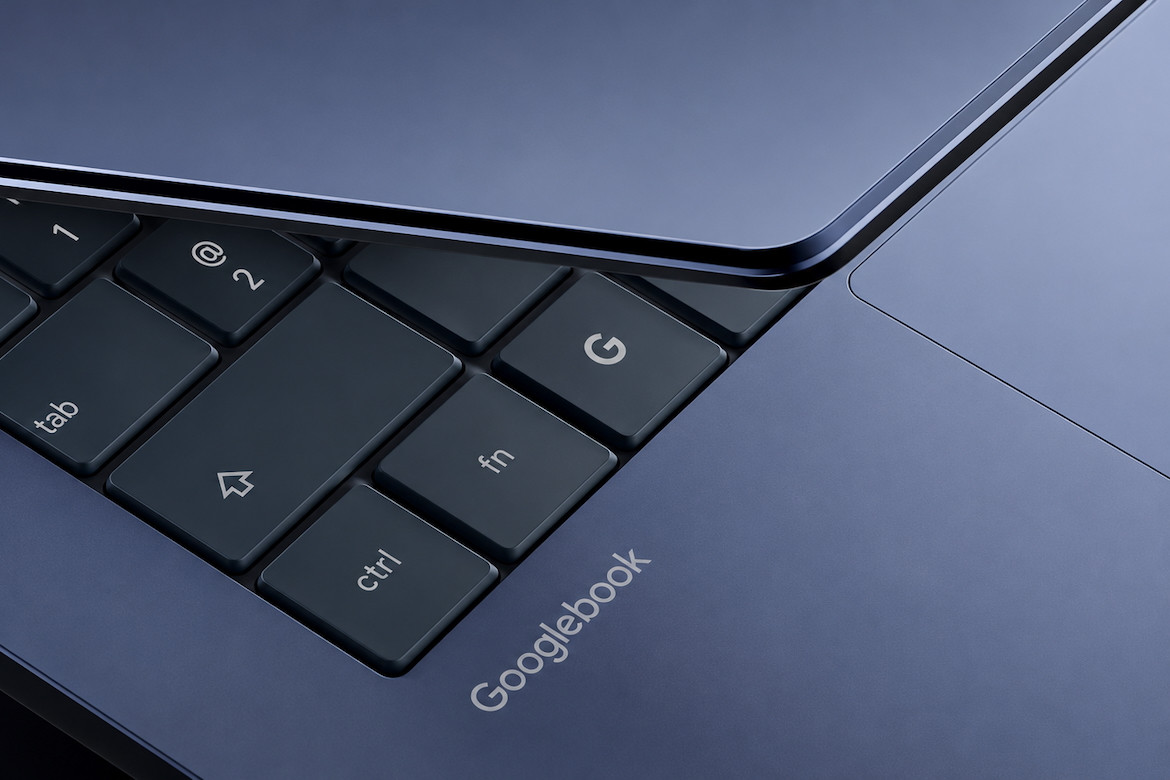
Google introduced Googlebook, a new category of laptops built around its Gemini artificial intelligence platform and powered by Android 17 with a desktop-focused interface.
The company positioned the devices as AI-native computers designed to integrate deeply with Google’s ecosystem of search, Gmail, calendar, and productivity services.
One of the headline features is “Magic Pointer” a contextual AI system that allows users to hover over objects on screen and receive intelligent actions suggested by Gemini.
For example, users can point at a date inside an email to instantly create a calendar meeting, or combine personal photos with online shopping images to generate virtual clothing try-ons.
Gemini Becomes Central to Laptop Experience
Googlebook represents one of Google’s most aggressive attempts yet to integrate generative AI directly into everyday computing workflows.
The operating system can also create personalized desktop widgets using natural-language prompts. Gemini is capable of automatically organizing information such as travel bookings, reminders, tickets, meetings, and messages into dynamic workspace layouts.
The move reflects a broader industry shift toward AI-centric operating systems, where artificial intelligence functions as an active layer across applications rather than a standalone assistant.
Analysts note that Googlebook could strengthen Google’s position in consumer AI by extending Gemini deeper into hardware and productivity ecosystems.
The launch also intensifies competition with Microsoft, Apple, and other technology companies racing to embed generative AI into operating systems and personal devices.
Major PC Manufacturers Join Googlebook Push
Hardware production for Googlebook devices will involve several major manufacturers, including Acer, ASUS, Dell, HP, and Lenovo.
Google said the devices will focus on premium materials and build quality, signaling an effort to compete more directly in the high-end laptop market.
The first Googlebook models are expected to launch this fall.
Investor attention remains heavily focused on how AI integration may reshape personal computing over the coming years. Companies capable of embedding AI deeply into hardware and operating systems are increasingly viewed as potential long-term winners in the next technology cycle.
The broader takeaway is that competition in artificial intelligence is rapidly expanding beyond cloud services and semiconductors into the core user experience of personal computing devices.