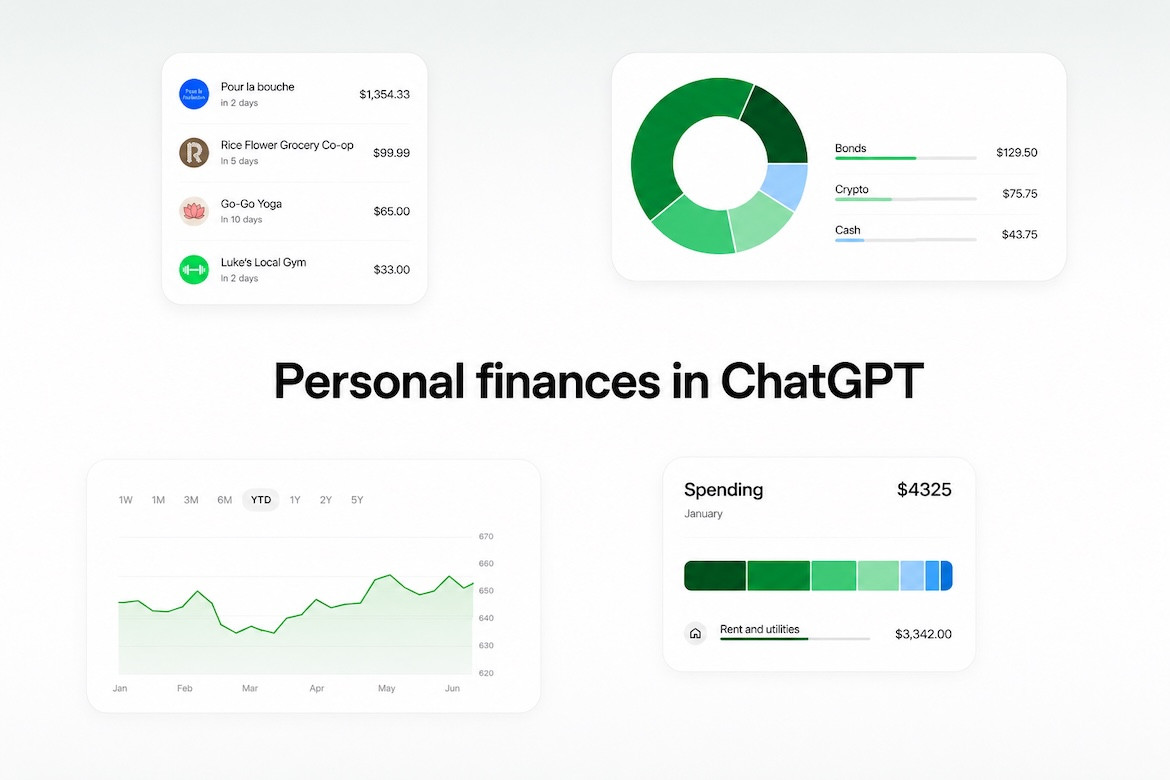
OpenAI launched ChatGPT Finance, a new AI-powered personal finance service that allows users to connect bank accounts and manage financial activity directly inside ChatGPT.
The feature is currently available only to U.S. subscribers of ChatGPT Pro, which costs $200 per month.
According to OpenAI, the platform enables users to securely integrate financial accounts and receive personalized insights, budgeting assistance, portfolio tracking, and financial planning recommendations based on their individual financial data and goals.
AI Expands Into Consumer Financial Services
The launch marks one of OpenAI’s most significant moves into consumer financial technology as artificial intelligence companies increasingly compete to integrate AI assistants into daily life and financial decision-making.
The service reportedly uses integrations with financial connectivity platforms to access banking and investment data while generating AI-driven financial guidance tailored to each user’s financial profile.
OpenAI said the system is designed to help users track spending, monitor investments, organize budgets, and receive contextual financial insights through natural-language interactions.
Analysts note that the expansion into finance positions ChatGPT more directly against traditional budgeting apps, robo-advisors, and digital banking tools.
The move also reflects the growing trend of AI becoming embedded into productivity, commerce, and financial ecosystems beyond simple chatbot functionality.
Privacy and Competition Become Key Focus
The launch is likely to intensify debates around data privacy, financial security, and the growing role of artificial intelligence in managing sensitive personal information.
OpenAI emphasized that the financial experience is grounded in user-specific goals and priorities, though analysts expect scrutiny around how financial data is processed, stored, and protected.
The premium pricing model also suggests OpenAI is targeting affluent users and professionals willing to pay for advanced AI-powered financial planning tools.
Competition in AI-driven finance is expected to accelerate as technology companies race to integrate artificial intelligence into banking, investing, payments, and wealth management services.
At the same time, regulators globally are increasingly examining how AI systems interact with financial products, consumer advice, and personal data protection.
The broader takeaway is that artificial intelligence is rapidly evolving from a productivity tool into a central platform for managing everyday financial decisions, potentially reshaping the future of digital banking and personal finance.