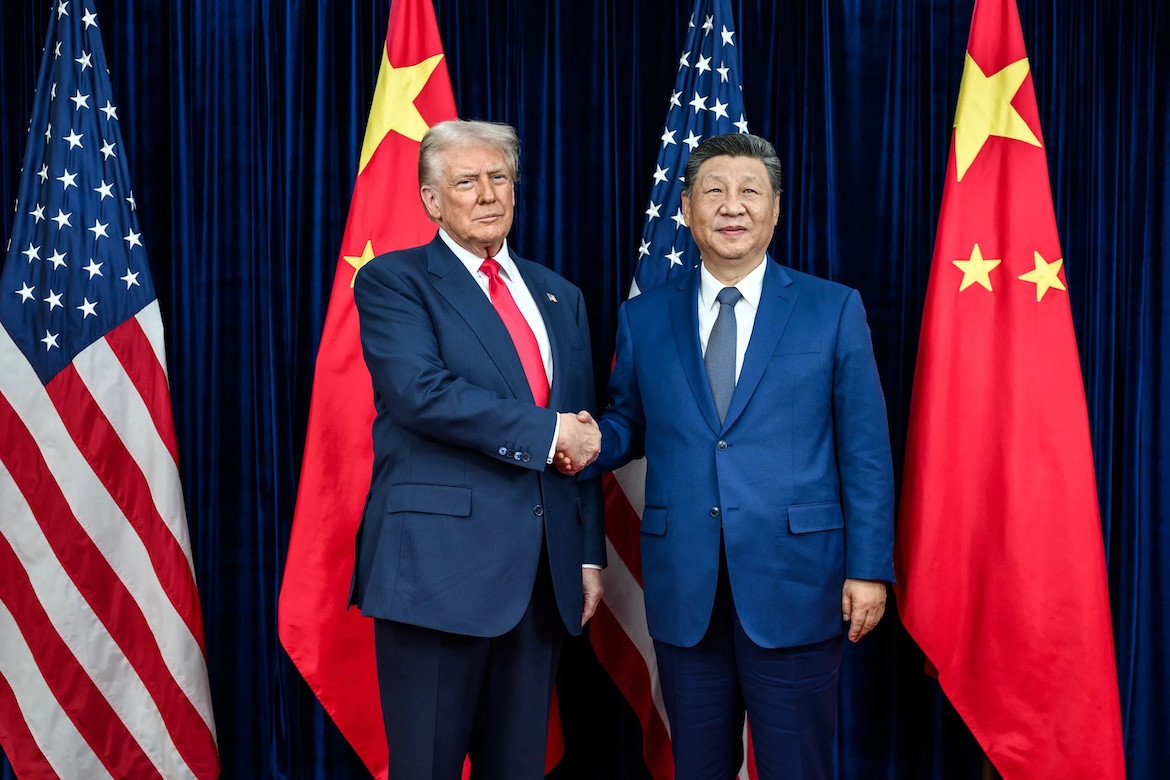
Donald Trump arrived in Beijing for a two-day summit with Xi Jinping, marking Trump’s first visit to China since 2017 and setting the stage for what analysts describe as a major attempt to reset economic relations between the two countries.
The summit, scheduled for May 14 and 15, comes after years of escalating trade tensions that disrupted global supply chains, increased tariffs, and intensified competition over semiconductors and artificial intelligence technologies.
Reports indicate that the U.S. delegation includes several prominent corporate leaders, among them executives from Tesla, Apple, Nvidia, Boeing, Qualcomm, Micron, Goldman Sachs, BlackRock, Visa, Mastercard, and other major multinational firms.
Trade, AI, and Semiconductors Dominate Agenda
The meetings are expected to focus heavily on reducing tariffs imposed during the 2025 trade conflict, which reportedly pushed some duties as high as 57%.
Discussions are also expected to cover rare earth mineral supply agreements, semiconductor export restrictions, artificial intelligence policy, and broader access between U.S. and Chinese markets.
Technology and industrial companies have been particularly affected by rising geopolitical tensions between Washington and Beijing, especially around semiconductor manufacturing and advanced AI systems.
Analysts believe China may push for softer U.S. export controls on advanced chips and less aggressive policy toward Taiwan, while the U.S. side is expected to prioritize supply chain stability and market access for American firms.
The summit may also include discussions involving Tesla’s Full Self-Driving technology approval in China and potential aircraft orders for Boeing.
Markets Watch for Signs of Economic Reset
Global markets are closely monitoring the summit for signals that the world’s two largest economies may be moving toward a more stable relationship after years of escalating tensions.
The trade conflict between the U.S. and China has significantly affected semiconductors, commodities, manufacturing, and global technology supply chains over the past several years.
Investors are particularly focused on whether the talks could ease restrictions affecting AI infrastructure, rare earth exports, and advanced semiconductor equipment.
A reduction in trade barriers could improve sentiment across technology, industrial, and consumer sectors, while any progress on semiconductor policy would likely have significant implications for global AI competition.
At the same time, analysts caution that major structural disagreements remain unresolved, particularly regarding Taiwan, technology controls, and strategic industrial policy.
The broader takeaway is that the Trump-Xi summit represents not only a diplomatic meeting, but also a potentially pivotal moment for global trade, artificial intelligence competition, and financial market stability.