Key Notes
- NVIDIA’s OpenShell reference architecture combines Rubin inference, Vera CPUs and BlueField-4 security to restrict enterprise AI agents’ access and actions.
- BBVA and Santander are exploring the framework, while enterprise software integrations illustrate different stages of adoption rather than universal production deployment.
- The reference design is available now, but NVIDIA Sentry is planned for early 2027, and the launch includes no new revenue guidance or quantified customer orders.
NVIDIA Corp. (NASDAQ: NVDA) has introduced an OpenShell reference architecture designed to put enforceable limits on AI agents, expanding its push to supply the infrastructure businesses need to move autonomous software into everyday operations.
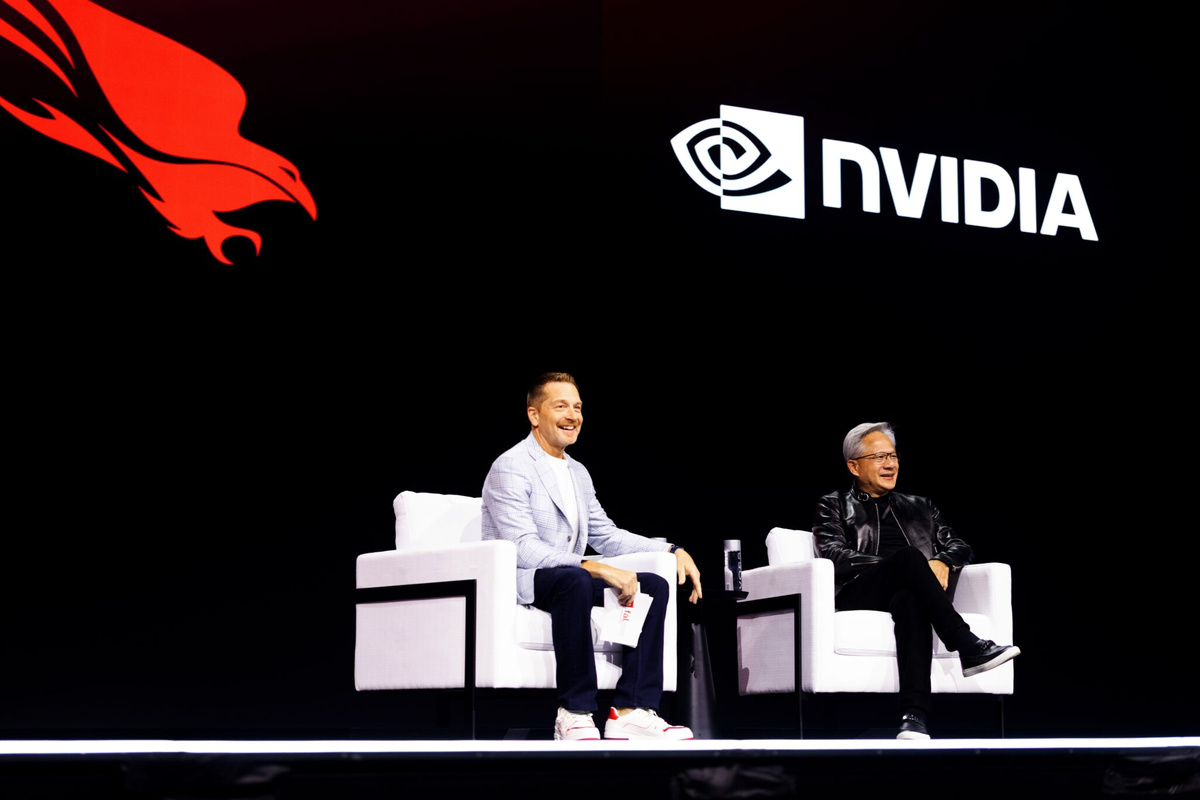
Announced at GTC Berlin on October 21, the architecture combines computing, agent execution and security controls. The commercial aim is to make agents useful inside companies without granting them unrestricted access to data, credentials or business systems.
“AI capability and safety must advance together,” CEO Jensen Huang said. The reference design builds on existing OpenShell software, rather than introducing agent containment for the first time.
For NVIDIA shareholders, the development broadens the company’s enterprise pitch beyond faster AI models. It links the ability to deploy agents with a larger stack of processors, networking and security software, although the announcement provides no new revenue forecast or quantified sales commitments.
OpenShell Places Controls Outside the Agent
An AI agent can read documents, call business applications and execute code to complete a task. Those capabilities also create opportunities to expose confidential information or take an action its operator never intended.
NVIDIA’s documentation describes controls over files, networks, processes and credentials. Operators define permitted resources, while the runtime restricts access at the operating-system level.
Network policies can limit where information is sent, and filesystem restrictions can prevent an agent from reading unrelated files. Restrictions also apply when the workload launches another process or runs generated code.
The practical difference is that a request written in natural language is not the only barrier. Enforcement sits outside the agent’s own working environment, reducing its ability to change the restrictions governing its actions.
For example, a bank could permit an agent to retrieve records while withholding permission to alter them. That is an illustration of the access-control model, rather than a bank deployment announced with this launch.
Four Components Define What Agents Can Do
The company’s overview separates OpenShell into four components:
- Sandboxes isolate individual workloads and constrain the files and networks they can access.
- A supervisor checks outgoing requests and handles access to protected credentials outside the agent workload.
- A gateway manages the lifecycles and permissions of multiple sandboxes, including separate workspaces for teams.
- A policy prover uses formal logic to test whether modeled permissions remain inside boundaries set by the operator.
For configured web and application interfaces, the supervisor can allow a read while blocking a write through the same service. Real credentials are supplied only after access and authorization checks pass, rather than being exposed directly to the agent.
The policy prover checks permissions, not whether every answer or business decision will be correct. Its purpose is to identify access that would exceed a declared boundary before a policy change is accepted.
Rubin, Vera and BlueField Divide the Work
NVIDIA’s technical explanation assigns different jobs to three parts of its infrastructure. Vera Rubin handles AI model inference, Vera CPUs run agent software and tools, and BlueField-4 data-processing units provide an independent domain for security enforcement.
NVIDIA Sentry, built on the company’s DOCA software, runs on BlueField-4. Its role is to monitor activity and enforce access policies separately from the host running the agent.
That separation matters if an agent’s environment is compromised. In its Sentry deep dive, NVIDIA describes inspecting communications and selected host-memory information without relying on the agent to report its own behavior.
NVIDIA says the hardware layer can quarantine an agent within milliseconds. This is a vendor capability claim; it does not establish that every threat will be detected or that every deployment will deliver identical results.
Protected records of activity can also support investigations and audits. For enterprises considering agents for sensitive workflows, evidence of what happened can be as important as blocking an unauthorized action.
Banks Explore the Framework as Software Partners Integrate
NVIDIA says BBVA and Santander are exploring the architecture as a framework for agent safety and governance. That wording describes evaluation, rather than completed production rollouts at either bank.
SAP is integrating the design with its Joule Studio runtime, while NVIDIA also identifies ServiceNow’s newly available Arc agent as using OpenShell enforcement. Those examples show different stages of adoption across the enterprise ecosystem.
Huang’s emphasis on controls follows his recent call for greater international AI-safety cooperation, as we previously reported. The OpenShell announcement concerns operational restrictions companies can apply to their own agents, rather than a new agreement between governments.
The implementation timetable also needs care. NVIDIA says the reference architecture is available now, while its Sentry technical article lists planned availability for that security framework early next year. An available design does not mean every component or partner service is already generally available.
Open Software Supports a Broader NVIDIA Business Case
OpenShell’s source code is published under the Apache 2.0 license. The runtime supports open and closed models across supported local, cloud and enterprise environments; the software should not be confused with a requirement to buy the entire NVIDIA reference configuration.
From an investor’s perspective, the opportunity is that stronger controls could make companies more comfortable assigning useful work to agents. If that translates into wider deployment, it could support demand for inference capacity and the surrounding infrastructure NVIDIA supplies.
That remains a commercial thesis, not a sales result demonstrated by this announcement. Customer adoption, implementation costs and measurable productivity gains will determine whether the architecture expands enterprise spending.
The distinction is especially relevant after the AI-sector selloff Huang recently addressed, as we reported. OpenShell gives NVIDIA a more detailed answer to how agents can be controlled; customers still need to show that running them produces durable business value.