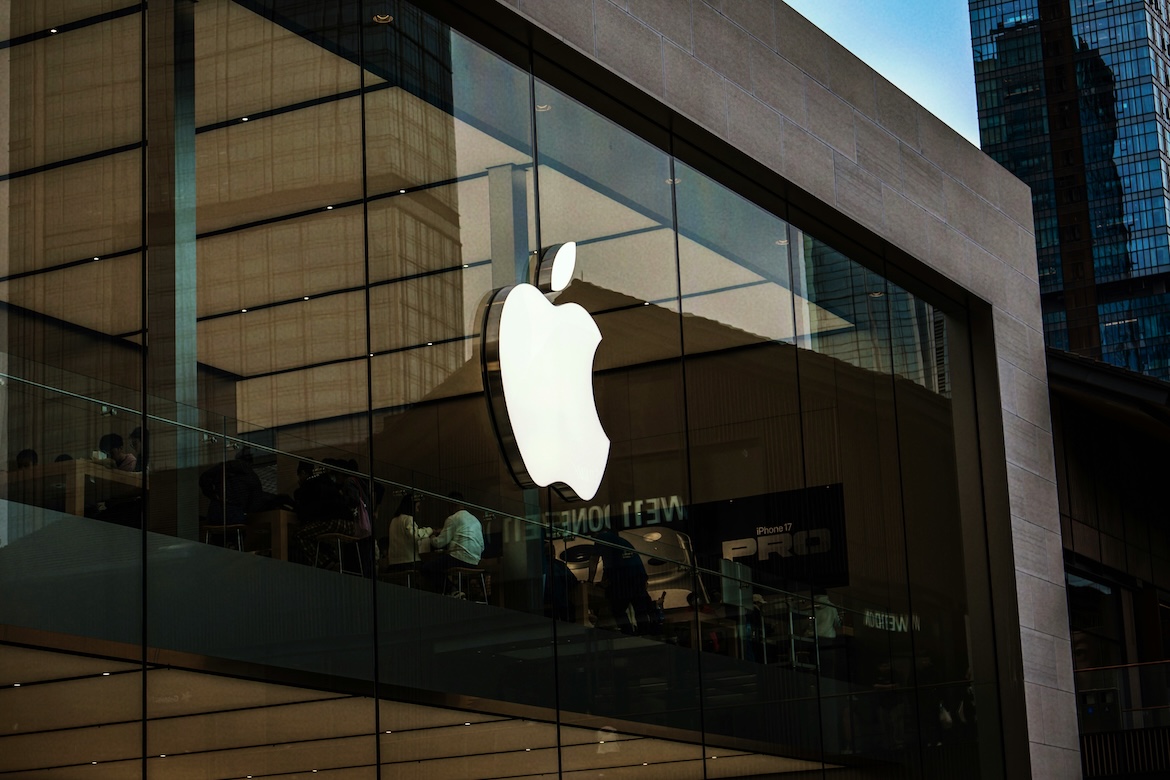
Apple reclaimed its position as the world’s most valuable publicly traded company on Monday after its market capitalization climbed to nearly $5 trillion, overtaking AI chip giant Nvidia, whose shares came under pressure amid renewed concerns about AI-related spending and valuations.
Apple shares rose about 1% during the session, lifting the company’s market value to approximately $4.95 trillion. At the same time, Nvidia lost roughly 5%, allowing the iPhone maker to regain the top spot after trailing the semiconductor leader for more than a year. Nvidia had held the title since June 2025, when it surpassed Microsoft to become the world’s most valuable company.
Investors Rotate Out of AI Leaders
The shift reflects a broader change in investor sentiment after months of extraordinary gains among companies tied to artificial intelligence.
While Nvidia remains one of the biggest beneficiaries of the AI boom thanks to its dominance in AI accelerators and data center chips, investors have recently become more selective as spending on large-scale AI infrastructure continues to climb. Concerns over whether technology companies can generate sufficient returns on massive AI investments have prompted some investors to lock in profits after Nvidia’s exceptional rally.
Several recent announcements involving multi-hundred-billion-dollar AI infrastructure projects have also raised questions about future capital expenditure, financing costs, and the timeline for monetizing those investments.
Apple Benefits From a Different Narrative
Ironically, Apple has spent much of the past year facing criticism for moving more cautiously than rivals in deploying generative AI features across its ecosystem.
However, that more measured approach now appears to be working in the company’s favor. As investors become increasingly focused on profitability, cash generation, and capital discipline, Apple’s relatively conservative AI strategy has begun to look less like a weakness and more like a competitive advantage.
Rather than pursuing the largest AI infrastructure investments, Apple has continued integrating artificial intelligence gradually into its hardware, software, and services while maintaining one of the strongest balance sheets and highest profit margins in the technology sector.
Analysts note that investors are increasingly rewarding companies capable of combining AI innovation with sustainable earnings growth instead of simply maximizing AI-related spending.
Two Tech Giants, Two Different Stories
Although Apple has regained the top position, both companies remain central to the next phase of artificial intelligence development.
Nvidia continues to dominate the market for AI chips powering hyperscale data centers, cloud providers, and frontier AI models. Demand for its latest GPU platforms remains strong despite growing investor concerns over valuation.
Apple, meanwhile, is increasingly viewed as a long-term beneficiary of AI through its installed base of more than two billion active devices. Future AI-powered features could encourage consumers to upgrade iPhones, Macs, and other products while strengthening the company’s rapidly growing services ecosystem.
The contrasting performance of the two stocks highlights a broader market trend, with investors becoming more selective about how they value AI-related companies as the sector matures.
Market Leadership May Continue to Shift
The race for the title of the world’s most valuable company has become increasingly competitive over the past two years, with Apple, Microsoft, and Nvidia frequently exchanging the top position as investor expectations evolve.
While Nvidia’s valuation has been driven primarily by explosive growth in AI infrastructure spending, Apple’s strength continues to rest on its ecosystem, recurring services revenue, premium hardware business, and consistent cash generation.
With both companies approaching the historic $5 trillion market capitalization milestone, future leadership is likely to depend not only on AI adoption but also on each company’s ability to translate technological innovation into sustained earnings growth and shareholder returns.