Key Notes
- Jensen Huang urges Nvidia and Chinese AI researchers to strengthen dialogue on monitoring safety risks.
- The appeal follows US-China AI discussions but does not announce a new safety agreement or chip-export approval.
- Nvidia’s latest quarterly outlook excluded Data Center compute revenue from China despite strong global growth.
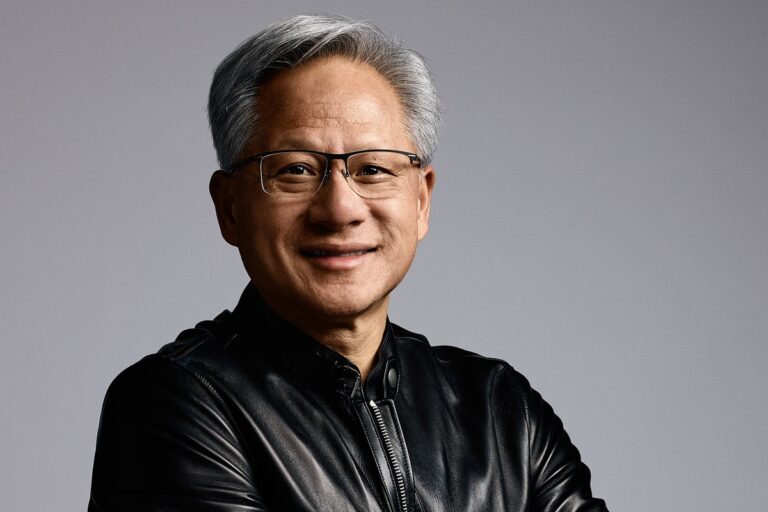
Nvidia Corp. (NASDAQ: NVDA) CEO Jensen Huang says the chipmaker should work with Chinese AI companies to monitor safety risks, calling for closer dialogue even as restrictions on advanced processors complicate its business in China.
Huang made the comments at a London media briefing on October 14, CNBC reported.
His remarks put research cooperation alongside a separate question for Nvidia shareholders: whether the company can preserve its position in a major AI market while complying with competing government restrictions.
Huang Calls for More Safety Dialogue
“We absolutely should work with each other so that we advance the technology safely,” Huang told CNBC. He urged the United States to expand those conversations and said he had encouraged the United Kingdom to do the same.
He said he already speaks with Chinese researchers and suggested that Britain could help convene international discussions.
CNBC’s report did not announce a new safety agreement, identify participating Chinese companies or give a timetable for formal cooperation.
AI Cooperation Has a Diplomatic Opening
The appeal follows recent talks between Washington and Beijing. In its September 25 readout of President Xi Jinping’s meeting with President Donald Trump, China’s foreign ministry said both countries should continue discussing AI’s risks and benefits and work to prevent misuse.
The Chinese account also emphasized keeping AI under human control and described Trump as supporting continued dialogue. That provides a diplomatic backdrop for Huang’s proposal, although the readout represents Beijing’s account of the meeting.
Agreement to discuss safety does not establish common rules for model development, information sharing or enforcement. Those details would determine how useful any future mechanism becomes for companies operating across national borders.
China Remains a Difficult Market for Nvidia
Nvidia’s latest quarterly filing illustrates the commercial limits. For the period ended July 26, the company said the rules and geopolitical environment prevented it from delivering a competitive data-center product for broad distribution in China with approval from both governments.
The company warned that export restrictions could further weaken its competitive position if customers turn to rivals or develop their own systems. Licensing delays can also cause opportunities to disappear before an approval arrives.
As we previously reported, IDC estimates reviewed by Reuters put Nvidia’s share of Chinese AI-accelerator shipments at 34% in the first half of 2026, compared with Huawei’s 28%. Those are historical shipment shares, rather than a measure of current sales permissions or equivalent chip performance.
For investors, the distinction matters. Scientific dialogue may keep research relationships open, but it does not by itself authorize hardware sales or reverse the growth of competing supplier ecosystems.
Global Growth Supports the Financial Outlook
Nvidia’s worldwide results show why the China question extends beyond immediate revenue. In its August 26 earnings release, the company reported fiscal second-quarter revenue of $96.2 billion, up 106% from a year earlier. Data Center revenue rose 117% to $89 billion.
Its fiscal third-quarter revenue forecast was $108 billion, plus or minus 2%, without assuming any Data Center compute revenue from China. That outlook predates Huang’s London remarks and was not a new forecast issued with the safety discussion.
The figures separate two investment questions: how quickly Nvidia can expand its existing global business, and whether restricted access to China gives competitors a stronger long-term foothold. Safety cooperation could influence relationships without producing an immediate change in either revenue guidance or export policy.
Nvidia Already Offers Tools to Manage AI Risks
Nvidia’s safety work also has a practical software component. Its NeMo Guardrails documentation describes an open-source library that lets developers check, block or modify inputs and model responses according to application policies.
The toolkit supports content moderation, protection against attempts to bypass safeguards, privacy controls and checks on AI agents’ tool use. These are controls around applications, rather than a guarantee that a model is safe or a substitute for international governance.
Huang’s proposal concerns the broader coordination problem: how researchers in competing countries communicate about risks. The next substantive development would be evidence of participating institutions, agreed procedures or a formal dialogue, alongside any separately announced changes to Nvidia’s commercial access.