Key Notes
- Elice fell more than 30% below its 90,500-won IPO price in its October 20 Kosdaq debut after raising approximately 201.1 billion won.
- The offering attracted heavy institutional demand but was priced before the recent AI stock selloff.
- Elice reported first-half revenue of 34.4 billion won and operating profit of 10.3 billion won, with IPO proceeds earmarked for infrastructure and overseas growth.
Elice Inc. (KRX: 0158S0) fell more than 30% in its South Korean trading debut on October 20, delivering a difficult start for the AI infrastructure company after an initial public offering raised approximately 201.1 billion won, or $150 million.
The selloff followed heavy demand during the offering, but arrived after a broader retreat in AI-related shares. Elice set its IPO price on October 6, before the latest deterioration in sentiment, Reuters reported through CNBC.
A later delayed regular-session quote displayed by TradingView was 61,500 won, approximately 32% below the 90,500-won offer price. That comparison measures the loss from the IPO allocation price, rather than a change from an earlier public-market closing price.
Strong IPO Demand Meets a Different Market
Elice’s October 6 announcement confirmed that it priced the offering at the top of its indicated range. A total of 2,367 institutions participated in book-building, with demand approximately 388.8 times the available institutional shares.
The offering implied a post-listing equity value of approximately 1.0054 trillion won. Those figures describe the transaction at the offer price; the company’s traded market value subsequently changed as shares fell.
Strong subscriptions are not a commitment to buy indefinitely after listing. An IPO allocates a limited pool of shares at a fixed price, while exchange trading allows new buyers and sellers to reassess that price continuously.
The decline also does not reverse the money raised in the completed offering. It changes the value of shareholders’ positions and may affect the terms on which the company can raise additional equity in future.
AI Infrastructure Faces a Higher Financing Hurdle
Reuters linked the debut to growing concern over whether large investments in AI computing will earn sufficient returns while borrowing costs remain high. Its CNBC report also identified postponed or shelved listings involving Firmus, an AirTrunk property vehicle and SoftBank’s SB Energy.
Those examples reflect financing decisions across different businesses and markets. They do not establish that Elice has the same debt structure, customer concentration or operating risks as every other infrastructure provider.
The broader concern is familiar: chips, cooling equipment and facilities require funding before all the associated customer revenue arrives. Investors must assess both the demand for computing and how much cash remains after supplying it.
We previously reported on CoreWeave’s financing debate and a Goldman Sachs upgrade that accompanied a lower price target. That provides context for the sector’s valuation reset, without making the two companies financially interchangeable.
Elice Has Expanded Beyond AI Education
Founded in 2015, Elice describes its operations as spanning AI cloud infrastructure, cloud services and software that helps organizations adopt AI. Its product range includes education platforms and enterprise tools alongside computing capacity.
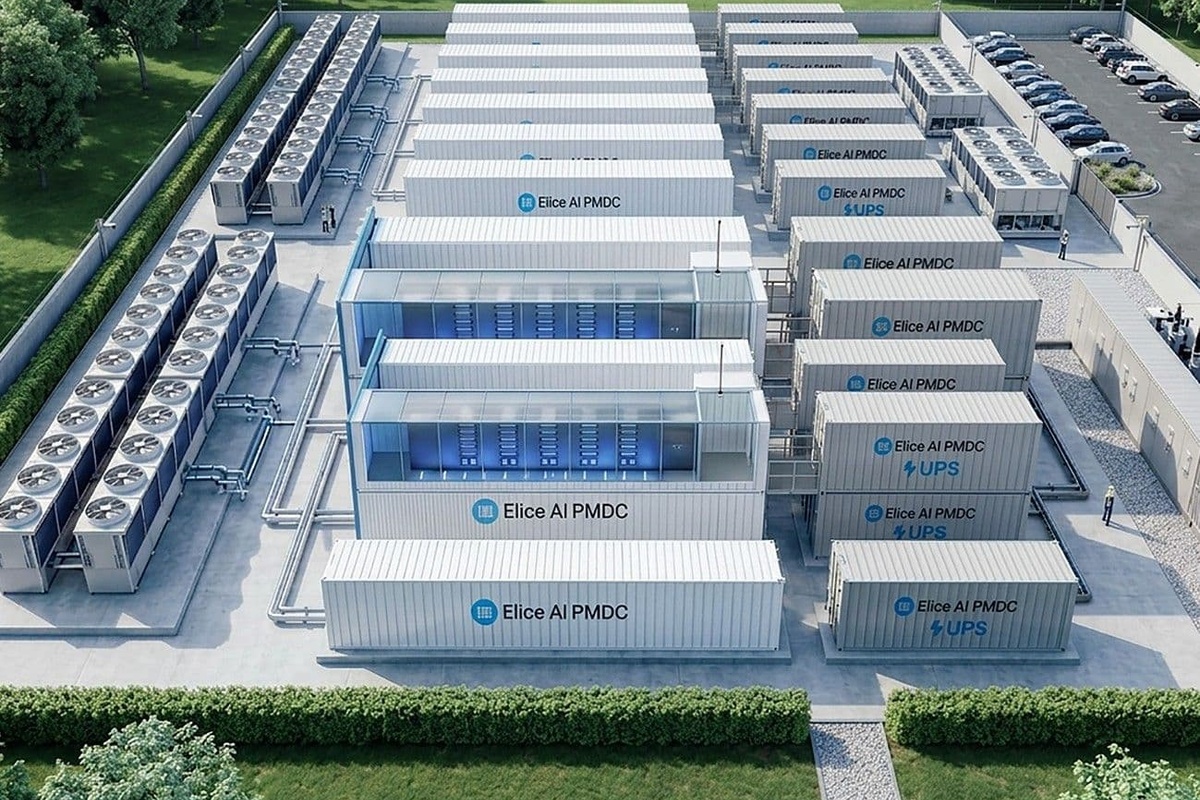
The company’s October 8 update explains its portable modular data-center model. Servers, power, cooling and networking systems are prefabricated before installation at locations where land and electricity are available.
Elice combines that infrastructure with its own ECI cloud-management software. It says the approach supports GPU-cluster operation and enables it to supply computing resources and data-center systems to customers in Korea and overseas.
The modular design addresses deployment, but it does not remove the commercial questions around utilization, customer contracts and equipment costs. A facility that can be built quickly still needs paying users to generate a return.
First-Half Results Show Operating Progress
In its September 30 IPO presentation, Elice reported consolidated first-half 2026 revenue of 34.4 billion won and operating profit of 10.3 billion won. Revenue for those six months was already approximately 87% of the previous full year’s total.
Those are completed-period results, rather than a forecast of revenue for the whole of 2026. They show that the business is generating sales and operating profit, even as public investors question the valuation assigned to its next stage of growth.
Operating profit is also different from cash available after equipment purchases, financing payments and other obligations. For a company expanding physical infrastructure, the timing of those cash flows matters alongside the income statement.
IPO Proceeds Will Support Further Expansion
Elice says the offering proceeds will support regional AI infrastructure and next-generation GPU facilities. Its international plans center on operations in the United States, Singapore and Japan, including exports of modular data centers and enterprise AI solutions.
That expansion will give investors operating milestones to assess after the debut: deployment, customer adoption, utilization and the cost of funding further capacity. Planned investment should be distinguished from completed sites and recognized sales.
The listing also follows the wider Asian technology selloff we reported earlier this month. Elice’s immediate challenge is to show that its operating growth can support the capital it needs, while investors apply more demanding valuations to the AI infrastructure trade.