Key Notes
- Goldman upgraded CoreWeave to Buy from Neutral while cutting its price target to $106 from $139.
- CRWV opened about 7.2% higher on October 19 but erased the rally and closed at $61.12, down 0.44%.
- CoreWeave’s revenue growth and large contract backlog support demand, while interest costs and infrastructure spending remain central to shareholder returns.
CoreWeave Inc. (NASDAQ: CRWV) gave up an early rally on October 19 despite a Goldman Sachs upgrade to Buy, ending the session slightly lower as investors continued to weigh the AI cloud provider’s financing risks.
The Goldman Sachs Group Inc. (NYSE: GS) raised its recommendation from Neutral while cutting its price target to $106 from $139. The combination reflects a more favorable assessment of the stock after its selloff, alongside a lower valuation than the bank previously assigned.
CoreWeave opened at $65.83, about 7.2% above Friday’s $61.39 close, before finishing at $61.12, down 0.44%, according to trading data. The initial gain was therefore an early-session move, not the closing return.
A Buy Rating With a Lower Price Target
Goldman analyst Gabriela Borges argued that investors were overestimating CoreWeave’s future cost of capital and underestimating potential improvement in its returns, Benzinga reported. The revised $106 target implied approximately 73% upside from Friday’s close.
The Fly separately reported that Goldman expects tight computing supply to support revenue per megawatt and project returns over the next two years. The bank sees CoreWeave as differentiated from other specialized AI cloud providers.
The lower target nevertheless shows that Goldman is applying a more cautious valuation. Benzinga said the new calculation uses 18 times estimated operating earnings for a future period, compared with 22 times under the old target.
A rating upgrade and target reduction are not contradictory. An analyst can lower an estimate of fair value while becoming more positive about the potential return from a share price that has fallen further. Neither the Buy label nor the target is a guarantee of performance.
The Rally Does Not Settle the Debt Debate
Monday’s reversal followed a difficult week. CoreWeave closed October 16 down 11.91%, after losing 15.46% on October 14. A sharp opening rebound consequently recovered only part of the preceding declines before sellers regained control of the session.
As we previously reported, yields on two CoreWeave bonds approached 15% during the October 14 selloff. That pressure put the price of financing new infrastructure at the center of the equity-market discussion.
A secondary-market bond yield is not the same as an issuer’s fixed coupon or the rate on every new loan. Its rise can still signal that investors demand more compensation for credit risk, making access to reasonably priced funding an important test of the growth plan.
Revenue Growth Still Comes With Large Costs
CoreWeave’s most recent completed-quarter results, released August 11, showed second-quarter revenue of $2.575 billion, up approximately 112% from a year earlier. Net interest expense reached $640 million and the company reported a $626 million net loss.
Adjusted EBITDA was $1.51 billion. That measure excludes interest and other expenses, so it does not represent profit available to shareholders after debt service and infrastructure investment.
The company also reported approximately $104 billion of revenue backlog at June 30. The figure includes estimated future revenue under committed contracts, subject to delivery and service-availability requirements. It supports the demand argument but is not cash already collected or revenue already earned.
Financing Determines How Much Growth Is Worth
The second-quarter filing shows $14.117 billion spent on property and equipment in the first half of 2026, against $3.663 billion of operating cash flow. Its June 30 debt schedule listed $35.551 billion of future principal payments.
Those are historical quarter-end disclosures, rather than a statement of current balances. They illustrate why expanding sales alone cannot resolve the investment question: the company must fund equipment and facilities while meeting interest and repayment obligations.
Goldman’s thesis depends on the returns from that capacity exceeding the cost of financing it by a sufficient margin. Better utilization and pricing could help; more expensive borrowing, delays or weaker customer economics could work in the other direction.
Nvidia’s Support Provides Context, Not a New Rescue
Nvidia Corp. (NASDAQ: NVDA) disclosed a $2 billion CoreWeave investment at $87.20 a share in a January 26 announcement. The companies also outlined a plan to accelerate the development of more than 5 gigawatts of AI facilities by 2030.
That existing relationship is distinct from Monday’s analyst action. A research upgrade does not supply CoreWeave with capital or change its debt terms.
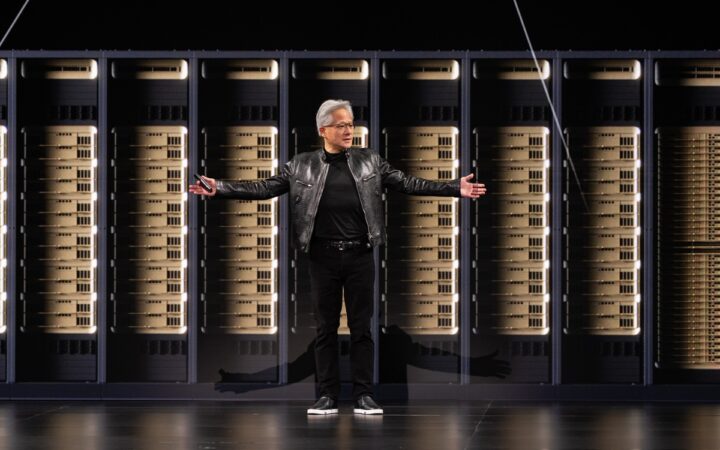
We reported on Jensen Huang’s recent defense of the AI industry and his confidence in CoreWeave. The practical shareholder tests remain financing terms, deployment, customer payments and cash generation. Goldman sees an opportunity after the selloff; Monday’s close shows the market has not reached a settled verdict.