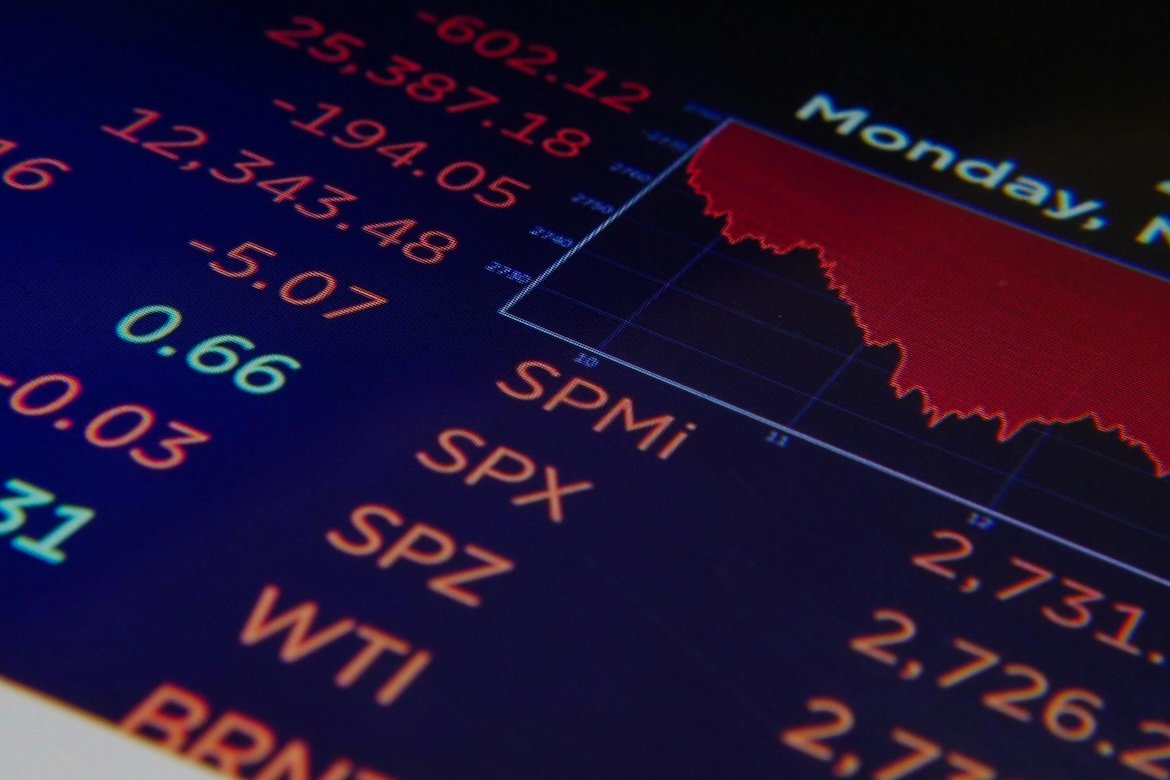
U.S. software stocks are tumbling in 2026 as investors fear sudden AI breakthroughs could render established products obsolete. The sector’s slide has accelerated despite steady earnings, with major names posting double-digit losses.
By Sophia Reynolds | Edited by Oleg Petrenko
Published:
Updated:
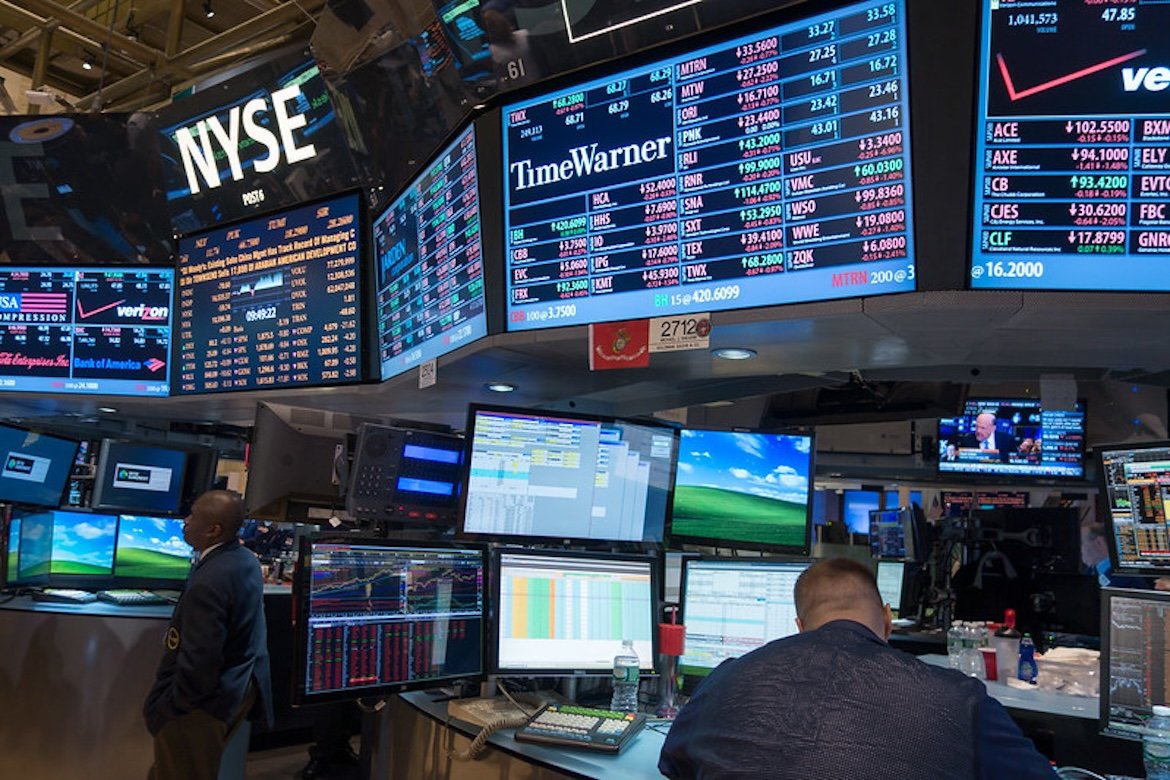
U.S. software stocks are sliding in 2026 as investors worry that sudden AI breakthroughs could make established products obsolete. The downturn has gained momentum despite stable earnings, with several major companies posting double-digit declines. Photo: Scott Beale / Wikimedia
A growing theme in U.S. markets is the fear of an unexpected shock from artificial intelligence a sudden breakthrough that could undermine established software businesses almost overnight. Investors are increasingly selling shares of software makers amid concerns that new AI-native competitors could render long-standing products obsolete.
The selloff has intensified even in cases where earnings remain relatively stable, suggesting the pressure is driven less by fundamentals and more by forward-looking disruption risk.
Recent volatility was highlighted by a sharp decline in shares of IBM, which fell heavily in the latest session, adding to mounting anxiety across the sector.
Why investors are dumping software stocks
Since the start of 2026, several major U.S. software companies have seen steep declines. Snowflake is down about 28%, Intuit has dropped roughly 46%, Salesforce is off 33%, Autodesk has fallen 26%, and Workday is down around 40%.
Bloomberg reports that investors continue to unload software stocks regardless of earnings updates, underscoring the depth of skepticism surrounding the sector.
Market participants increasingly worry that an AI startup could launch a new product capable of rapidly displacing legacy platforms that took years and millions of dollars to develop. With generative AI tools evolving quickly, barriers to entry in certain software categories appear lower than before.
As previously covered, the AI boom has shifted investor focus toward infrastructure providers and chipmakers, while application-layer software firms face questions about defensibility and pricing power.
Warnings of structural risk
The concerns are not limited to traders. Nassim Nicholas Taleb, author of The Black Swan, has warned that parts of the software sector could face bankruptcy risk if AI dramatically alters competitive dynamics. Taleb argues that rapid technological shifts can create nonlinear outcomes, catching even established companies off guard.
Analysts say the core issue is unpredictability. In the past, software cycles unfolded gradually, allowing incumbents time to adapt. Today, with AI development accelerating globally, disruption can emerge from virtually anywhere – across geographies, industries, and business models.
This perceived fragility has led investors to reassess valuations that once reflected high recurring revenue and strong customer lock-in. Even profitable firms are being repriced as markets factor in potential long-term erosion.
For now, the software sector remains under pressure as investors grapple with a new paradigm: in the age of AI, competitive threats can materialize faster and with greater force than ever before. Whether these fears prove justified or excessive will depend on how quickly incumbents adapt and whether the next breakthrough truly reshapes the landscape.
Finland-based IQM is set to go public at a $1.8 billion valuation, becoming one of Europe’s first listed quantum computing companies. The move marks a milestone for the region’s emerging deep-tech sector.
By Sophia Reynolds | Edited by Oleg Petrenko
Published:
Updated:
Finland’s IQM is preparing to go public at a $1.8 billion valuation, positioning itself among Europe’s first listed quantum computing firms. The listing represents a significant step forward for the region’s growing deep-tech industry. Photo: IQM Quantum Computers / X
IQM is set to become one of Europe’s first publicly listed quantum computing companies in a transaction valuing the firm at approximately $1.8 billion. The move represents a significant milestone for Europe’s deep-tech ecosystem, as investors increasingly look beyond artificial intelligence to next-generation computing technologies.
The Finnish company, headquartered in Helsinki, has positioned itself as a leading developer of superconducting quantum processors. Its public debut signals growing confidence in the commercial potential of quantum computing, a field long regarded as promising but capital-intensive and technically complex.
The listing comes amid renewed investor interest in frontier technologies as capital flows broaden beyond AI infrastructure and semiconductor plays.
Why IQM’s listing matters for Europe
Europe has historically lagged behind the United States and China in commercializing breakthrough computing technologies. IQM’s public market entry could help close that gap by providing regional investors with direct exposure to quantum innovation.
The $1.8 billion valuation reflects expectations that quantum computing will eventually transform industries such as pharmaceuticals, materials science, cryptography, and complex logistics. While practical, large-scale quantum applications remain in development, companies like IQM are focused on building the hardware foundation needed to scale.
As previously covered, quantum computing has attracted increasing government and institutional backing across the European Union. Public listing could give IQM greater access to capital markets, supporting research, talent acquisition, and industrial partnerships.
Investor outlook and sector risks
Despite the enthusiasm, quantum computing remains a long-term investment theme with substantial uncertainty. Revenues across the sector are still limited, and profitability timelines remain unclear. Investors are effectively betting on future breakthroughs rather than near-term cash flow.
Analysts note that the valuation positions IQM among Europe’s most prominent deep-tech listings, potentially paving the way for additional quantum startups to explore public markets. However, volatility may be high given the early-stage nature of the technology.
The transaction also underscores a broader shift in market appetite. After years dominated by software and AI narratives, investors are increasingly willing to fund hardware-heavy innovation with extended development horizons.
If successful, IQM’s listing could mark the beginning of a new chapter for European technology markets — one in which quantum computing moves from laboratory ambition to publicly traded reality.
Shares of EPAM Systems fell 20% after the IT services firm issued a cautious 2026 outlook, overshadowing better-than-expected quarterly results. The drop marked the worst performance in the S&P 500 for the session.
By Sophia Reynolds | Edited by Oleg Petrenko
Published:
Updated:
EPAM Systems shares sank 20% after the IT services company released a cautious 2026 forecast that overshadowed stronger-than-expected quarterly results. The decline made it the worst-performing stock in the S&P 500 for the day. Photo: epamsystems / Instagram
EPAM Systems shares plunged 20% in one of the steepest single-day declines in the S&P 500 after the company’s latest earnings report failed to reassure investors. While fourth-quarter results exceeded management’s own outlook, the company’s guidance for 2026 weighed heavily on sentiment.
The sharp drop made EPAM the worst-performing stock in the S&P 500 for the session. The selloff compounded earlier weakness, with shares already down 18% year-to-date before the earnings release.
Strong quarter overshadowed by cautious outlook
EPAM reported fourth-quarter and full-year 2025 results that management said surpassed expectations. Revenue and margins came in ahead of prior guidance, reflecting continued demand for digital transformation and artificial intelligence-related services.
However, investors focused on the company’s 2026 forecast, which signaled a more challenging operating environment. Management cited shifting client spending patterns toward AI initiatives and a modest headwind tied to a major NEORIS customer. Analysts said the tone of the outlook suggested limited near-term acceleration in growth.
As previously covered, software and IT services stocks have faced heightened scrutiny in 2026 as investors reassess valuations amid AI-driven disruption. In such an environment, even minor signs of weakness in guidance can trigger outsized reactions.
AI opportunity meets market skepticism
Like many of its software and services peers, EPAM has been integrating artificial intelligence into its offerings and helping clients implement AI-driven projects. While management emphasized long-term opportunity, markets appear increasingly impatient for tangible revenue acceleration.
Barron’s noted that in a sector under intense pressure, investors are unforgiving when earnings guidance falls short of elevated expectations. The market’s reaction reflects a broader repricing across software names, where optimism around AI is being tempered by concerns about execution and margin stability.
The 20% slide underscores how quickly sentiment can turn in the current environment. Despite beating quarterly expectations, EPAM’s cautious outlook proved decisive in shaping investor response.
Looking ahead, analysts say the company’s ability to convert AI-related demand into sustained growth will be critical in stabilizing the stock. Until clearer signs of reacceleration emerge, volatility in the shares may remain elevated.
U.S. equities experienced a dramatic intraday reversal, wiping out hundreds of billions of dollars before recovering nearly the same amount within hours. Major indices swung from losses of more than 1% to solid gains by the close.
By Sophia Reynolds | Edited by Oleg Petrenko
Published:
Updated:
U.S. equities staged a sharp intraday turnaround, erasing hundreds of billions of dollars in market value before regaining nearly the same amount within hours. Major indices moved from losses of more than 1% to firm gains by the end of the session. Photo: Markus Spiske / Pexels
The U.S. stock market experienced a sharp intraday reversal, with hundreds of billions of dollars in market capitalization erased and then largely restored within a matter of hours. The dramatic swings highlighted heightened volatility and fragile investor sentiment across major indices.
Early in the session, selling pressure pushed broad benchmarks lower, briefly intensifying fears of a deeper correction. However, buyers returned aggressively, triggering a rapid recovery that reversed most of the losses.
The scale of the moves underscores how quickly capital is rotating in and out of risk assets in the current environment.
How the major indices swung
The S&P 500 initially fell about 1%, wiping out roughly $600 billion in market value. It later reversed course, rising approximately 1.1% and adding back around $650 billion.
The Nasdaq dropped as much as 1.34% earlier in the session, erasing about $536 billion before rebounding 1.43%, restoring roughly $540 billion in capitalization.
The Dow Jones Industrial Average slid 1.13%, destroying about $258 billion in value, then climbed 1% to recover approximately $240 billion.
Meanwhile, the Russell 2000 declined 1.31%, removing around $40 billion, before rising 1.36% and adding back roughly $42 billion.
What the volatility signals
Such rapid reversals reflect a market environment driven by short-term positioning and algorithmic flows rather than clear fundamental shifts. As previously covered, periods of elevated uncertainty often produce exaggerated intraday swings as traders react quickly to headlines and technical levels.
The sharp bounce suggests that dip-buying appetite remains strong despite earlier weakness. Investors appear willing to step in when losses accelerate, preventing broader downside momentum from taking hold.
At the same time, the magnitude of the intraday destruction and recovery highlights the fragility of sentiment. With markets trading near historically elevated valuations, small shifts in risk perception can translate into large capitalization swings.
For investors, the session serves as a reminder that volatility remains elevated, even when daily closing levels appear relatively stable. The ability of indices to recover losses may reinforce confidence in the short term, but analysts caution that continued choppiness is likely as markets digest macroeconomic signals and corporate earnings.
As capital continues to move rapidly across asset classes, such intraday reversals may become more common – underscoring the importance of risk management in a market defined by speed and scale.
The Netherlands plans to impose a 36% tax on unrealized gains from stocks, bonds, and cryptocurrencies starting in 2028. Critics warn the move could drive investors to shift capital abroad.
By Emma Clarke | Edited by Oleg Petrenko
Published:
Updated:
The Netherlands intends to introduce a 36% tax on unrealized gains from stocks, bonds, and cryptocurrencies beginning in 2028. Critics caution that the measure could prompt investors to move capital overseas. Photo: David Rama / Pexels
Lawmakers in the Netherlands have advanced plans to introduce a 36% tax on unrealized capital gains beginning in 2028, a move that would apply to stocks, bonds, and cryptocurrencies. The proposal would require investors to pay taxes on the paper appreciation of assets, even if they have not sold them.
Under the new framework, investors whose portfolios show gains at the time of annual tax assessment could face levies based on market value increases rather than realized profits. The measure represents a significant shift from traditional capital gains taxation, which typically applies only when assets are sold.
Supporters argue the reform is designed to create a more transparent and consistent system for taxing wealth and investment income.
Why the Netherlands is changing its tax model
The proposal follows years of legal and political debate over how investment income is taxed in the Netherlands. Courts have previously ruled that elements of the country’s existing “Box 3” wealth tax system unfairly assumed a fixed return on assets, prompting calls for reform.
Policymakers say taxing unrealized gains at 36% more accurately reflects actual market performance and could help stabilize government revenues. The plan would cover a broad range of financial assets, including publicly traded equities, fixed-income securities, and digital assets such as cryptocurrencies.
As previously covered, several countries have explored alternative wealth taxation models in response to rising asset prices and widening income inequality. However, directly taxing unrealized gains remains controversial due to valuation complexity and liquidity concerns.
Concerns over capital flight and investor behavior
Critics warn that the proposed tax could alter investor incentives and encourage capital outflows. By taxing gains that have not been converted into cash, investors may be forced to sell assets to cover tax liabilities, particularly during volatile market conditions.
There are also fears that high-net-worth individuals and internationally mobile investors could relocate assets or residency to more tax-friendly jurisdictions. Analysts note that in an increasingly globalized financial system, capital can move quickly in response to policy changes.
The inclusion of cryptocurrencies in the tax regime adds another layer of complexity, given the asset class’s volatility and cross-border nature. Investors may face significant tax bills following market rallies, even if prices subsequently decline before assets are sold.
Supporters of the reform argue that a clear and rules-based system could reduce uncertainty compared with the current framework. Still, the debate highlights the tension between revenue generation and competitiveness in financial markets.
If implemented as planned in 2028, the 36% levy would place the Netherlands among the more aggressive European jurisdictions in taxing investment gains. The final impact will depend on implementation details, market conditions, and whether investors choose to adapt or exit.
Shares of Kering surged after the luxury group reported stronger-than-expected sales and unveiled a revival strategy under its new chief executive. Investors welcomed early signs of stabilization at Gucci, the company’s largest brand.
By Sophia Reynolds | Edited by Oleg Petrenko
Published:
Updated:
Kering shares jumped after the luxury group posted better-than-expected sales and outlined a turnaround plan under its new chief executive. Investors took the results as an early sign that performance at Gucci, the company’s largest brand, is beginning to stabilize. Photo: Raysonho / Wikimedia
Shares of Kering jumped around 10% after the French luxury conglomerate reported quarterly sales that exceeded expectations and laid out a fresh strategy under its newly appointed chief executive. The rally marked one of Kering’s strongest single-day performances in recent years, reflecting renewed investor confidence after a prolonged period of underperformance.
The earnings update offered early signs that pressure on the group’s core business may be easing, particularly at Gucci, which accounts for nearly half of Kering’s revenue. Sales came in ahead of analyst forecasts, defying fears of a deeper slowdown in global luxury demand.
Investors responded positively to both the numbers and the strategic reset outlined by management, pushing Kering’s market capitalization sharply higher.
Why investors welcomed the new strategy
The new CEO emphasized a disciplined turnaround plan focused on restoring brand desirability, improving execution, and tightening cost controls. Management said the priority is to stabilize Gucci’s performance before accelerating growth, signaling a shift away from aggressive expansion toward brand rebuilding.
As previously covered, Gucci has struggled with slowing sales and uneven consumer demand following years of rapid growth. The new leadership acknowledged these challenges while stressing that corrective measures are already underway, including product adjustments, pricing discipline, and a renewed focus on core customers.
Analysts noted that beating sales estimates was particularly important given the cautious tone surrounding the luxury sector. The result suggests that Kering may be navigating the downturn better than feared, even as competitors face mixed demand across regions.
What it means for the luxury sector
Kering’s rebound comes at a sensitive moment for luxury stocks, which have been under pressure from slowing Chinese demand, inflation-weary consumers, and rising competition. The sharp share price reaction indicates that expectations had become deeply pessimistic, leaving room for upside when results stabilized.
For investors, the update offers tentative reassurance that Kering’s issues are manageable rather than structural. While a full recovery is likely to take time, early evidence of sales resilience and strategic clarity has shifted sentiment in the company’s favor.
The move also highlights how leadership changes can act as catalysts in beaten-down sectors. Markets are now betting that the new CEO can execute a credible turnaround and restore confidence in Gucci as a growth engine.
Looking ahead, analysts caution that risks remain, particularly if global consumer spending weakens further. However, Kering’s ability to outperform expectations in a challenging environment suggests the worst-case scenarios may be off the table at least for now.
As the luxury sector searches for signs of stabilization, Kering’s results and market reaction could mark an early inflection point, setting the tone for how investors reassess luxury stocks in the months ahead.
Apple’s market capitalization has climbed back to $4 trillion, returning the company to second place among the world’s most valuable corporations. While rivals pour hundreds of billions into artificial intelligence, Apple’s restrained approach is winning investor approval.
By Sophia Reynolds | Edited by Oleg Petrenko
Published:
Updated:
Apple’s market value has rebounded to $4 trillion, putting the company back in second place among the world’s most valuable corporations. As competitors commit hundreds of billions to artificial intelligence, investors are rewarding Apple’s more measured strategy. Photo: Zetong Li / Pexels
Apple has quietly reclaimed a $4 trillion market capitalization, restoring its position as the world’s second-most valuable publicly traded company. The milestone comes at a time when markets are increasingly unsettled by fears of an artificial intelligence spending bubble – a race Apple has largely chosen to sit out.
While technology peers commit enormous capital to AI infrastructure, Apple has taken a notably restrained path. The company plans to spend about $18 billion on AI-related investments, a fraction of what rivals are allocating. By comparison, Meta is spending roughly $115 billion, Alphabet around $175 billion, and Amazon close to $200 billion.
That contrast has not gone unnoticed by investors increasingly wary of margin pressure and uncertain returns from massive AI bets.
Why Apple’s restraint is paying off
As concerns mount over whether AI investment will generate profits quickly enough, Apple’s conservative capital allocation is being viewed as a strength rather than a weakness. Analysts note that Apple’s business model remains anchored in hardware, services, and ecosystem lock-in, reducing its reliance on speculative AI-driven revenue.
Instead of racing to overhaul Siri with ambitious in-house AI promises, Apple chose a pragmatic route. Chief executive Tim Cook struck a partnership with Google, integrating external AI capabilities rather than attempting to build everything internally. The move lowered development risk and avoided the ballooning costs seen elsewhere in the sector.
That strategy has had tangible results. iPhone sales have benefited from the partnership, surprising investors who had expected AI hesitation to weigh on demand. As previously covered, markets have begun to favor companies that demonstrate discipline over scale in AI spending.
What Apple’s approach signals for markets
Apple’s return to a $4 trillion valuation highlights a broader shift in investor sentiment. After months of enthusiasm for AI-led growth at any cost, markets are increasingly rewarding predictability, cash flow stability, and balance-sheet strength.
The contrast with heavily leveraged AI strategies is stark. While competitors chase transformative breakthroughs with massive capital outlays, Apple continues to extract value from its existing ecosystem, reinforcing margins without taking on outsized execution risk.
For investors, Apple’s performance suggests that standing still or at least moving carefully can be a competitive advantage during periods of technological hype. The company’s ability to regain ground while others face valuation pressure underscores the appeal of restraint amid uncertainty.
Looking ahead, analysts say Apple may continue to benefit if skepticism around AI spending deepens. While the company is unlikely to ignore AI entirely, its measured approach positions it as a safe harbor within Big Tech at a moment when markets are questioning how much is too much.
U.S. equity markets lost roughly $1 trillion in capitalization as technology stocks extended sharp declines from record highs. The crypto market also slid, shedding about $330 billion in a single day amid intensifying risk aversion.
By Michael Foster | Edited by Oleg Petrenko
Published:
Updated:
U.S. equity markets shed about $1 trillion in market value as technology stocks continued to slide from record highs. At the same time, the crypto market dropped roughly $330 billion in a single day as risk aversion intensified. Photo: Edwin / Wikimedia
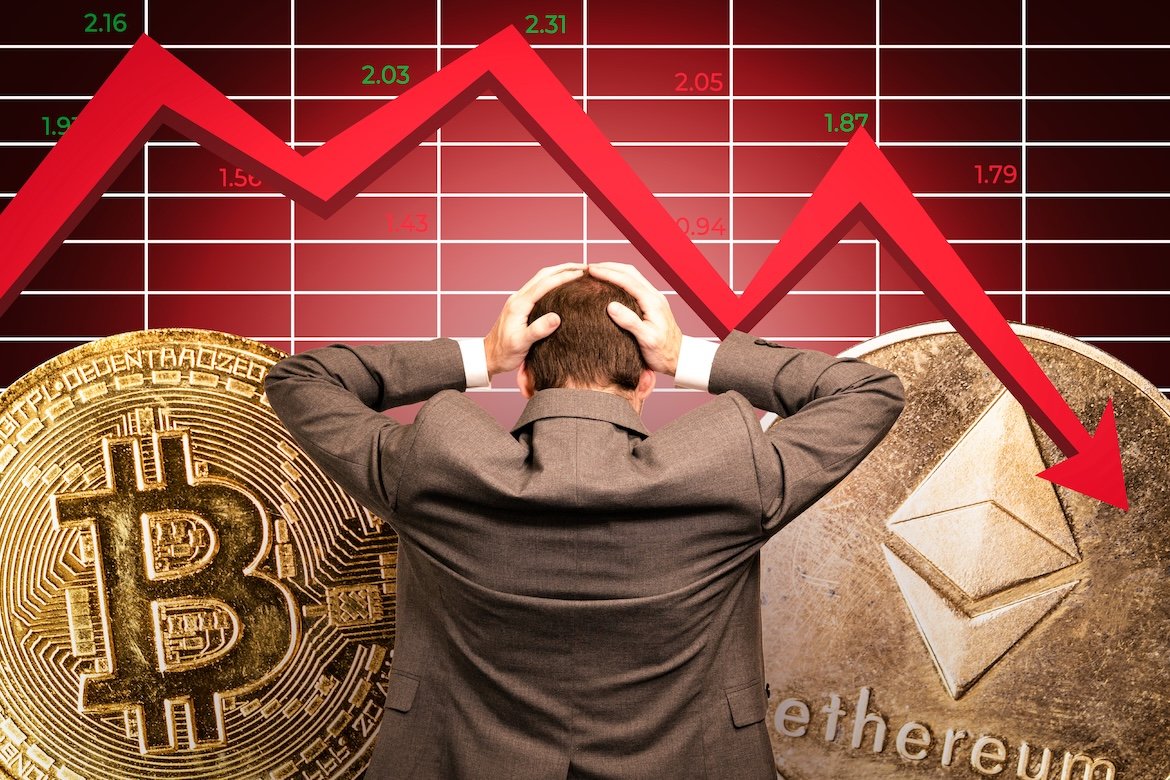
U.S. financial markets suffered another major blow as roughly $1 trillion in market capitalization was erased from equities in a single session, underscoring the growing strain across risk assets. The selloff was mirrored in digital markets, where the total cryptocurrency capitalization fell by approximately $330 billion on the day.
The losses were concentrated in technology stocks, many of which had been trading near or at record highs only weeks earlier. The sharp reversal has intensified concerns that the market is undergoing a deeper repricing rather than a short-lived correction.
The downturn also pushed cumulative losses across leading technology companies into the trillions, signaling a decisive shift in investor sentiment.
Tech leaders drive the equity decline
Several high-profile technology and crypto-linked stocks have suffered dramatic drawdowns from their recent peaks. Shares of Strategy have plunged about 80%, while Coinbase is down roughly 66%. Netflix has fallen 40%, Palantir 36%, and AMD around 27%.
Losses have also weighed heavily on mega-cap leaders. Microsoft and Broadcom are both down about 27% and 25% respectively, while Tesla has slipped roughly 20%. Nvidia, one of the biggest beneficiaries of the artificial intelligence boom, is down about 18%, and Meta has declined roughly 17% from its recent highs.
Together, the so-called “Magnificent Seven” technology stocks have now shed an estimated $3 trillion in combined market capitalization since their latest record levels, highlighting the scale of the reversal in some of the market’s most crowded trades.
Crypto adds to the pressure
The crypto market has moved in lockstep with equities during the selloff. Bitcoin and other major digital assets declined sharply, contributing to the $330 billion drop in total crypto market value. Analysts say the correlation reflects tightening liquidity and a broader move away from speculative assets.
As previously covered, periods of synchronized selling across equities and crypto often point to forced deleveraging rather than asset-specific news. Elevated volatility and margin pressures have amplified losses across both markets.
The combined equity and crypto drawdown underscores how quickly confidence has deteriorated after months of optimism driven by artificial intelligence enthusiasm and expectations of easier financial conditions.
What investors are watching next
The scale of the losses has prompted investors to reassess risk exposure, particularly in high-growth and technology-heavy portfolios. While some market participants argue that valuations had become stretched, others warn that continued volatility could trigger further selling if key support levels fail.
Attention is now turning to macroeconomic signals, central bank guidance, and corporate earnings for clues on whether markets can stabilize. Analysts caution that until volatility subsides and liquidity improves, downside risks may remain elevated.
For now, the message from markets is clear: the unwind in technology stocks and crypto has erased trillions in value, marking one of the most significant shifts in risk appetite in recent years.
Investor Michael Burry warned that U.S. financial markets and the broader economy are heading toward a collapse that may be impossible to contain. He also cautioned that bitcoin’s decline could trigger severe losses for companies holding large BTC positions.
By Sophia Reynolds | Edited by Oleg Petrenko
Published:
Updated:
Investor Michael Burry warned that U.S. financial markets and the wider economy are moving toward a collapse that may be impossible to stop. He also cautioned that a continued decline in bitcoin could inflict heavy losses on companies with large BTC holdings. Photo: Michael Burry / X
Michael Burry has issued a stark warning about the future of U.S. financial markets, saying the scale of underlying problems is now too large to be rescued. The investor, best known for predicting the 2008 housing crash, said both the U.S. economy and global markets are vulnerable to a sharp and potentially disorderly collapse.
Burry’s comments come amid rising volatility across equities, commodities, and digital assets, with investors increasingly questioning whether years of leverage and policy support have created systemic fragilities.
Why Burry sees markets at breaking point
According to Burry, the current market environment is defined by excessive risk-taking, distorted asset pricing, and a prolonged reliance on liquidity support. He argues that these factors have left markets highly exposed to shocks, with limited room for policymakers to intervene effectively.
As previously covered, Burry has repeatedly warned that prolonged periods of easy money can mask structural weaknesses, only for them to surface abruptly when conditions tighten. He now suggests that those vulnerabilities have reached a critical threshold.
Equity markets, while still near historic highs, may be underestimating downside risks, Burry argues. He believes that a reversal in risk appetite could cascade rapidly across asset classes, amplifying losses well beyond initial expectations.
Bitcoin seen as amplifier, not a hedge
Burry also singled out bitcoin as a growing source of risk rather than protection. He warned that further declines in Bitcoin could wipe out significant value at companies that hold large BTC positions on their balance sheets.
In his view, bitcoin has failed to function as a gold-like hedge during periods of stress. Instead, it has increasingly behaved like a high-volatility equity, moving in close correlation with the S&P 500 rather than offering diversification benefits.
That dynamic, Burry said, exposes aggressive bitcoin holders to severe balance-sheet pressure as prices fall. In extreme cases, continued declines could push highly exposed firms toward insolvency, potentially triggering broader market disruptions.
Implications for markets and investors
The warning underscores growing concerns about interconnected risks between crypto markets and traditional finance. As more public companies and funds gain exposure to digital assets, price shocks in bitcoin may no longer remain isolated within the crypto ecosystem.
For investors, Burry’s comments serve as a reminder that diversification assumptions may break down during periods of stress. Assets once viewed as hedges can become sources of contagion when leverage and correlation rise simultaneously.
While some market participants dismiss Burry’s outlook as overly pessimistic, his track record ensures his views continue to attract attention. Analysts note that even if a full-scale collapse does not materialize, heightened volatility and sharp repricing across assets remain plausible scenarios.
As markets navigate growing uncertainty, Burry’s message is clear: risks are accumulating beneath the surface, and the margin for error is shrinking rapidly.
The crypto market extended its sharp decline as Strategy added more bitcoin despite mounting losses, while forced liquidations accelerated across exchanges. Bitcoin’s drop below $70,000 triggered heavy unrealized losses and dragged crypto-linked stocks sharply lower.
By Benjamin Harper | Edited by Oleg Petrenko
Published:
Updated:
The crypto market shed $140 billion in a single day as Strategy added more bitcoin, liquidations surged to $2.5 billion, and MicroStrategy shares fell to their lowest levels since 2024. Photo: Jonathan Borba / Pexels
The cryptocurrency market suffered another severe setback as bitcoin slipped below $70,000, intensifying losses across major holders, exchanges, and crypto-linked equities. In a single day, the total crypto market shed roughly $140 billion in value, extending a broader downturn marked by forced liquidations and growing investor unease.
The decline came even as Strategy, the company chaired by outspoken bitcoin advocate Michael Saylor, continued to accumulate the cryptocurrency. Just three days after its bitcoin position showed losses exceeding $9.5 million, the firm purchased an additional 855 BTC for about $75.3 million.
Buying into weakness as losses mount
The latest purchase immediately pushed Strategy deeper into the red. As bitcoin fell below $75,000 shortly after the acquisition, the company’s bitcoin holdings swung to more than $900 million in unrealized losses, underscoring the risks of aggressive buying during a steep downtrend.
The pressure has spilled over into equity markets. Shares of MicroStrategy fell to their lowest level since September 2024, with the stock now down roughly 78% from its November 2024 peak. The company’s cumulative bitcoin position is approaching an unrealized loss of $3 billion, amplifying concerns about balance-sheet exposure amid sustained crypto weakness.
As previously covered, MicroStrategy’s stock has increasingly traded as a leveraged proxy for bitcoin, magnifying both gains and losses as the cryptocurrency swings.
Liquidations accelerate across the market
Market stress has been exacerbated by widespread forced liquidations. Over the past several days, leveraged long positions totaling approximately $2.5 billion have been liquidated across crypto markets, making it the tenth-largest liquidation event in the sector’s history, according to market data.
Traders have also pointed to on-chain activity at Binance, where large flows suggest repeated liquidation of bitcoin and ethereum positions in rapid succession. While the exact sources of the selling remain unclear, the visible scale and frequency of the transfers have reinforced bearish sentiment.
Ethereum has also come under heavy pressure, compounding losses across decentralized finance and altcoin markets as liquidity thins.
Losses spread to other major buyers
The downturn has not been limited to bitcoin-focused firms. Bitmine, the crypto company associated with investor Tom Lee, disclosed the purchase of an additional 41,788 ETH valued at roughly $97 million. Despite the acquisition, the firm is now showing unrealized losses of around $7 billion on its ethereum holdings, highlighting the scale of the market’s reversal.
Analysts say the current environment reflects a classic deleveraging cycle, where falling prices trigger margin calls, forcing further selling that overwhelms organic demand. The synchronized losses across crypto assets and related equities suggest that confidence remains fragile.
For investors, the message from the market is stark. Continued buying by large players has so far failed to stabilize prices, while liquidation pressure continues to dominate short-term price action. Until leverage is flushed out and volatility subsides, analysts warn that crypto markets may remain vulnerable to further sharp swings — even as long-term believers double down on their positions.
Bitcoin has fallen more than $53,000 over the past 120 days, erasing over $1.1 trillion in market value and sliding deeper into a bear market. The decline stands in stark contrast to U.S. stock indices, which remain close to record highs.
By Daniel Wright | Edited by Oleg Petrenko
Published:
Updated:
Bitcoin has dropped by more than $53,000 over the past 120 days, wiping out over $1.1 trillion in market value and sinking further into a bear market. The selloff sharply contrasts with U.S. stock indices, which continue to trade near record highs. Photo: Karolina Grabowska / Pexels
Bitcoin has suffered a dramatic selloff over the past 120 days, plunging more than $53,000 from its October 2025 peak of $126,000 to a new yearly low below $73,000. The decline has wiped out over $1.1 trillion in market capitalization, leaving bitcoin roughly 42% below its all-time high.
The move has cemented bitcoin’s position in a deep bear market, even as traditional financial markets continue to show resilience. The sharp contrast has intensified debate among investors over whether the crypto downturn reflects market manipulation or deeper structural stress behind the scenes.
Why crypto is diverging from U.S. equities
While bitcoin and the broader crypto market have been sliding, U.S. stock indices remain close to record levels. The S&P 500 is just 1.5% below its all-time high, the Nasdaq sits 3.6% lower, and the Russell index is down 4.2% from its peak.
By comparison, crypto losses are far more severe. Bitcoin is down 42% from its record high, while Ethereum has fallen roughly 56%. Analysts say the divergence highlights how differently investors are treating digital assets compared with equities.
As previously covered, cryptocurrencies tend to be more sensitive to tightening liquidity, leverage, and shifts in speculative appetite. With fewer fundamental anchors than equities, crypto prices can unravel rapidly once confidence weakens.
Some market commentators argue that the scale of the decline suggests more than normal risk-off behavior. On social media, analysts have described the situation as either an “insane level of manipulation” or evidence that “something very serious has happened behind the scenes” in the crypto ecosystem.
What the bear market signals for investors
The depth of the selloff has raised concerns about broader confidence in digital assets. Despite growing institutional involvement over recent years, crypto markets remain vulnerable to sharp drawdowns when sentiment turns and leverage unwinds.
For investors, the comparison with equity markets is particularly stark. While U.S. stocks continue to be supported by earnings, buybacks, and expectations of policy stability, crypto markets lack similar structural support during downturns.
The sustained weakness in both bitcoin and ethereum suggests that this is not a single-asset correction but a market-wide repricing. Analysts note that prolonged periods of underperformance often force long-term holders to reassess exposure, further pressuring prices.
At the same time, the extreme divergence could eventually attract contrarian interest if selling exhausts itself. Historically, deep bear markets in crypto have been followed by periods of sharp recovery, though timing remains highly uncertain.
For now, the message from markets is clear: while traditional assets remain near historic highs, cryptocurrencies are facing one of their most challenging phases in years. Whether the cause is manipulation, hidden stress, or a fundamental reset, the crypto market’s struggle has become impossible to ignore.
SpaceX has officially announced the acquisition of Elon Musk’s artificial intelligence company xAI, framing the move as a step toward accelerating humanity’s technological future. The deal brings together space infrastructure and AI development under a single corporate umbrella.
By Daniel Wright | Edited by Oleg Petrenko
Published:
Updated:
SpaceX has formally announced the acquisition of Elon Musk’s artificial intelligence company xAI, describing the move as a way to accelerate humanity’s technological progress. The deal combines space infrastructure and AI development under a single corporate structure. Photo: Steve Jurvetson / wikimedia
SpaceX has officially announced the acquisition of xAI, formalizing a long-rumored move to combine space infrastructure with advanced artificial intelligence capabilities. The company said the merger is intended to accelerate what it described as “the future of humanity,” signaling an ambitious expansion beyond traditional aerospace operations.
The announcement confirms that xAI will be fully integrated into SpaceX’s broader ecosystem, which includes launch services, satellite communications, and data-intensive space infrastructure. While financial terms were not disclosed, the deal represents one of the most consequential technology acquisitions in recent years.
The move comes as SpaceX prepares for its next phase of growth and follows months of speculation about closer integration between Elon Musk’s ventures.
Why SpaceX is bringing xAI in-house
SpaceX said the acquisition is designed to tightly link artificial intelligence development with its rapidly expanding infrastructure in orbit. Through its Starlink satellite network, SpaceX controls one of the world’s largest global data and communications platforms, generating vast volumes of real-time information.
As previously covered, xAI was founded to develop large-scale AI models with a focus on reasoning, data interpretation, and alignment. Folding xAI into SpaceX allows those capabilities to be deployed directly across satellite operations, autonomous systems, and future space missions.
Company executives described the merger as a way to remove organizational barriers between hardware, software, and intelligence layers. By unifying launch systems, satellites, and AI under one structure, SpaceX aims to accelerate development cycles and reduce dependence on external partners.
The acquisition also reflects Elon Musk’s broader strategy of vertical integration, concentrating critical technologies within a single corporate framework.
What the deal means for markets and technology
The SpaceX–xAI combination creates a unique hybrid company operating at the intersection of aerospace, telecommunications, and artificial intelligence. Analysts say the move could significantly reshape how investors and regulators view SpaceX, particularly as the company moves closer to a potential public listing.
By embedding AI directly into its infrastructure, SpaceX could unlock new applications ranging from autonomous satellite management to advanced data services for governments and enterprises. The deal also strengthens SpaceX’s position relative to competitors that rely on third-party AI providers.
From a market perspective, the acquisition underscores the accelerating convergence of AI and physical infrastructure. As capital flows increasingly favor platforms that control both data generation and intelligence, SpaceX’s integrated model could command a premium valuation.
However, the merger also raises questions around governance, transparency, and regulatory oversight. Combining two capital-intensive businesses with global reach may draw increased scrutiny, particularly given SpaceX’s role in national security and critical communications.
Looking ahead, analysts expect the integration of xAI to play a central role in SpaceX’s long-term strategy. Whether powering next-generation satellites, autonomous spacecraft, or AI-driven services on Earth, the acquisition positions SpaceX as more than a space company — but as a foundational technology platform shaping the next phase of global infrastructure.
The cryptocurrency market has entered a sharp downturn, with bitcoin falling below $75,000 and roughly $700 billion wiped out in two weeks. Selling pressure is spreading across commodities, equities, and digital assets, fueling fears of deeper losses.
By David Sinclair | Edited by Oleg Petrenko
Published:
Updated:
The cryptocurrency market has slid into a sharp downturn, with bitcoin dropping below $75,000 and about $700 billion erased in just two weeks. The selloff is spilling over into commodities, equities, and other digital assets, raising concerns about further losses ahead. Photo: Jonathan Borba / Pexels
The cryptocurrency market is undergoing a steep selloff, with Bitcoin sliding below $75,000 and extending losses to its lowest level since April 2025. Over the past two weeks alone, an estimated $700 billion has evaporated from the total crypto market, underscoring a rapid deterioration in investor sentiment.
The decline has not been confined to digital assets. Pressure has intensified across multiple asset classes, signaling a broader risk-off environment. Bitcoin’s drop has coincided with sharp losses in commodities, equities, and alternative assets, amplifying concerns that markets are entering a period of sustained instability.
On European trading venues, bitcoin briefly fell below €64,000 on Coinbase, highlighting the global scale of the selloff.
Why selling pressure is spreading
Analysts point to tightening financial conditions, extreme positioning, and cascading liquidations as key drivers behind the current downturn. As previously covered, periods of elevated leverage tend to produce synchronized selloffs once prices begin to slide, dragging down assets that previously moved independently.
The breadth of recent losses is striking. Over the latest stretch, natural gas has dropped about 15.5%, Ethereum is down roughly 10.5%, silver has fallen 8.0%, gold 5.5%, and bitcoin itself about 5.5%. Oil prices, measured by WTI crude, have declined 4.5%, while major equity indices have also moved lower, with the Nasdaq 100 down 1.5% and the S&P 500 off 1.2%.
Market commentary has turned increasingly cautious. Television personality Jim Cramer said earlier this week that at around $77,000 he expected buyers to step in aggressively and push bitcoin back toward $82,000. Instead, prices continued to fall, suggesting that dip-buying appetite may be weakening.
What markets are signaling next
Analysts say the current environment is marked by historically high volatility, particularly in commodity markets, where price swings are feeding back into broader risk sentiment. Crypto markets, often the most sensitive to shifts in liquidity, have borne the brunt of the adjustment.
Prediction markets are reflecting growing pessimism. On Polymarket, traders currently assign a higher probability to bitcoin falling below $45,000 than rebounding to $120,000, a notable reversal from bullish expectations seen earlier in the year.
For investors, the synchronized decline across assets suggests that diversification benefits are temporarily breaking down. When commodities, equities, and crypto sell off together, it often reflects forced deleveraging rather than asset-specific fundamentals.
Looking ahead, analysts warn that volatility is likely to remain elevated as markets search for a new equilibrium. Bitcoin’s ability to stabilize above key technical levels will be closely watched, as a failure to do so could trigger further liquidations.
While long-term adoption narratives around crypto remain intact, the near-term outlook has become increasingly fragile. The past two weeks have demonstrated how quickly confidence can unwind and how digital assets remain deeply exposed to shifts in global risk appetite.
The precious metals market suffered an unprecedented selloff as gold and silver lost more than $10 trillion in market value in a single day. Extreme volatility pushed gold below $4,400 per ounce and forced Thailand to temporarily halt gold futures trading.
By Nathan Cole | Edited by Oleg Petrenko
Published:
Updated:
The precious metals market was hit by an unprecedented selloff, with gold and silver shedding more than $10 trillion in market value in a single day. Violent volatility drove gold below $4,400 per ounce and prompted Thailand to temporarily suspend gold futures trading. Photo: Kindel Media / Pexels
The global precious metals market experienced one of the most violent selloffs in history, with gold and silver losing a combined $4.02 trillion in market capitalization in a single trading day, according to analysts. The collapse extended a brutal three-day stretch that has already wiped more than $10 trillion from the sector, underscoring the scale of the shock hitting what are traditionally considered safe-haven assets.
Gold prices fell sharply below $4,400 per ounce, while silver dropped under $71.5, breaching multiple technical support levels in rapid succession. The selloff intensified as liquidity thinned and volatility surged across futures and spot markets worldwide.
Spot gold was hit particularly hard, sliding below $4,400 per ounce for the first time since January 9 and closing the day down 7.9%, one of its steepest daily declines on record.
What triggered the historic collapse
Analysts point to a combination of forced liquidations, extreme leverage, and crowded positioning following months of relentless gains in precious metals. As previously covered, gold and silver had surged to record levels amid currency weakness, central bank buying, and strong speculative inflows, leaving markets highly vulnerable to abrupt reversals.
Once prices broke below key thresholds, margin calls and algorithmic selling accelerated the decline. Futures markets amplified the move as traders rushed to reduce exposure, while physical markets struggled to absorb the sudden wave of selling pressure.
Silver’s losses were compounded by its higher volatility and thinner liquidity compared with gold. The metal’s dual role as both an industrial input and a monetary asset made it especially sensitive to shifts in risk sentiment, exacerbating intraday swings.
Market fallout and emergency measures
The scale of the volatility prompted intervention in some markets. In Thailand, authorities temporarily suspended online trading of gold futures on the Thailand Futures Exchange (TFEX) as price swings reached destabilizing levels. The move highlighted growing concerns about orderly market functioning amid unprecedented turbulence.
For investors, the episode has shattered assumptions about the stability of precious metals during periods of stress. While gold and silver are often viewed as defensive assets, the past three days have shown that extreme positioning and leverage can turn even safe havens into sources of systemic risk.
The combined $10 trillion loss over three days rivals some of the largest market drawdowns in modern financial history, placing the precious metals rout alongside major equity and credit crises in terms of scale.
Looking ahead, analysts expect volatility to remain elevated as markets attempt to find a new equilibrium. Attention will focus on futures positioning, margin requirements, and whether physical demand can re-emerge at lower price levels.
While long-term demand drivers such as reserve diversification and inflation hedging remain intact, the current episode serves as a stark reminder that no asset is immune to violent repricing when market structure breaks down. Analysts say this collapse will likely be studied for years as a case study in how rapidly sentiment and liquidity can reverse — even in the oldest markets in the world.
OpenAI is quietly developing a new social network and considering biometric identity verification to combat bots, according to Forbes. The platform may use Worldcoin’s iris-scanning Orbs or similar technologies to ensure users are real people.
By Benjamin Harper | Edited by Oleg Petrenko
Published:
Updated:
OpenAI is quietly working on a new social network and is weighing biometric identity verification as a way to curb bots, according to Forbes. The platform could rely on Worldcoin’s iris-scanning Orbs or similar tools to confirm that users are real people. Photo: Focal Foto / Wikimedia
OpenAI is developing a new social network and weighing the use of biometric identity verification to ensure that only real humans can join, according to Forbes. The initiative reflects growing concern over bot activity and synthetic accounts that increasingly dominate online platforms.
People familiar with the project say OpenAI is exploring tools such as the iris-scanning Orbs developed by Worldcoin, as well as other biometric methods including facial recognition. The goal is to create a “humans-only” network that sharply limits automated accounts and AI-generated personas.
Why OpenAI is targeting bots and fake users
The rise of generative AI has dramatically lowered the cost of creating convincing fake profiles, overwhelming social platforms with automated engagement, spam, and misinformation. Analysts say the problem has reached a tipping point, with bots now shaping discourse rather than merely disrupting it.
OpenAI’s leadership has reportedly grown concerned that existing moderation tools are no longer sufficient. As previously covered, AI systems are now capable of generating realistic text, images, and even video at scale, making traditional bot-detection techniques increasingly ineffective.
By tying accounts to biometric identifiers, OpenAI aims to establish a strong proof-of-personhood system. Worldcoin’s Orb technology scans a user’s iris to create a unique digital identity, while alternative approaches could rely on device-based biometrics such as Apple’s Face ID.
Supporters argue that such systems could restore trust and authenticity to online interactions, particularly as AI-generated content becomes indistinguishable from human output.
Implications for privacy, platforms, and tech regulation
The concept of a biometric social network raises immediate privacy and regulatory questions. While OpenAI has emphasized that any biometric data would be encrypted and anonymized, critics warn that centralized identity systems could introduce new risks if misused or breached.
From a market perspective, the move would place OpenAI in direct competition with established social media platforms struggling to contain bots and fake engagement. A verified-only network could appeal to users seeking more credible conversations, as well as to advertisers wary of paying for artificial traffic.
For regulators, the project may intensify debates around digital identity, data protection, and the role of private companies in managing verification infrastructure. Governments globally are already grappling with how to regulate biometric data and AI-driven identity systems.
If successful, OpenAI’s approach could redefine how online platforms verify users in an era dominated by artificial intelligence. Rather than relying on moderation after the fact, biometric verification would attempt to prevent synthetic participation at the entry point.
Whether users are willing to trade anonymity for authenticity remains an open question. But as bot-driven activity continues to erode trust across the internet, OpenAI’s experiment signals a growing belief that proof of humanity may become a core feature of the next generation of social platforms.