Key Notes
- SPCX reached $176.41 during October 6 trading before easing, extending its recovery above $175 while remaining below its earlier peak.
- A $175 share price implies an equity value of approximately $2.31 trillion using SpaceX’s latest disclosed Class A and Class B share count.
- Starlink remains the largest revenue contributor, while substantial AI investment puts profitability and future cash returns in focus.
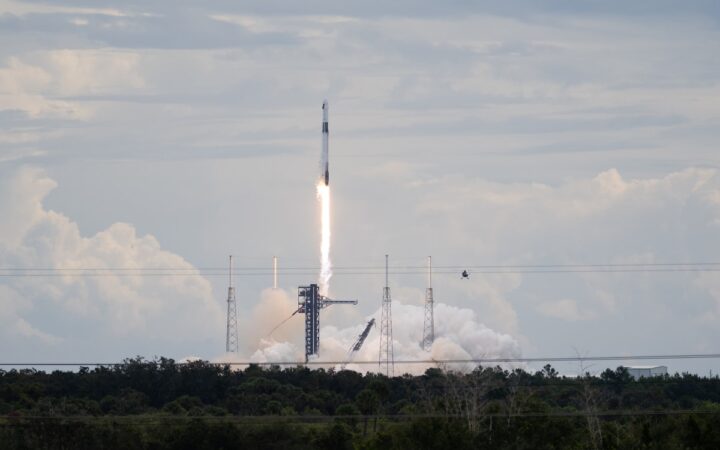
Space Exploration Technologies Corp. (NASDAQ: SPCX), Elon Musk’s SpaceX, climbed above $175 during Tuesday’s trading, extending its recovery and lifting its estimated equity value above $2.3 trillion. The advance puts SPCX’s valuation back in focus as investors weigh Starlink’s expanding revenue against heavy spending on artificial intelligence and next-generation launch systems.
Nasdaq’s market data showed a session high of $176.41 on October 6. At 10:02 a.m. Eastern time, shares were trading around $174.31, up 1.88% from the previous close of $171.09. The high represented a gain of approximately 3.1%. These are intraday readings, rather than the day’s closing result.
Tuesday’s move follows the earlier rally MarketSpeaker covered on Monday, when SPCX moved above $160. The higher trading level reinforces the need to distinguish the stock’s market value from forecasts about the eventual scale of SpaceX’s commercial businesses.
What $175 Means for SpaceX’s Market Value
SpaceX’s latest quarterly filing disclosed approximately 13.18 billion Class A and Class B shares outstanding as of July 28. Multiplying that count by $175 gives an estimated market capitalization of $2.31 trillion. At Tuesday’s observed high of $176.41, the same calculation produces approximately $2.33 trillion.
These estimates use the disclosed share count, rather than assuming that every market-data provider uses the same denominator. Later share issuance or different treatment of share classes can change displayed totals. Market capitalization measures the market value of shareholders’ equity; it is separate from the cash available to finance satellites, rockets or data centers.
The $175 level is approximately 29.6% above SpaceX’s $135 IPO price. Trading began in June under SPCX. The recovery still leaves the shares below the $225.64 high in Nasdaq’s displayed 52-week range, placing the advance within a trading history that has included significant reversals.
MarketSpeaker’s July coverage of the post-IPO decline documented the stock’s retreat below $140 after its early surge. The latest move represents a recovery from that period, rather than a new all-time high.
Starlink Anchors the Revenue Base
The company’s August 4 earnings update reported second-quarter revenue of $7.81 billion, up 92% from a year earlier, alongside a net loss of $541 million. Those results cover the quarter ended June 30 and provide a financial reference point for evaluating the stock’s latest valuation.
Connectivity, including Starlink, generated $4.29 billion of revenue and $1.66 billion of operating income. AI contributed $2.56 billion of revenue but recorded a $1.26 billion operating loss, while the Space segment generated $962 million of revenue. The mix gives SPCX shareholders exposure to several businesses with different profitability and investment requirements.
Starlink ended June with 12 million subscriber service lines, twice the year-earlier level. Monthly average revenue per subscriber was $66, down from $85 a year earlier. Subscriber growth therefore needs to be assessed alongside pricing and customer mix, rather than treated as a complete measure of financial progress.
AI Investment Adds a Demanding Cash Test
Second-quarter capital expenditure reached $18.37 billion, including $15.83 billion in AI. The scale of that spending makes future utilization and cash returns significant to the investment case. Rapid revenue growth can coexist with heavy funding requirements when a business is building computing infrastructure ahead of the earnings it hopes to generate.
SpaceX reported about $100 billion in cash, cash equivalents and marketable securities at the end of June. That provides investment capacity, but shareholders still need evidence that new infrastructure can earn sustainable returns. A higher share price increases the market value of existing equity without itself producing additional operating cash.
The stock also retains support from optimistic analyst expectations. Morgan Stanley (NYSE: MS) reiterated an Overweight rating and a $300 target in Monday’s research coverage. Analyst Adam Jonas identified a potential Starship catch on Flight 15, expected in late October or early November, as an important prospective catalyst.
That target is an analyst forecast, and the mission timing and proposed catch remain expectations. Neither establishes a completed engineering achievement or guarantees a particular return for SPCX shareholders.
Starship Progress Shapes the Longer-Term Case
SpaceX’s September 28 mission update confirmed that Starship Flight 14 reached orbit and deployed 26 Starlink V3 satellites. The company established contact with all of them, with checkouts and orbit-raising required before customer service begins. An engine issue led controllers to shorten the orbital phase before a Pacific splashdown.
MarketSpeaker’s Citi analysis examined a separate long-term valuation scenario tied to Starship’s commercial scale. Such scenarios depend on repeatable launches, efficient reuse and profitable demand for added satellite capacity, rather than payload delivery alone.
Its orbital computing coverage also examined experimental processor deployments and the unresolved economics of larger systems. For SPCX, the next financial evidence will come from operating disclosures showing whether connectivity growth and new computing capacity can support earnings and cash generation at a scale consistent with the valuation.