Key Notes
- OKX chief executive Star Xu named Standard Chartered, Circle and Ripple among its equity investors at the company’s October 6 conference in Singapore.
- ICE’s March investment valued OKX at $25 billion, providing the disclosed valuation reference while the newer investor stakes and transaction sizes remain unspecified.
- Existing bank-custody and USDC partnerships give OKX an institutional foundation as it expands toward tokenized markets, payments and broader financial services.
OKX founder and chief executive Star Xu named Standard Chartered Bank, Circle and Ripple among the cryptocurrency exchange’s equity investors at its October 6 conference in Singapore, highlighting a shareholder base that increasingly connects digital assets with mainstream finance.
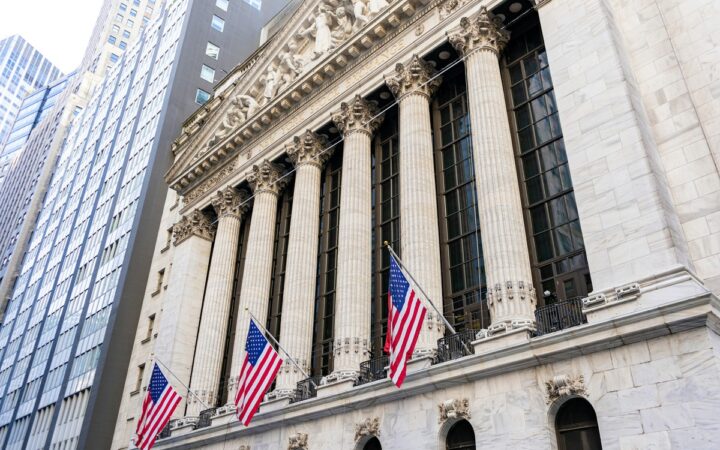
The disclosure follows an investment by Intercontinental Exchange Inc. (NYSE: ICE), the owner of the New York Stock Exchange, that valued OKX at $25 billion in March. That valuation was disclosed by ICE at the time, rather than established for the first time at Tuesday’s event.
Xu described the institutional investors in his opening address at OKX NOW, according to a published transcript carried by TechFlow. The account did not specify the size, ownership percentages or closing dates of the Standard Chartered, Circle and Ripple investments.
A Shareholder Base Across Banking and Digital Payments
Standard Chartered PLC (LSE: STAN) brings a global banking group into the picture, while Circle Internet Group Inc. (NYSE: CRCL) issues the USDC stablecoin. Ripple operates in blockchain payments and related financial infrastructure.
Alongside ICE, those businesses cover several layers of the financial system: exchange operations, custody, banking relationships and digital settlement assets. Their involvement gives OKX a broader institutional network as it develops services beyond cryptocurrency trading.
Xu outlined a long-term platform spanning custody, payments, investing and wealth management, with AI supporting more personalized financial services. These are strategic ambitions, rather than confirmation that every proposed service is available in every jurisdiction.
The distinction between a commercial partnership and an equity investment also matters. A service agreement connects products or infrastructure; a shareholding gives the investor an economic interest in the company itself. Several of the relationships described by Xu already have an operating history.
ICE’s Investment Established the $25 Billion Reference
ICE’s March 5 announcement paired a minority investment with a board seat and plans to connect OKX’s customers with its regulated markets. The companies did not disclose the investment terms.
Bloomberg reported in March that ICE invested roughly $200 million, citing people familiar with the matter. Representatives of ICE and OKX declined to comment on that amount.
The $25 billion valuation therefore describes the value attributed to OKX in a private transaction. It is not the amount of money the exchange raised, the value of customer assets held on its platform or a publicly traded market capitalization.
For investors in the listed backers, the financial impact depends on their ownership interests and the performance of the investment. ICE said in March that its minority position was not expected to materially affect its 2026 financial results or capital-return plans.
Standard Chartered Already Provides a Custody Connection
The banking relationship has a practical application in collateral management. In April, Standard Chartered, OKX and BlackRock Inc. (NYSE: BLK) launched a framework allowing institutional clients to use the BUIDL tokenized Treasury fund as trading collateral.
Under the arrangement, eligible clients can keep the fund tokens in regulated custody at Standard Chartered while using their value for trading on OKX Middle East. The announcement also described an on-exchange route for using BUIDL as yield-bearing margin collateral.
BUIDL invests in cash, Treasury bills and repurchase agreements. Its use as collateral can let an investor retain exposure to those income-producing assets while supporting a trading position, instead of leaving all margin in unproductive cash.
Keeping custody separate from execution changes where assets sit and which institution safeguards them. It does not eliminate the market risk of the trading position or the need to meet margin requirements.
Circle’s Existing Partnership Targets USDC Liquidity
Circle and OKX announced their USDC partnership in July 2025. The agreement provided for one-to-one conversions between dollars and USDC across OKX products, alongside simpler funding and withdrawal connections through shared banking partners.
For an exchange, those connections can reduce the work required to move between conventional money and a stablecoin used for trading or payments. For Circle, exchange distribution gives USDC access to a larger pool of potential users.
Equity participation adds another connection between the businesses, but the disclosed investor names alone do not establish a new product launch, exclusive distribution agreement or guaranteed increase in stablecoin demand.
Tokenized Markets Provide the Next Commercial Test
ICE’s original agreement envisaged crypto futures based on OKX price data and access to tokenized equities, subject to regulatory approval. MarketSpeaker’s OKXICE coverage examines the proposed venue’s subsequent filing for trading in 63 tokenized stocks.
The wider infrastructure effort also extends beyond exchanges. Our banking infrastructure coverage looks at how financial institutions are testing blockchain applications before integrating them into their services.
For OKX, the commercial test is whether these relationships produce sustained activity in trading, payments and institutional services. More detailed investment disclosures would clarify the capital committed by each backer, while product availability and customer adoption will show how far the broader platform strategy has progressed.