Key Notes
- The Nasdaq Composite gained about 0.5% and reached another intraday record, while the advance still required confirmation at the closing bell.
- Chipmakers’ latest results show rapid revenue growth, providing an earnings backdrop for technology leadership without guaranteeing future stock returns.
- The Federal Reserve’s September meeting minutes arrive October 7, offering policy context as investors judge earnings growth against persistently high financing costs.
The S&P 500 and Nasdaq Composite reached fresh intraday records on Tuesday, October 6, as semiconductor stocks advanced and falling oil prices and Treasury yields eased some of the pressure on Wall Street.
In CNBC’s 9:40 a.m. Eastern market update, both indexes gained about 0.5%. These were early-session readings, rather than closing returns.
The gains put earnings growth and financing costs back at the center of the market’s investment debate. A more favorable morning in bonds and energy offered relief, while the companies driving technology demand still faced the test of converting that demand into sustained profits.
Semiconductors Lead, With Earnings Behind the AI Trade
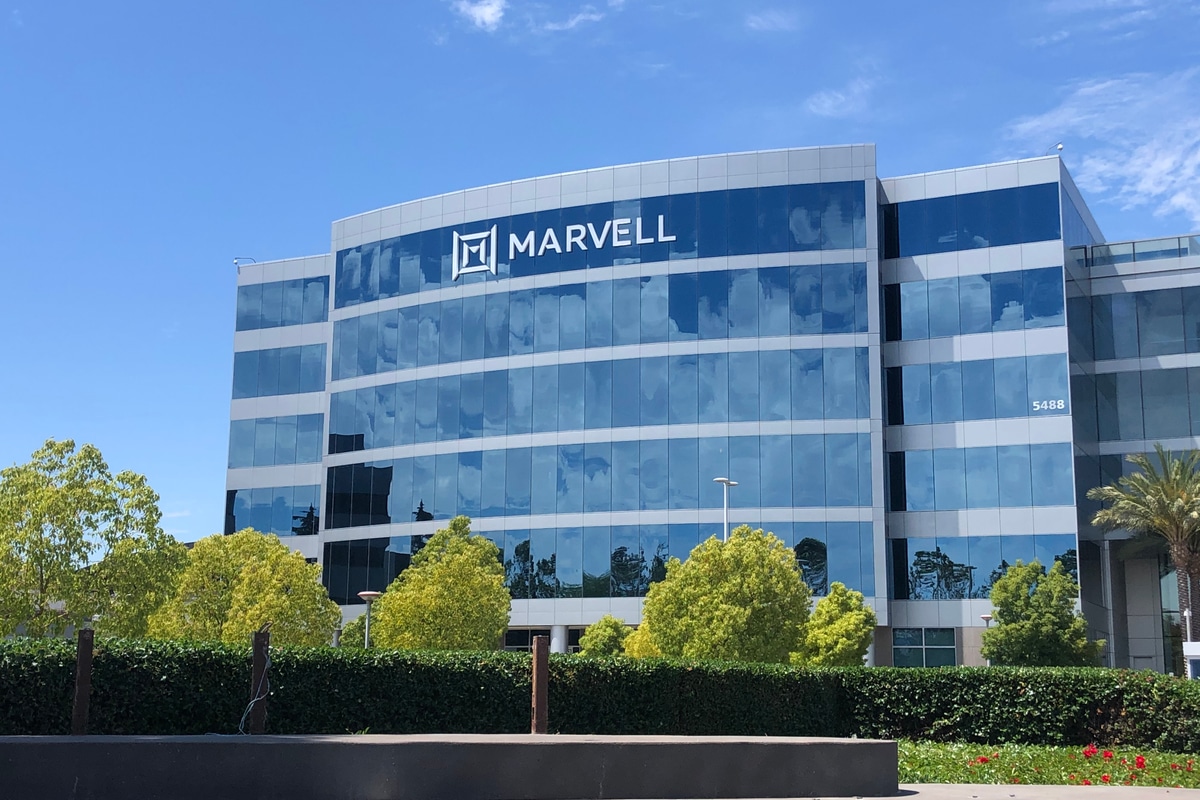
Marvell Technology (NASDAQ: MRVL) rose about 7%, while Nvidia (NASDAQ: NVDA) and Broadcom (NASDAQ: AVGO) gained around 1% each in the same report.
The rally has a measurable earnings backdrop. Marvell’s August second-quarter results for fiscal 2027 showed revenue of $2.739 billion, up 37% from a year earlier, with data-center revenue growth of 46%. Management attributed that expansion to strong demand across its data-center portfolio.
Nvidia’s quarterly filing reported revenue of $96.22 billion for the three months ended July 26, compared with $46.74 billion a year earlier. Those are reported sales, providing a financial reference point beyond expectations about future AI adoption.
Nvidia reported GAAP net income of $59.69 billion, compared with $26.42 billion a year earlier. Revenue growth and profit growth are different measures; the latter also reflects costs, tax and other income, which matter when assessing the earnings supporting an index rally.
Broadcom’s September earnings release put AI semiconductor revenue at $16.7 billion, up 221% year over year. It forecast $21.7 billion for the following quarter; that figure remains guidance, rather than a completed result.
These figures help explain why computing suppliers remain central to the equity story. They do not establish a fair value for each stock or identify the cause of every intraday move. The next earnings reports will show whether growth continues at a pace consistent with investors’ expectations.
Lower Yields Offer Relief After the Bond Selloff
The 10-year Treasury yield eased to about 5.29%.
The retreat followed the pressure documented in MarketSpeaker’s Treasury coverage, when long-term yields reached fresh highs dating back to 2002 on Monday. Tuesday’s move therefore represented a respite from an elevated starting point, rather than a return to low borrowing costs.
Bond prices and yields move in opposite directions. The SEC’s Investor.gov explains interest-rate risk: when newly issued debt offers more attractive interest payments, an older fixed-rate bond may need to trade at a discount.
For stocks, a lower Treasury yield can reduce the return investors demand when valuing future cash flows. That relationship is especially relevant for businesses whose investment case depends on profits expected several years ahead. Earnings estimates, credit conditions and risk appetite also influence valuations.
The distinction matters for companies refinancing debt. Their borrowing rate combines a government benchmark with compensation for company-specific risk, so a Treasury rally alone does not guarantee that every business can borrow more cheaply.
Oil’s Retreat Changes the Cost Picture
Brent and West Texas Intermediate fell roughly 2%, to around $98 and $87 a barrel respectively.
Lower crude prices can help fuel-intensive businesses and reduce pressure on household budgets. The effect on gasoline, aviation fuel and diesel depends on refining, distribution, taxes and the timing of purchases. A change in crude futures is therefore an early cost signal, rather than an immediate reduction in every bill.
The supply backdrop remains unsettled. MarketSpeaker’s oil inventory coverage examined the warning that depleted stocks could require a prolonged rebuilding period. A lower daily price can coexist with concerns about the market’s capacity to absorb another interruption.
Index Records Need a Check on Market Breadth
New highs measure the performance of an index, rather than the experience of every company in it. S&P Dow Jones Indices describes the S&P 500 as a large-cap benchmark covering approximately 80% of available market capitalization.
The index uses float-adjusted market-capitalization weights, giving larger companies more influence. Nasdaq’s Composite overview likewise describes a market-cap-weighted measure. Strong gains among a few heavyweights can consequently lift either benchmark without matching advances across all its constituents.
MarketSpeaker’s previous session coverage examined technology leadership despite rising yields. The latest advance adds bond-market relief to that picture. Whether participation expands across sectors will help distinguish a broader rally from another increase concentrated in its largest names.
Fed Minutes Provide the Next Policy Check
The Federal Reserve’s October calendar schedules minutes from its September 15–16 meeting for Wednesday, October 7, at 2 p.m. Eastern. The next rate-setting meeting takes place on October 27–28.
The minutes will describe the earlier policy discussion. They will not constitute a new rate decision or include every development since that meeting. For the current rally, the immediate tests are whether the records hold through the close, bond-market relief persists and earnings expectations remain supported by companies’ results.