
Key Notes
- Moonshot AI is targeting a Hong Kong IPO in the first quarter of 2027, with a potential fundraising target of up to $5 billion.
- Its latest private round reportedly valued the Kimi developer at about $50 billion, ahead of a separate public-market pricing process.
- Investors will weigh revenue growth against operating costs as Hong Kong attracts more AI developers and infrastructure businesses.
Moonshot AI is targeting a Hong Kong initial public offering in the first quarter of 2027 after completing its final private funding round at a valuation of about $50 billion, Bloomberg reported on October 6, citing people familiar with the matter.
The Chinese developer behind Kimi is considering raising up to $5 billion through the listing. Preliminary investor meetings could begin this month, according to the report.
The proposed offering would move Moonshot from private fundraising toward a public-market assessment of its business. The IPO size and timing remain under discussion.
A Private Valuation Sets the Starting Point
The reported $50 billion figure comes from a private financing transaction. It provides a reference for the business’s value, but does not establish the price at which IPO investors will buy shares or the market capitalization after trading begins.
Those outcomes depend on the final offer price, share count and transaction structure. An offering can include newly issued shares that fund the company, shares sold by existing holders, or a combination of both. The reported fundraising target alone does not disclose that split.
For the same reason, dividing the proposed $5 billion raise by the private valuation would not establish the stake offered to public investors. The definitive terms will matter more than that headline comparison.
Revenue Growth Becomes a Valuation Test
Bloomberg also reported that Moonshot’s annual recurring revenue is currently about $1 billion and could reach $2 billion by December. Those figures describe a current run rate and a forecast, respectively.
ARR annualizes recurring business at a particular point in time. It should not be read as revenue already earned over a completed financial year. A rapid increase can signal commercial momentum while leaving profitability, customer retention and cash requirements unresolved.
As a simple comparison, a $50 billion valuation is approximately 50 times a $1 billion annualized revenue run rate, or 25 times the projected $2 billion figure. Those calculations depend on the reported numbers and are not multiples of audited annual sales.
The difference shows how much continued expansion could matter to the investment case. A prospectus would allow investors to examine recognized revenue, operating losses and the cost of serving customers alongside model performance.
Kimi Gives Moonshot a Product Platform
Moonshot’s own Kimi K3 announcement describes a model built for coding, knowledge work and reasoning, with native visual understanding and a context window of one million tokens. It is available through the company’s website, desktop software, coding tools and API.
That distribution gives Moonshot several ways to reach users: direct subscriptions, workplace applications and access for developers building their own services. Model adoption can therefore support different revenue streams, although usage does not by itself reveal the margin earned on each customer.
The company’s July 27 release made the model weights and supporting infrastructure available. Open weights allow organizations to deploy the model themselves, subject to its license, rather than using only Moonshot’s hosted service.
This creates a commercial trade-off. Wider deployment can expand an ecosystem around Kimi, while self-hosted use does not automatically generate subscription or API revenue for Moonshot. Public-market investors will need to assess how product reach translates into paid demand.
Hong Kong’s AI IPO Market Provides the Backdrop
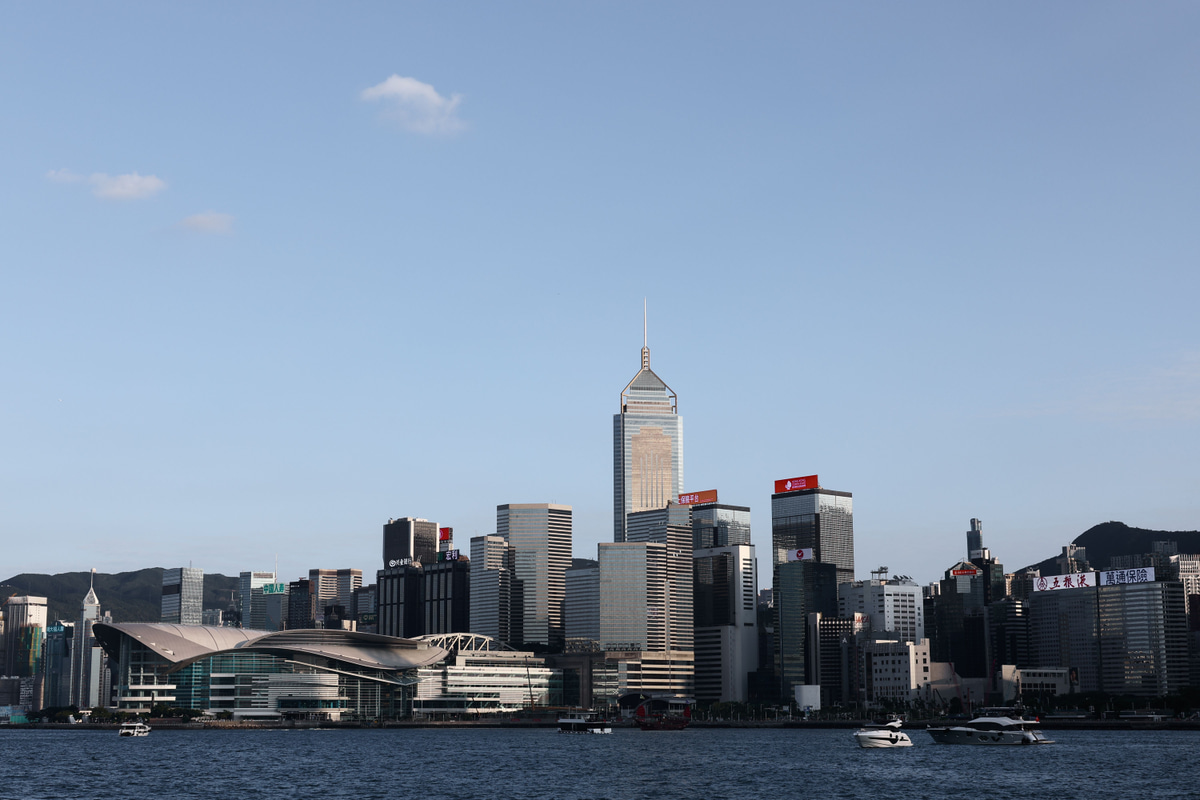
Hong Kong has already become a significant fundraising venue for businesses across the AI supply chain. In its June market review, Hong Kong Exchanges and Clearing Ltd. (HKEX: 0388) said AI-related issuers had raised HK$97.9 billion from the start of December through the end of May, accounting for roughly 55% of total IPO proceeds over that period.
The exchange described a market spanning model developers, applications, chips and infrastructure. That breadth gives investors more businesses to compare, although companies selling computing hardware and companies selling AI services have different financial models.
HKEX also highlighted Chapter 18C, which provides a listing route for specialist technology companies that cannot meet traditional profit, revenue or cash-flow requirements, alongside confidential filing options for eligible issuers. These are features of the broader market; they do not establish Moonshot’s specific listing route or confirm approval.
MarketSpeaker’s earlier Robotera coverage examined another proposed Hong Kong technology IPO, reflecting fundraising interest beyond AI software alone.
Competition for Capital Extends Beyond the IPO
The plans come as other Chinese developers seek substantial financing. Our DeepSeek coverage details a reported round of at least $12 billion backed by Tencent Holdings Ltd. (HKEX: 0700) and Contemporary Amperex Technology Co. Ltd., known as CATL (HKEX: 3750), ahead of a planned listing.
For Moonshot, the next milestones are formal offering terms and financial disclosures that show how revenue growth translates into cash flow. Until those arrive, the private funding valuation remains the clearest reported pricing reference, while an early-2027 debut remains a target.