
Key Notes
- Uber has agreed to acquire ezCater for $2.3 billion in cash, with completion subject to regulatory approval and other closing conditions.
- ezCater’s corporate ordering platform adds invoicing, reporting and expense-management tools that support repeat workplace meal programs.
- Uber’s delivery segment operating income, a non-GAAP measure, grew faster than bookings in the second quarter, putting acquisition returns and further margin improvement in focus for shareholders.
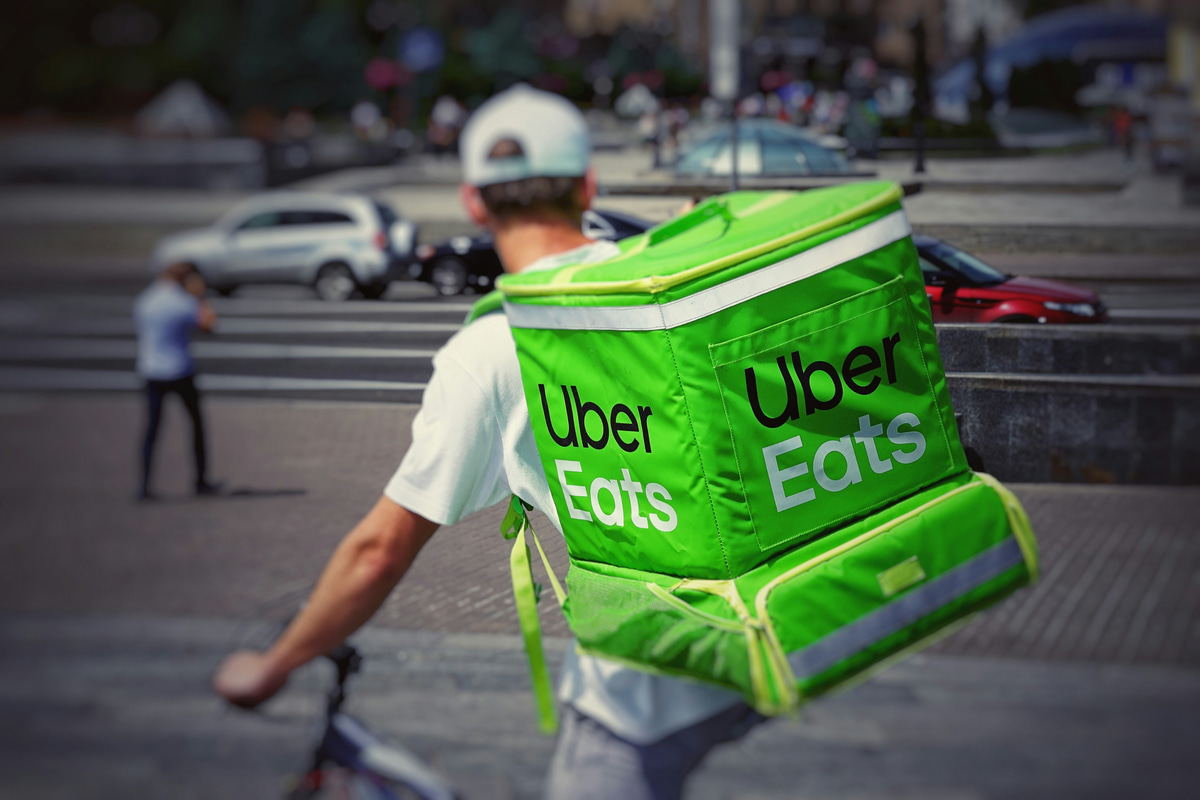
Uber Technologies (NYSE: UBER) has agreed to buy workplace catering platform ezCater for $2.3 billion in cash, putting delivery profitability and capital allocation in focus for shareholders as the company expands its food-ordering business.
The companies announced the agreement on October 6. ezCater brings more than 140,000 restaurant partners and generated over $2.5 billion in gross bookings during the trailing 12 months, with growth in the high teens.
Its average order exceeds $400, and the business is profitable on a non-GAAP operating-income basis. Uber expects the acquisition to improve margins, with completion anticipated in the coming months, subject to regulatory approval and other closing conditions.
Why the Deal Matters for Uber Shareholders
The acquisition targets an established business within food delivery: ordering meals for workplaces, meetings and events. Large group orders create a different commercial opportunity from individual meals, although the size of an order alone does not determine how much profit a platform earns.
For Uber stock, the important question is whether that activity can generate incremental earnings after the costs of serving customers and integrating the platform. The announced margin benefit is an expectation, rather than a result already delivered.
Gross bookings also need to be distinguished from revenue. They measure the value of transactions handled through a platform, not the amount the platform retains. The purchase price therefore should not be read as a multiple of ezCater’s annual revenue.
The transaction’s value will depend on how effectively Uber can combine corporate ordering relationships with its existing restaurant and delivery operations. More frequent orders could strengthen the business, but customer retention and service reliability will matter alongside transaction growth.
ezCater Adds Corporate Software Alongside Food Orders
ezCater has been building capabilities beyond a catering marketplace. Its April platform update described a business serving distribution centers, hospitals, universities and professional sports teams as well as offices.
The company’s enterprise features include invoicing, customized reporting, tax-exempt ordering and connections to procurement and authentication systems. Those tools address the administration of workplace meals, particularly for organizations managing multiple locations.
In April, ezCater also introduced a Concur Expense integration that automatically forwards and updates food-order receipts. Finance teams can use it to view expenses across an organization and reduce manual reconciliation.
That software component helps explain the strategic appeal. Uber is acquiring a way to manage corporate purchasing and reporting, not simply access to additional restaurant menus. The potential advantage is a closer relationship with businesses that need repeat ordering and consistent financial controls.
Delivery Profitability Is Already Growing
Uber’s second-quarter results provide the financial backdrop. Delivery gross bookings reached $27.46 billion, up 26% from a year earlier, while segment operating income, a non-GAAP measure, rose 38% to $1.06 billion.
The figures show that profit growth was already outpacing bookings growth before the proposed acquisition. For shareholders, ezCater adds another question to that trend: whether a new mix of corporate orders can support further improvement without creating disproportionate costs.
Across Uber, second-quarter free cash flow was $2.79 billion, and unrestricted cash, cash equivalents and short-term investments totaled $5.4 billion at June 30. Those are historical balance-sheet figures, rather than a statement of the company’s cash position today.
The $2.3 billion purchase price is substantial against that cash balance, making the deployment of capital relevant to the stock’s investment case. The strategic opportunity has to be assessed alongside other uses of cash, including debt management, investment and shareholder returns.
In its August prepared remarks, Uber said it had repurchased $510 million of stock during the second quarter and retained roughly $16 billion of authorization. It planned to remain active in buybacks while balancing its capital-allocation priorities.
Management also said trailing 12-month free cash flow had exceeded $10 billion for the first time. That gives the $2.3 billion price context beyond a single quarter’s cash balance, although it does not establish how Uber will fund this particular purchase or what cash generation will look like after integration.
MarketSpeaker previously examined Uber’s earnings reaction and its delivery investment strategy. The catering agreement extends the debate over how acquisitions fit alongside cash generation and share repurchases.
Workplace Dining Offers Opportunity, With Execution Still Ahead
ezCater’s March cafeteria report pointed to changing demand. In its survey, 51% of organizations had reduced cafeteria hours, while 68% of leaders in hybrid-work organizations said variable schedules made cafeterias difficult to operate.
The findings came from an October 2025 survey of 602 cafeteria decision-makers and 1,000 on-site employees. They provide context for flexible restaurant-based meal programs, rather than a guarantee of demand for any particular platform.
For Uber shareholders, the next milestones are approval, closing and evidence that the combined business can turn corporate ordering activity into profitable growth. The financial test will be the earnings and cash flow generated over time, measured against the capital committed to the acquisition.