Key Notes
- Google plans its first orbital TPU test with Planet Labs aboard SpaceX’s Transporter-18 rideshare mission.
- Solar power offers a potential advantage, but launch costs, cooling and reliable communications remain major hurdles.
- A separate two-satellite milestone in 2027 is intended to test the laser links needed for distributed AI computing.
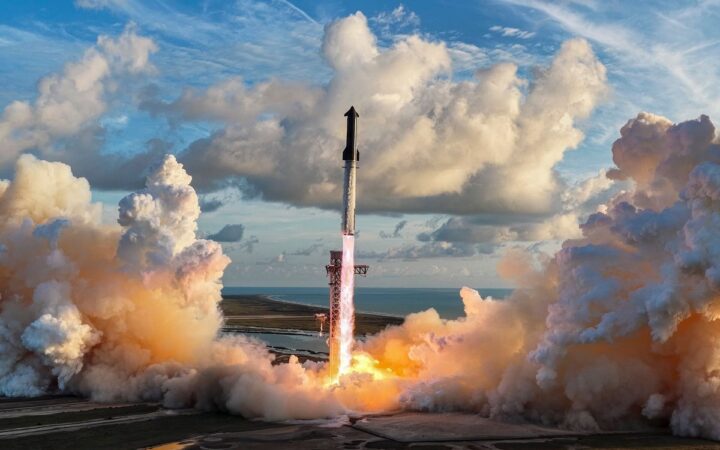
SpaceX is set to carry Google’s artificial intelligence chips into orbit on Thursday, giving Alphabet an early test of whether some of the computing behind its AI ambitions could eventually operate beyond Earth’s power grids.
The Tensor Processing Units, or TPUs, will travel aboard a prototype developed with Planet Labs on SpaceX’s Transporter-18 rideshare mission. CNBC reported that the Falcon 9 flight is scheduled for October 1. The launch would mark Project Suncatcher’s first test in orbit, rather than the opening of a commercial data center.
For investors, the experiment connects three parts of the infrastructure market: Google’s AI processors, Planet’s satellite engineering and SpaceX’s launch services. Its significance rests on what the hardware can demonstrate, with the economics of a larger orbital network still unproven.
A Hardware Test Before a Commercial Business
Google outlined the mission on September 24. Engineers want to measure how TPUs cope with launch vibration, radiation and temperature extremes. Earlier ground tests included exposing the chips to a proton beam at the University of California, Davis, while they ran AI workloads.
Cooling is another obstacle. A vacuum provides no airflow to carry heat away, so Google is testing heat pipes and radiators. Results from a thermal vacuum chamber provide a starting point; operating in orbit will expose the system to conditions that laboratory testing cannot fully reproduce.
AIstify’s earlier coverage examined the modest scale of the initial satellite experiment. The distinction matters: successfully operating a small payload would provide engineering evidence, but would not establish that thousands of interconnected processors could run continuously at competitive cost.
The Financial Case Depends on Launch Costs
Google first announced Suncatcher in November 2025 as a long-term research program. Its proposed architecture links solar-powered satellites so that multiple spacecraft can contribute to machine learning workloads.
The attraction is energy. In its research analysis, Google estimates that solar panels in a suitable orbit could be up to eight times as productive as panels on Earth, with nearly continuous sunlight reducing battery requirements.
That advantage comes with a demanding cost assumption. Google’s model suggests launch prices could fall below $200 per kilogram by the mid-2030s if historical learning trends continue. At that level, launching and operating an orbital data center could become roughly comparable to the reported energy costs of an equivalent terrestrial facility, measured per kilowatt per year.
This is a conditional comparison with ground-based energy spending, not proof that the total cost of an orbital installation would match a conventional data center. Hardware, communications, reliability and thermal management still have to work together at scale. Cheaper sunlight alone does not resolve those requirements.
Planet’s Role Extends Beyond Earth Imaging
Planet said when the partnership was announced that it would build and operate two prototype satellites for Google, targeting early 2027. Those spacecraft are intended to fly together and test high-bandwidth connections alongside the processors.
The company described the work as a move beyond collecting data and performing limited onboard computing toward more complex processing in space. It also said the program shares a satellite platform with its Owl mission, connecting the research partnership to its broader technology development.
Google’s latest update separates Thursday’s hardware-survival experiment from the two-satellite milestone planned for 2027, when laser communications will be tested. Keeping fast connections between moving spacecraft is essential if a future network is to handle distributed AI tasks.
A New Market With Major Questions Ahead
SpaceX is participating as the launch provider while also pursuing its own computing ambitions. AIstify has examined its AI strategy, including plans to connect launch capabilities, chips and data centers. That broader commercial vision should be assessed separately from the outcome of this Google payload.
The immediate milestone is narrower: get the processors into orbit, collect performance data and identify failures before designing larger systems. Until those results arrive, Project Suncatcher represents an option on a future infrastructure market, with substantial technical and financial work still ahead.