Key Notes
- Pump.fun added PreStocks tokens linked to eight private companies for direct trading and new coin pairs.
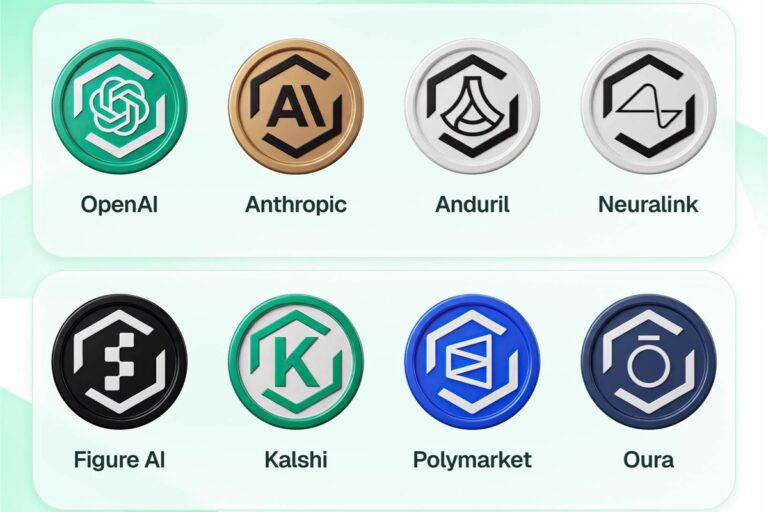
- The lineup includes OpenAI, Anthropic, Anduril, Neuralink, Figure AI, Kalshi, Polymarket and Oura.
- PreStocks says the tokens provide economic exposure without shareholder rights and are unavailable to United States persons.
Pump.fun has added PreStocks tokens linked to eight private companies, including OpenAI and Anthropic, expanding its Solana-based trading platform into pre-IPO exposure.
Users can trade the tokens directly and launch new coins paired with them, Pump.fun announced on October 19. The lineup also includes Anduril, Neuralink, Figure AI, Kalshi, Polymarket and Oura.
The integration creates another venue for trading expectations about private businesses. It does not mean the companies have listed their shares on Pump.fun: PreStocks says its tokens provide economic exposure without ownership, voting or dividend rights.
PreStocks are live on Pumpfun!
— Pump.fun (@Pumpfun) October 19, 2026
Eight Private-Company Tokens Join the Platform
The supported assets span several parts of the private-company market. OpenAI and Anthropic develop AI models, while Anduril, Neuralink and Figure AI add exposure linked to defense technology, brain-computer interfaces and robotics. Kalshi and Polymarket operate prediction markets, and Oura makes wearable health devices.
Pump.fun’s announcement describes two uses for the integration. Traders can exchange the PreStocks assets themselves, while coin creators can use them as the other asset in a new trading pair. The latter connects a newly launched coin’s market with a token referencing a private business.
That pairing does not make the new coin an investment in the referenced company. It identifies the assets being exchanged in that market; the rights attached to each token still depend on its own structure. An OpenAI-linked token used in a pair does not turn the other coin into OpenAI equity.
Economic Exposure Is Different From Share Ownership
PreStocks describes its products as tokens backed one-for-one by special-purpose-vehicle exposure to underlying company shares. That is the platform’s description of its backing arrangements, rather than a statement that token holders appear on the companies’ shareholder registers.
Its public disclosures explicitly say the tokens confer no ownership, voting, dividend, information or other legal rights in the referenced companies. They also say the companies have not issued, endorsed or affiliated themselves with the products.
The distinction affects what an investor is actually buying. A company name on a token can describe the exposure being marketed without establishing a direct relationship between the buyer and that business. The token and a conventional private share therefore should not be treated as interchangeable instruments.
PreStocks’ terms, last updated September 8, also say token prices can differ materially from prices in other markets or from the valuation of the exposure backing them. A token-market price is consequently not, by itself, a new funding valuation agreed by the company.
Availability Does Not Remove Access Restrictions
PreStocks markets round-the-clock trading with no investment minimum. Its disclosures nevertheless exclude the United States, U.S. persons and other ineligible participants, while warning that secondary-market liquidity is not guaranteed.
Those are separate features of the product. Trading hours describe when a market can operate; eligibility rules describe who may use it. Availability through another interface does not establish that the issuer’s restrictions have disappeared.
Liquidity also matters independently of access. The ability to find a token on a platform does not establish how much can be bought or sold near its displayed price. A thin market can produce a very different outcome from the headline valuation associated with the private business.
Pre-IPO Trading Is Expanding Across Crypto Venues
The launch adds to a wider range of products built around companies that have not yet reached public stock markets. We previously reported on Bitget’s Jio pre-IPO perpetual futures, another way to trade expectations before a conventional share listing.
The products have different mechanics: a perpetual futures contract is not the same instrument as a PreStocks token. Their common feature is that the ability to trade a company-linked exposure does not itself provide an allocation of shares in an eventual IPO.
Interest in those alternatives comes as major private businesses prepare potential offerings. Anthropic’s prospective listing and reported financial growth have attracted investor attention, as we reported. An IPO timetable remains a separate corporate process from the trading of a third-party token.
Distribution Expands Before Public Listings
For Pump.fun, the immediate development is a broader selection of assets available for direct trading and new coin pairs. For the referenced companies, the announcement does not establish new share issuance, fundraising proceeds or approval of the tokens.
The next measure of the integration will be actual trading activity and liquidity. The launch connects private-company narratives with Pump.fun’s coin-creation market, while leaving the legal and financial distinction between tokens and company shares intact.