
Key Notes
- Tesla and SpaceX are exploring a closer relationship through independent committees, with no agreed merger terms.
- SpaceX already owns xAI and X, while Neuralink and The Boring Company remain separate private businesses.
- Investment needs, voting rights and the exchange ratio matter more to shareholders than the combined company’s place in a market-value ranking.
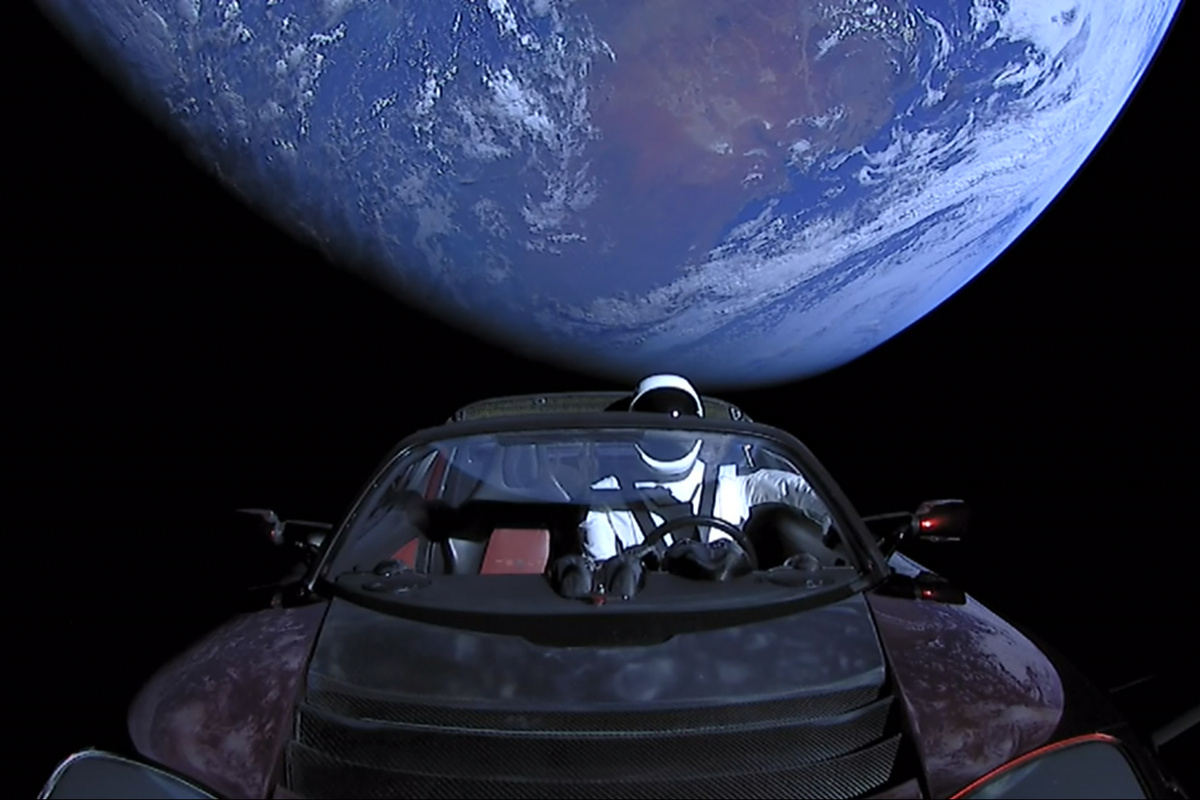
The photograph almost looks like an early merger announcement: a red Tesla Roadster, a spacesuit in the driver’s seat and the curve of Earth beyond the windshield. In February 2018, SpaceX sent the car into space on Falcon Heavy’s demonstration flight. Two companies shared a spectacular image while keeping separate shareholders, separate accounts and separate businesses.
Eight years later, the question is whether the financial separation still makes sense.
SpaceX and Tesla have established committees to examine a closer relationship that could include a business combination. Elon Musk supports the idea. Their stock-market values, added together, run into trillions of dollars. Yet the more revealing numbers sit elsewhere: the money Tesla generates, the equipment SpaceX is buying and the ownership rights each group of investors would receive.
The proposed combination would also redraw an empire that has already changed substantially. SpaceX owns xAI, which includes X. Tesla sells vehicles, batteries and software while investing in autonomy and robotics. Neuralink and The Boring Company remain separate businesses, pursuing brain interfaces and underground transport. Counting every familiar name as another independent company would count some assets twice.
This week’s news makes the distinction between ambition and financing unusually concrete. Strong SpaceX revenue growth has arrived alongside enormous computing expenditure. Tesla’s latest quarter produced positive free cash flow, but its own investment program is substantial. A new report about the price of SpaceX’s borrowing shows how quickly investor enthusiasm can become a question about interest payments.
A combination could make the pieces easier to coordinate. It could also make it harder for shareholders to choose which risks they want to own.
The Empire Is Already Smaller Than the List of Names
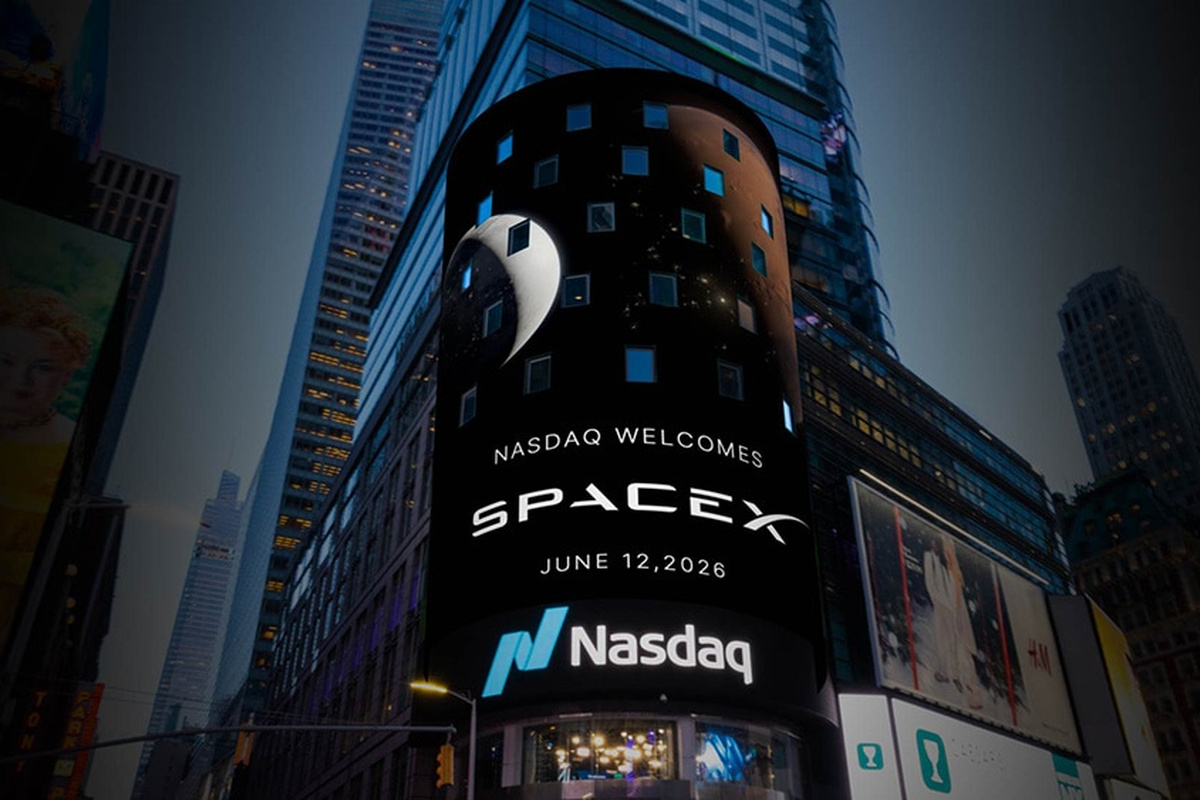
A useful map begins with legal ownership. SpaceX’s filings record its acquisition of xAI on February 2, 2026. Before that, xAI acquired X in March 2025. The group’s quarterly filing describes those transactions as mergers between businesses under common control. The announcement that xAI joined SpaceX was therefore a change in corporate ownership, rather than simply another product partnership.
- Tesla · public · TSLA
Vehicles, energy storage, charging, software, autonomy and robotics programs. - SpaceX · public · SPCX
Launch and spacecraft; Starlink connectivity; the Super Intelligence business, including xAI and X. - The Boring Company · private
Tunnel construction and Loop transport systems. - Neuralink · private
Implantable brain interfaces and their development programs.
Under review: a deeper Tesla–SpaceX relationship, potentially including a business combination. No agreed exchange ratio or completed merger is represented here.
MarketSpeaker’s original schematic, based on linked company disclosures. Shared leadership and commercial relationships do not make every business a subsidiary of every other business.
That map prevents several common mistakes. Starlink is a business within SpaceX, rather than a separate listed stock to add to SpaceX’s market value. Grok is part of the AI operation. X sits within the same ownership chain. Their products, customers and reputations remain distinct, but a valuation of the parent already reflects investors’ view of the assets inside it.
The same principle applies to Tesla’s growing list of ambitions. A car, a stationary battery and a humanoid robot are different products. They do not each have an independently observable stock-market capitalization simply because investors debate their potential separately.
For the proposed merger, the perimeter is consequential. A shareholder thinking they are exchanging an electric-vehicle investment for exposure to rockets and satellite subscriptions would also be accepting the AI infrastructure and social-platform businesses already inside SpaceX. Conversely, a SpaceX investor would acquire exposure to Tesla’s factories, customer obligations and development priorities.
The first question is therefore what the combined security would actually own. A diagram of logos provides a starting point. The accounts, subsidiaries and transaction documents determine the investment behind it.
Two Different Machines for Turning Capital Into Products
Tesla and SpaceX share an emphasis on engineering and manufacturing. The way their businesses convert that work into cash can be very different.
A vehicle factory needs suppliers, production equipment and working capital before a customer takes delivery. After the sale, the company retains service, warranty and software responsibilities. A battery-storage project adds another rhythm: customers may reserve capacity, make milestone payments and receive equipment on a schedule tied to a larger energy installation.
A launch business has a different set of deadlines. A successful flight can depend on a vehicle, a payload, a customer’s readiness and the operating conditions at a particular launch site. Satellite connectivity then adds a recurring service relationship, supported by infrastructure that must be built, launched and maintained.
SpaceX’s development also illustrates why government customers belong in this story. A GAO account traces NASA’s commercial cargo agreements to 2006 and records SpaceX’s subsequent award for 12 resupply missions at approximately $1.6 billion. Commercial demand and public procurement helped build a market around a capability that did not spring fully formed from a stock-market valuation.
Today, a business that spans factories, launch services, connectivity and computing has to reconcile several investment cycles. The ability to move money between them could be useful. So could keeping their financial responsibilities clear.
Consider a simple capital-allocation choice. A dollar spent expanding a mature product line may produce a more measurable near-term return than a dollar spent on an experimental platform. The experimental project may nevertheless offer the larger eventual opportunity. Combining the businesses places more of those decisions inside one boardroom.
That changes who makes the comparison. Separate shareholders can decide how much Tesla and SpaceX to hold. Shareholders in a combined company would delegate more of the allocation between them to management. The benefit depends on whether the internal decisions are better than the choices investors could make for themselves.
Tesla Has Cash, and Claims on That Cash
The description of Tesla as a slower-growing company with a substantial treasury captures one part of its latest results. Third-quarter revenue was $28.05 billion, essentially unchanged from a year earlier. Net income attributable to common shareholders was $787 million. Cash, cash equivalents and short-term investments totaled $45.45 billion at September 30, according to its quarterly report.
That is considerable financial flexibility. It is also a balance belonging to a company with its own projects and obligations. Cash on the balance sheet cannot be assumed to be surplus simply because another business has a larger investment appetite.
The latest shareholder update puts quarterly operating cash flow at $6.26 billion and capital expenditure at $4.73 billion, leaving $1.53 billion in free cash flow. The distinction is useful: cash generated during a quarter, cash remaining after investment and accumulated liquidity are three different measures.
A positive quarter can support the case that Tesla can help finance its own development. It does not establish how much cash will remain available every quarter, especially if spending or customer demand changes. Our earnings coverage examines the operating detail behind the headline.

For an existing Tesla shareholder, the financing question is specific. Would committing more capital to the combined group produce a better return than using that money within Tesla, holding it for resilience or eventually returning it to owners? The answer requires estimates of the alternatives, rather than a general preference for a bigger enterprise.
There is a strategic argument for sharing expertise and resources. Batteries, manufacturing, power management and computing can matter across multiple projects. But operational relevance and financial entitlement remain different questions. A useful supplier relationship does not automatically justify pooling every future spending decision.
SpaceX’s Growth Comes With an Enormous Equipment Bill
SpaceX provides the faster-growing side of the comparison. Its third-quarter results reported $14.575 billion in revenue, up 161% year over year. Capital expenditure reached $19.593 billion, with $16.444 billion attributed to Super Intelligence. Those investment figures make computing central to understanding the company’s current funding requirements.
The juxtaposition is striking: one quarter’s purchases of long-lived assets exceeded the revenue recorded in that quarter. It does not mean every purchase was wasteful or that revenue must immediately exceed expansion expenditure. It does mean the company needs financing beyond the simplistic image of a rocket business reinvesting the proceeds of each launch.
As our earnings coverage explains, the business reported $4.404 billion of net income and $2.791 billion of operating income. Neither measure answers how much cash remains after buying the infrastructure needed for expansion. Accounting earnings recognize investment costs differently from the cash payments used to acquire equipment.
That difference is familiar in infrastructure businesses. A large asset purchase can support revenue over several years, while the cash leaves earlier. Investors then need to judge the asset’s eventual use, the revenue it can produce and the terms on which the purchase is financed.
A strong quarter can improve that judgment without settling it. Higher revenue offers evidence of demand. A new investment program raises questions about the scale and durability of demand required to earn an attractive return on the next round of spending.
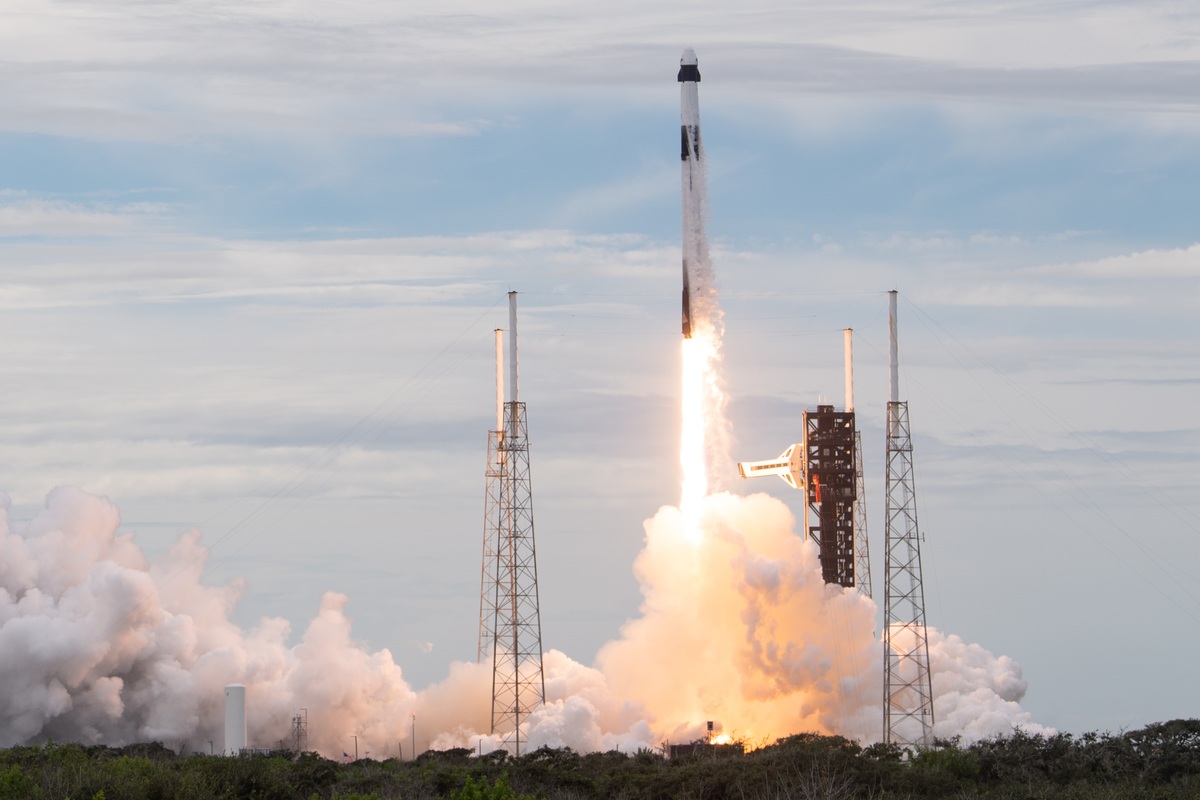
It also changes how an investor should interpret the company’s name. SpaceX still evokes rockets, spacecraft and an extraordinary engineering record. The financial exposure now includes a much broader collection of assets. A person comfortable with launch demand may reach a different conclusion about the economics of a rapidly expanding computing fleet.
The merger debate compresses those distinctions into a single story of growth. A useful assessment opens them back up: which activity is expanding, what has to be purchased to support it, and which customers ultimately pay for that capacity?
Why xAI and X Belong Inside the SpaceX Box
The previous consolidation is an important precedent because it changed both the assets and the story investors were being asked to finance. Bringing xAI into SpaceX connected an AI company with launch and connectivity infrastructure. X came with the AI ownership chain. It did not become a separate pile of value to add again afterward.
SpaceX’s IPO prospectus defines its AI business to include compute, Grok and X. That description is broader than a chatbot subscription business. The sources of revenue and the assets supporting them therefore deserve separate examination.
Renting computing capacity, selling access to software and operating a social platform can involve different customers and cost structures. A rise in one category does not establish the strength of another. Grouping them under an AI label makes the corporate map easier to draw, but the operating analysis still has to go underneath that label.
There is a coherent strategic ambition behind the integration: build more of the infrastructure, software and distribution needed to deliver intelligent services. The appeal is control over important dependencies. The tradeoff is responsibility for financing and operating more of the system.
A company purchasing capacity from an outside provider can adjust its commitments within the limits of its contracts. A company owning the equipment carries more of the utilization risk itself. If demand arrives faster than expected, ownership can be attractive. If demand disappoints, the assets and financing obligations remain.
The same reasoning applies to plans that connect terrestrial computing with space infrastructure. A launch capability may enable a project; it does not by itself establish that the resulting service will be cost-competitive, reliable or wanted by enough customers. Those claims need milestones and evidence at each stage.
A Tesla combination would add another set of capabilities to that ambition. It would also make the investment proposition more dependent on how well several complex programs work together. Investors would need enough disclosure to judge the parts, even if management presents them as one connected future.
The Attraction and Limits of a Shared Treasury
The intuitive merger argument is easy to state. Put a business with substantial liquidity beside a business with rapid growth and large investment needs. Let the first help finance the second, while both benefit from shared technology and management.
The financial constraint becomes clearer when the cash-flow periods are aligned. Over the first nine months of 2026, SpaceX reported $13.097 billion in operating cash flow and $48.069 billion in property and equipment purchases. The difference was approximately negative $34.97 billion. This is a simple comparison of those two lines, rather than the total change in cash after financing and other investing activity.
Tesla’s accumulated liquidity is substantial against that amount. It is not an inexhaustible source of funding. Comparing a balance accumulated over time with another company’s recent spending also does not show what either business will require in future years.
Suppose a group uses existing cash to bring a new project online earlier. The economic benefit depends on what the earlier start produces: additional customers, better margins, a technological advantage or some other return. Moving the money is the enabling step. The return arrives only if the project works.
There are costs to consider on the other side. The original business gives up the option to use the same cash elsewhere. It may also need a larger financial cushion if its own sales or investment program becomes less predictable. A merger does not erase those alternatives simply by removing the transfer between companies from public view.
Nor does an all-stock structure eliminate the financing problem. Paying shareholders with shares can avoid a large cash acquisition payment, but factories, processors, construction and staff still have to be funded. The form of the purchase price and the operating cash needs after the deal are separate issues.
The compelling version of the case would quantify the coordination benefits and the investments required to obtain them. It would explain why a merger delivers those benefits more effectively than supply agreements, joint projects or other arrangements. That comparison matters because the companies already cooperate while remaining separate.
Musk’s Control Is Different on Each Side
The claim that Musk owns roughly 80% of SpaceX confuses voting control with economic ownership. SpaceX’s offering prospectus described approximately 82.3%–82.4% voting power immediately after the IPO, depending on the underwriting option. Its Class B shares carry ten votes each, compared with one for Class A. Those are offering-date figures, rather than a newly calculated October ownership percentage.
Tesla’s latest proxy statement reports 19.8% beneficial ownership for Musk on its stated September 30 basis. Beneficial ownership follows the filing’s definitions and footnotes; it should not be substituted casually for the percentage of votes he can direct on a future merger.
The difference explains why the negotiation cannot be reduced to a founder deciding to combine two possessions. Each company has other shareholders. Those shareholders may have different entry prices, investment horizons and reasons for owning the stock. A proposal attractive to an owner with large stakes in both businesses may be less attractive to someone holding only one.
The review process therefore matters. Tesla’s quarterly filing says a committee of disinterested directors is exploring a deeper relationship with SpaceX, including a possible business combination. It cautions that a transaction is not assured and would require the committee’s affirmative recommendation and any necessary shareholder approval.
Musk’s public support establishes his preference. The committees’ job is to evaluate a proposal for the shareholders they represent. The eventual documents would need to make the process, assumptions and terms clear enough for those owners to assess.
The pay-package comparison has limits too. Tesla’s proxy describes unearned performance-award shares that remain subject to a voting agreement; the secretary votes those shares proportionately until they become earned. Approval of executive compensation is a different decision from accepting a particular merger price, dilution level or set of voting rights.
For minority investors, the useful question is the protection attached to the security they would receive. Percentage ownership, votes per share, board rights and the location of future capital decisions can all matter. A larger combined market value does not automatically strengthen their influence over it.
The Exchange Ratio Matters More Than the Headline Size
Reuters reported that the companies were examining several structures, including a SpaceX acquisition of Tesla or a new holding company, with an all-stock deal among the possibilities. The discussions were preliminary. Our deal coverage follows those reported alternatives.
An all-stock transaction changes the ownership arithmetic even when no cash purchase payment changes hands. Imagine, purely as an illustration, that existing Tesla holders receive 40 of every 100 economic units in a new company and SpaceX holders receive 60. The same assets divided 50–50 would give the two groups very different outcomes.
Neither illustration is a prediction of the terms. It shows why announcing a multitrillion-dollar combination is not sufficient to assess the deal for an individual shareholder. The relevant calculation includes the fraction of the new company received for each old share and the rights attached to it.
A holding company would not remove that problem. It could provide a new parent above the operating businesses, but someone still has to decide how much of that parent each shareholder group receives. The allocation of liabilities and financial support between subsidiaries would also matter.
There is an existing cross-holding to consider. Tesla’s quarterly report records a $2 billion investment in SpaceX common stock, representing less than 1% ownership. It also reports $221 million in quarterly revenue from SpaceX’s purchases of Megapacks. The relationship already includes capital and commercial transactions.
A gross addition of the two market capitalizations therefore provides scale, rather than a complete valuation of a combination. Detailed merger analysis would account for cross-holdings, debt, cash, transaction terms and any other relevant adjustments. It would also test the additional value management expects to create.
The history supplies a useful reminder. In its 2016 SolarCity announcement, Tesla emphasized combining solar generation with storage and simplifying the customer experience. That was a specific operating argument. A new combination needs its own evidence and economics; an earlier transaction does not settle the merits of a later one.
The Political Clock Is a Reported Incentive
Bloomberg’s October 22 feature frames the timing around political access and investor enthusiasm. Bloomberg describes a push to announce a deal in the first half of 2027 so that it can close during the Trump administration. That is a reported objective, not a company-announced timetable or a promise of first-quarter completion.
The distinction between announcement and closing is especially important for a transaction of this scale. An agreement can establish terms while leaving conditions to be satisfied. A hoped-for announcement window does not tell investors when the combined business would begin operating under a common parent.
Political relationships can affect the environment in which companies operate. They cannot supply a missing exchange ratio, make a project economically attractive or guarantee the outcome of every applicable review. Investors still need to understand the obligations and businesses being brought together.
The argument for speed also creates a tension. A favorable external window may encourage companies to move quickly. Shareholders benefit from enough time and disclosure to evaluate a complex proposal. Those objectives may be compatible, but the compatibility has to be demonstrated through the process.
There is another way to interpret the urgency: the terms available in an enthusiastic market may be harder to obtain after a sustained repricing. That observation applies to financing and to share-funded acquisitions. A company’s stock can be valuable acquisition currency precisely because investors have high expectations for its future.
None of this establishes that a political deadline will determine the outcome. The reported motivation explains why timing has become part of the story. The investment decision would still turn on the actual proposal, the financial assumptions and the protections offered to shareholders.
The Financing Market Is Already Testing the Story
The risk of a less enthusiastic funding environment has already become more concrete. On October 22, Semafor reported that SpaceX was finalizing a $40 billion debt package at higher borrowing costs. It cited prospective rates around 8.3% for the lowest-rated portion and around 7.75% for a safer portion backed by chips. Pricing could change; those were reported indications, rather than final terms for the whole package.
The scale makes even a small change in the cost of money significant. As an illustration, one extra percentage point applied to $40 billion would equal $400 million in annual interest. The actual additional bill would depend on the allocation, terms and fees. Applying either reported rate to the entire financing would give a misleadingly precise answer.
Debt also asks a different question from equity. Shareholders can accept uncertainty about when a project reaches its full potential if they believe the eventual upside justifies it. Lenders focus on the borrower’s ability to meet contractual payments and on the protection available if the outcome is weaker.
Equipment collateral can provide protection without eliminating commercial risk. The usefulness of a processor depends on demand, the systems around it and the economics of the service it helps deliver. A large installed base is more valuable when it is productively used and supported by paying customers.
Our financing report sets out the latest account. For the merger story, the broader implication is that a high share price and an attractive cost of borrowing are separate advantages. Either can change while management is still designing the transaction.
A combined company might offer more sources of cash and a broader business base. It would still need to explain which projects generate that cash, which consume it and how much financial support is available across the group. Size improves neither the answer nor the disclosure automatically.
The Tunnels Remain a Separate Bet
The Boring Company is small beside two listed businesses valued in the trillions, but its recent financing is substantial by almost any other standard. A September 10 Bloomberg funding report described a $3 billion Series D round valuing the business at $23 billion, backed by the United Arab Emirates and affiliated entities.
The company’s Loop description explains its place in the wider universe: passengers travel in electric vehicles through tunnels. Tesla vehicles can provide an operational connection without making the tunnel company a Tesla subsidiary.
The business challenge combines construction with transport demand. Excavating a tunnel creates an asset. Stations, access, passenger use and the costs of running the system determine how that asset performs. A map of planned routes and a completed, economically productive network describe different stages of the project.
That makes the valuation date important. A private financing establishes a price under particular terms, with investors buying into a plan and negotiating their rights. It is not a continuously quoted market value available to every shareholder at the same price.
The $3 billion raised and the $23 billion valuation also answer different questions. The first concerns new financing. The second describes the implied value assigned to the equity under the round’s terms. The company did not receive $23 billion to spend simply because its valuation reached that level.
A future Tesla–SpaceX transaction would not, by itself, bring Boring inside the combined group. Any such change would require its own arrangements. Until then, the useful connection is commercial and strategic, while the ownership boundary remains distinct.
For readers following the larger empire, our earlier Boring coverage records the financing. Its progress should be judged through construction, usage and project economics, rather than by how small its valuation looks beside SpaceX.
The Brain-Interface Business Runs on Another Timetable
Neuralink occupies a different corner of the map. Its June 2025 funding announcement confirmed a $650 million Series E round and described ongoing clinical work. The company did not publish a valuation in that announcement. Forge’s funding data, displayed by Yahoo Finance, gives a roughly $9.62 billion post-money benchmark for that round.
That is a dated private-financing reference, rather than an October 2026 public market capitalization. It can help explain the approximate size of the remaining private businesses, provided the age and basis of the number stay attached to it.
The work itself also resists a simple comparison with car deliveries or satellite subscriptions. Developing an implantable interface involves research, clinical evidence, manufacturing and the practical experience of the people using the system. Progress on one dimension does not establish commercial scale on all the others.
Neuralink’s updates include a January 2026 announcement of 21 participants and an October research update on pretraining with brain data. Those are dated company disclosures about development. They should not be presented as evidence of a mature mass-market business or as a revenue forecast.
The attraction to an investor is exposure to a potentially important technology. The difficult questions concern the route from demonstrations and research to a product that can be provided safely, consistently and economically at a larger scale. A famous founder and a large funding round do not resolve those questions.
Adding Neuralink’s reported funding benchmark to Boring’s newer valuation gives approximately $32.6 billion. The arithmetic helps explain the “about $33 billion” shorthand. It combines two private-company observations from different dates and does not produce a current trading value for a single portfolio.
Nor is that amount Musk’s personal wealth in the two companies. A company valuation applies to the company’s equity; the value of any individual stake also depends on ownership, rights and other relevant terms. The same distinction applies, at a much larger scale, to Tesla and SpaceX.
What the Companies Are Worth, and What That Means
The stock market provides a different view of the empire’s scale. A share price is the price of one share, so the two quotes alone cannot show which company is worth more. Market capitalization accounts for the number of shares outstanding. The October 23 snapshot below places Tesla and SpaceX alongside other large listed businesses before illustrating their combined scale.
TSLA · Nasdaq · USD: $374.22
SPCX · Nasdaq · USD: $148.81
Displayed prices checked October 23, 2026, at 14:49 UTC, during the US regular session. The provider supplies no individual trade timestamps here and warns that prices can lag by minutes or hours. These are stored observations, not live quotes.
Public Equity Values in the Same Provider Snapshot
| Rank | Company | Market Value USD trillions |
|---|---|---|
| 1 | NVIDIA | $5.141 |
| 2 | Apple | $5.073 |
| 3 | Alphabet (Google) | $3.923 |
| 4 | Microsoft | $3.891 |
| 5 | Amazon | $2.682 |
| 7 | SpaceX | $2.020 |
| 11 | Tesla | $1.479 |
| — | Tesla + SpaceX Illustrative sum |
≈ $3.50 |
The gross sum would place the pair below Microsoft and above Amazon in this snapshot, making the hypothetical combination fifth among the displayed companies. It would remain below Nvidia and Apple. This is a comparison at one observation time, rather than a forecast of the ranking after a deal.
A combined market capitalization is also different from an acquisition price or enterprise value. It does not tell either shareholder group what premium, if any, it would receive. It does not incorporate the final financing or remove existing cross-holdings.
The stock-market question is ultimately about expectations. If investors believe the companies can generate more durable cash flows together, they may assign a higher value to the combination. If they expect weaker capital discipline, less transparency or a transfer of value between shareholder groups, the response could go the other way.
There is no mechanical rule that lets shareholders add two market values, choose a place in the league table and keep that value through negotiation, approval and closing. Both businesses continue trading and operating throughout the process. Their results, risks and funding costs continue to change.
What Would Make the Combination Convincing
The next meaningful milestone is a proposal detailed enough to evaluate. A favorable comment from the chief executive, the existence of committees and a reported timetable establish that the idea is serious. They do not supply the transaction investors would actually own.
Three tests would make the case clearer.
First, show the incremental operating benefit. The companies already have commercial ties and can cooperate while remaining separate. A merger proposal should explain what additional capability, efficiency or opportunity requires common ownership, what it costs and when investors can expect evidence that it is working.
Second, show the capital plan. Investors need a credible account of the equipment, factories and other projects to be financed, together with the cash expected from operations and the assumptions behind external funding. A stronger treasury is useful only if it supports investments that earn an adequate return while preserving the group’s ability to meet its obligations.
Third, show the bargain for each shareholder group. The exchange ratio, share classes, voting arrangements and treatment of cross-holdings determine how the value is divided. An attractive strategic story can coexist with unattractive terms for one side. Clear disclosure should allow that possibility to be tested.
The strongest version of Musk’s plan would connect capabilities that already have value, reduce genuine coordination problems and produce better results than the companies could achieve through existing arrangements. The weakest version would make an enormous investment program easier to finance without improving the discipline applied to it.
Neuralink and Boring would continue to illustrate the wider reach of the empire, but they should not distract from the immediate decision. The question facing Tesla and SpaceX shareholders concerns the assets and obligations in front of them, the ownership offered in exchange and the returns those assets can support.
The Roadster above Earth made the connection between the companies impossible to miss. A merger would make that connection financially binding. The test is whether the accounts and the terms can make as strong a case as the photograph.
Reporting note: Prepared October 23, 2026. Company statements, filings and attributed news reports are distinguished throughout. The stock snapshot is a fixed, potentially delayed editorial snapshot. Private funding valuations refer to their stated rounds, rather than current exchange prices. Hypothetical ownership splits and interest-cost sensitivities are MarketSpeaker illustrations, not proposed deal terms or forecasts.