Key Notes
- Anthropic publicly filed its S-1 on October 26 and applied for Nasdaq ticker ANT, with share count and pricing still undecided.
- First-half revenue reached $16.286 billion, while the $80.748 billion net loss included $72.388 billion in financing-related fair-value charges.
- The prospectus details long-term computing obligations, warns that sustainable profitability is uncertain and does not anticipate cash dividends in the foreseeable future.
Anthropic has publicly filed for a US initial public offering and applied to list its Class A shares on the Nasdaq Global Select Market under the ticker ANT, giving prospective shareholders a detailed view of Claude’s rapid growth, financing costs and infrastructure obligations.
The October 26 prospectus discloses first-half revenue of $16.286 billion, up from $1.163 billion a year earlier, alongside a net loss of $80.748 billion. Most of that loss came from changes in the value of financing instruments, making it very different from an equivalent cash outflow.
Anthropic confirmed the filing in a company release. The number of shares and price range remain undecided, and the registration statement has not yet become effective. The announcement is a step toward a public listing, rather than the start of trading.
ANT Listing Plan Names Goldman Sachs and Morgan Stanley
Goldman Sachs and Morgan Stanley occupy the lead positions on the prospectus cover, ahead of a broader underwriting group. The proposed offering includes shares sold by Anthropic and existing stockholders; the company will not receive proceeds from the latter sales.
The public S-1 follows the confidential draft submitted in June. Earlier today, we reported on the expected filing timetable. Anthropic’s announcement now confirms that milestone and its proposed exchange symbol.
International Financing Review previously reported a November 9 roadshow target and pricing the following week. That schedule remains distinct from a confirmed first trading day, which Anthropic’s release does not specify.
Revenue Rises Fourteenfold as Financing Charges Drive the Loss
First-half revenue was about 14 times the prior-year level. The filing’s interim accounts show compute and infrastructure expense of $8.945 billion and a $693 million operating loss, compared with a $2.135 billion operating loss a year earlier.
The much larger net loss includes $72.388 billion in fair-value changes affecting convertible notes, derivative liabilities and simple agreements for future equity. Anthropic says these changes primarily reflected the rising value of outstanding convertible notes as its enterprise valuation increased.
Those charges affect accounting earnings without representing the same amount of cash spent operating Claude. Subtracting them from the net loss would still not produce a cash-burn measure, because other financing items, investment movements and working-capital changes require separate treatment.
Operating activities generated $3.929 billion of cash in the first half, according to the filing. Positive operating cash flow does not establish sustainable profitability or include every investing outlay. The accounting distinction builds on the loss analysis we previously reported.
Computing Agreements Create Long-Term Financial Obligations
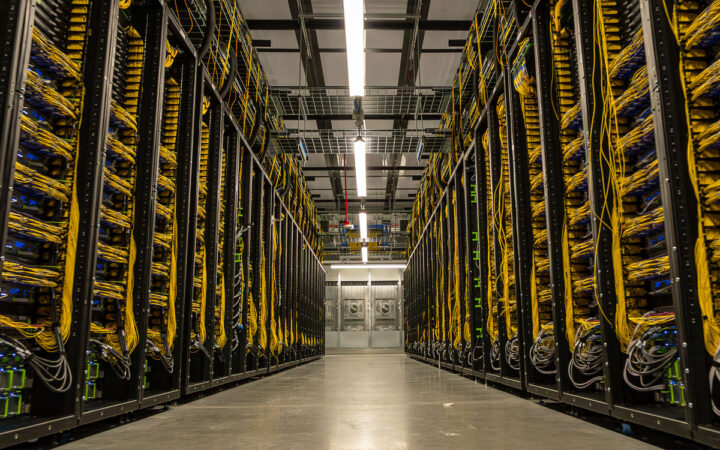
The prospectus’s notes disclose approximately $265.6 billion in expected fixed or minimum purchase commitments as of June 30, with terms ranging from one to 20 years. That dated figure covers the specified purchase agreements; it is not a final current total for every infrastructure arrangement.
The filing also describes subsequent agreements and amendments. They include at least $110 billion with Amazon between May 2026 and April 2036, approximately $114.5 billion with Google between April 2026 and July 2033, and $44.9 billion with Microsoft between November 2026 and May 2033.
These figures should not be added to the June total without reconciling overlap, amendments and scope. Some arrangements depend on delivery or deployment conditions, while others require minimum spending regardless of usage. The preliminary filing leaves its updated aggregate contractual-obligations table incomplete.
For future ANT shareholders, the issue is whether customer revenue and financing can support those obligations as capacity becomes available. Contracted access to computing is an operational advantage, but also creates payment requirements well beyond the current reporting period.
Profitability Remains Uncertain and Dividends Are Not Planned
Anthropic warns that it may fail to achieve or sustain profitability. That is a stated business risk, rather than a prediction that losses must continue indefinitely.
The company also says it does not anticipate cash dividends in the foreseeable future. It intends to retain available funds and future earnings, if any, to support operations and expansion, while financing agreements can restrict distributions.
The dividend policy places the emphasis on potential share-price appreciation rather than an income stream. Neither rapid revenue growth nor a prominent IPO guarantees that appreciation.
AI Risk Disclosures Extend Beyond Ordinary Software Failures
Anthropic warns that sufficiently advanced AI could pose catastrophic or existential risks if developed or operated without appropriate safeguards, oversight and security. It identifies potential misuse, weaponization, replication and extensive autonomy as relevant circumstances.
The prospectus also discusses agents executing code, communicating and completing transactions with limited human oversight. These are risk disclosures about possible outcomes, rather than a statement that such a catastrophe has occurred or is inevitable.
Valuation Will Depend on Offering Terms and Investor Demand
The preliminary documents do not establish a final IPO valuation. Reuters reported before the filing that some investors discussed a valuation near $1.5 trillion, below earlier discussions around $2 trillion. Those estimates are not a published offer price.
The final share count, pricing, dilution and proceeds will determine what public investors are being asked to buy. Until those terms are set, both a record-sized offering and a specific November trading date remain possibilities to assess rather than completed outcomes.