Key Notes
- Lula won reelection with 51.79% of valid votes against Flávio Bolsonaro’s 48.21%, according to the final electoral court announcement.
- The EWZ Brazil ETF was reported down 26.04% in American premarket trading, while São Paulo’s domestic cash market had yet to open.
- Bolsonaro plans to contest the outcome as investors reassess fiscal policy, the next finance minister and the government’s relationship with Congress.
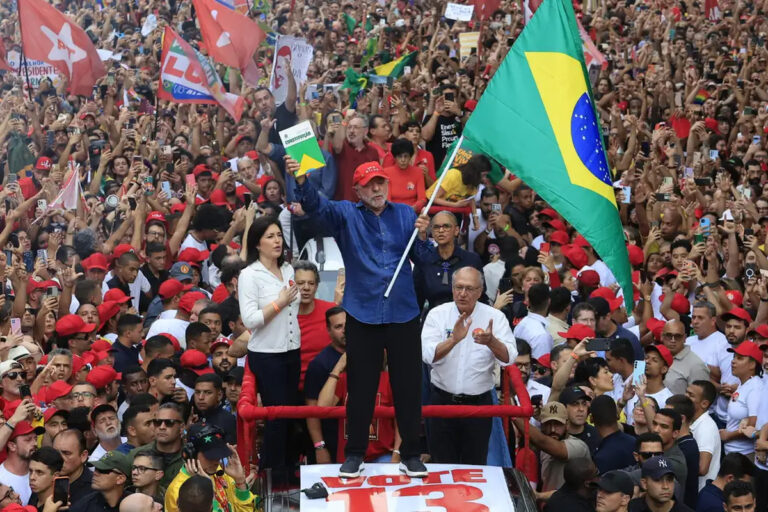
Brazil-linked assets sold off sharply overseas after President Luiz Inácio Lula da Silva won reelection, overturning investors’ expectations of a change in government and setting up a volatile Monday for Brazilian stocks, the real and interest-rate markets.
The iShares MSCI Brazil ETF (NYSE Arca: EWZ) was down 26.04% at $31.30 in U.S. premarket trading at 5:34 a.m. Brasília time, or 08:34 UTC, according to InfoMoney’s updated report. The move deepened the near-20% declines reported in overnight Brazil-linked trading.
Brazil’s domestic cash market had not opened at publication. The overseas moves therefore do not establish a 20% or 26% decline in the Ibovespa itself. B3’s published timetable places the stock-market opening at 10 a.m. local time, or 13:00 UTC.
Final Results Give Lula 51.79%
Brazil’s Superior Electoral Court, known as the TSE, announced that Lula received 64,256,232 votes, or 51.79% of valid ballots. Senator Flávio Bolsonaro won 59,826,041 votes, or 48.21%, leaving a margin of more than 4.4 million votes.
Those final figures replace the narrower margins circulated while counting was still under way. Lula secured a fourth presidential mandate after finishing behind Bolsonaro in the October 4 first round.
According to the Chamber of Deputies’ account, Bolsonaro had taken 47.03% in that opening round, compared with Lula’s 45.16%. The reversal helps explain why the result caught investors who had positioned for a different government.
Overseas Prices Signal a Sharp Repricing
The selloff extended beyond the U.S.-listed fund. Reuters reported that the Tokyo-listed Nomura NF Ibovespa Link ETF fell 15% during Asian trading, while November futures for the Brazilian real declined 10%.
These are different instruments quoted in different markets. Nomura’s fund is a Japanese-listed vehicle linked to Brazilian equities; EWZ trades in the United States. Their percentage changes should not be combined or treated as an official reading of São Paulo’s benchmark.
EWZ’s fund page identifies its benchmark as the MSCI Brazil 25/50 Index, rather than the Ibovespa. It offers exposure to Brazilian shares through a dollar-denominated security, making both the underlying stock market and currency movements relevant to international investors.
For the same reason, an overseas ETF can provide an early indication of sentiment without predicting the precise opening level of each Brazilian share. Trading conditions and exchange rates can change before domestic buyers and sellers meet in the local session.
A First-Round Rally Faces Reversal
Before the runoff, Brazilian stocks had closed Friday almost 7% above their level before the first round, while the real had strengthened nearly 5% against the dollar, Reuters reported. Investors had anticipated a more market-friendly policy shift and tighter public finances under Bolsonaro.
The election result has forced that positioning to be reconsidered. A reversal of crowded expectations can produce a rapid adjustment even before the incoming administration provides a detailed economic program.
Reuters cited investors seeking a credible fiscal plan, clarity over the next finance minister and the 2027 budget, and a workable relationship with an opposition-leaning Congress. Those decisions will help determine whether the initial market shock becomes a sustained reassessment of Brazil’s finances.
The mechanism is familiar across sovereign markets: concern about budgets can raise the compensation investors demand for lending, while higher financing costs make fiscal adjustment harder. As we previously reported, political deadlock has also put upward pressure on France’s borrowing costs, although Brazil’s election and policy outlook are distinct.
Bolsonaro Plans to Challenge the Outcome
Bolsonaro said he would not recognize the result and would seek to annul the election, Agência Brasil reported. His objection centers on a last-minute extension of voting hours ordered by Supreme Court Justice Cristiano Zanin.
The TSE said the extension moved the deadline from 5 p.m. to 7 p.m. only at polling stations that remained open. Machines already closed could not be reopened, and officials temporarily suspended receipt of ballot reports while adapting the counting process.
The legal challenge is a stated intention by the defeated candidate, rather than a ruling that invalidates the vote. The electoral court has announced Lula as the winner. Investors will need to distinguish further court proceedings from unverified claims about the result.
The Domestic Opening Is the Next Test
The immediate focus is how Brazilian shares, currency trading and interest-rate futures respond when local markets open. That will provide a broader test of the overseas repricing and show whether demand emerges after the initial selling pressure.
Beyond the first session, the government’s budget commitments and political support will matter more than a single overnight quote. For now, the verified picture is a decisive electoral reversal, steep losses in overseas Brazil-linked assets and an unresolved challenge from Bolsonaro—not a confirmed 20% collapse in the domestic stock index.