Key Notes
- Elon Musk warned of failures and consolidation among more than 200 AI cloud providers while saying SpaceX had closed $40 billion of GPU debt.
- Nebius’s recent $3.5 billion secured facility shows financing remains available to some operators, with collateral and refinancing conditions attached.
- CoreWeave’s interest costs and Gartner’s consolidation forecast highlight the need to turn rapid revenue growth into sustainable cash returns.
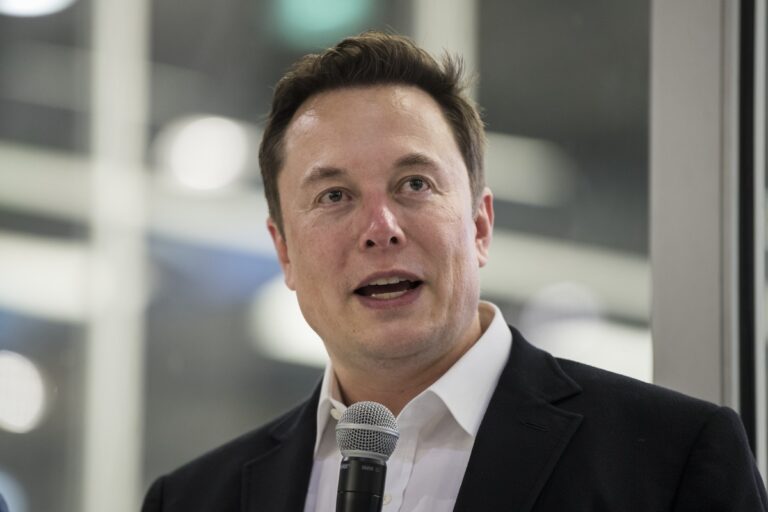
Elon Musk warned that a sharp retreat by lenders could trigger widespread failures and consolidation among specialist AI cloud providers, saying companies without substantial revenue outside data centers are struggling to obtain debt financing.
In an October 25 post, Musk contrasted that pressure with SpaceX (NASDAQ: SPCX), which he said had closed $40 billion of debt for graphics processing units. He attributed its access to credit to investment-grade status and revenue from Starlink and rocket launches.
His warning adds to concern over how the AI buildout will be funded. However, recent company disclosures show that access to borrowing has not disappeared for every specialist provider: Nebius Group N.V. (NASDAQ: NBIS) announced a $3.5 billion secured facility just days earlier.
debt markets have almost entirely shut off access to money
SpaceX’s Debt Deal Frames the Warning
Musk’s comments came in a discussion with investor Chamath Palihapitiya about the funding and execution challenges facing neoclouds. These are specialized cloud providers that rent computing capacity for AI workloads, often relying on large clusters of GPUs.
Musk put the number of such providers at more than 200 and predicted that only a small proportion would survive the coming consolidation. That count is his characterization of the sector, while the expected failures remain a forecast rather than an announced set of bankruptcies.
For SpaceX, his statement marks a claimed financing milestone after negotiations we previously reported. The October 22 report concerned prospective pricing on different portions of the package; Musk’s new post does not provide a complete lender list, final interest rates or maturities.
Those missing terms matter. Raising capital and raising it cheaply are separate outcomes, especially when the funds support equipment that must generate revenue over a limited economic life.
Nebius Shows Credit Is Still Available on Specific Terms
Nebius’s October 22 announcement provides a concrete example of financing still reaching an AI cloud operator. The company secured a $3.5 billion senior facility from Citi, part of Citigroup Inc. (NYSE: C), for capacity expansion and GPU purchases.
Its SEC filing says the agreement was signed October 17 and matures October 16, 2027. The initial interest margin is 2.75 percentage points above Term SOFR, rising in quarterly steps to 3.50 points, subject to adjustments. These margins are added to the benchmark, rather than representing the total borrowing rate.
The obligations are secured by substantially all borrower assets, subject to exceptions. The agreement also contains a minimum-liquidity covenant and other conditions.
The facility therefore supports a more selective reading of the market. Some lenders are still providing capital, but collateral, borrower quality and refinancing deadlines remain central to the terms. A roughly one-year bridge also leaves the borrower needing to repay or replace the financing.
CoreWeave’s Results Highlight Debt-Service Costs
CoreWeave Inc. (NASDAQ: CRWV) illustrates why strong demand does not settle the financing question. Its second-quarter results showed revenue of $2.575 billion, compared with $1.212 billion a year earlier, but net interest expense reached $640 million.
The company reported a $49 million operating loss under generally accepted accounting principles and $128 million of adjusted operating income. Its net loss was $626 million. The figures show why investors need to distinguish sales growth, adjusted earnings and the cost of servicing debt.
CoreWeave also reported approximately $104 billion of revenue backlog at June 30. That provides visibility into committed business, but recognition remains subject to delivery and service-availability requirements. Backlog is not cash already collected or profit already earned.
As we reported, AI infrastructure financing can link chip suppliers and cloud operators through capacity commitments, leases and guarantees. The strength of one company’s order book therefore needs to be assessed alongside its funding obligations.
Gartner Expects Consolidation by 2030
Gartner Inc. (NYSE: IT) had already forecast that more than 80% of neocloud providers would cease independent operations by 2030, citing cost pressure and a lack of differentiated business models.
That projection is broader than a prediction of insolvency: a company can lose its independence through an acquisition or merger. It also has a defined time horizon, unlike treating every current financing concern as an immediate failure.
The research firm estimates that AI-optimized infrastructure-as-a-service spending could grow from $66 billion in 2027 to $174 billion in 2030. Its concern is that even that expansion may not allow most providers to recover investments before the current generation of chips is replaced.
What Investors Need to Watch
The most useful evidence will be new financing agreements, their interest costs and collateral requirements, followed by how quickly contracted capacity becomes billable revenue. A signed customer commitment helps support a project, but construction delays or slow deployment can postpone the cash needed to service its debt.
For listed operators, changes in liquidity, interest expense and near-term maturities will provide firmer signals than a broad sector label. The upcoming earnings from major cloud platforms will also offer a fresh view of demand and investment plans across the wider market.
Musk’s warning brings attention to that funding risk. Nebius’s secured borrowing and CoreWeave’s financial statements show why the outcome will depend on each provider’s contracts, financing structure and ability to turn expensive infrastructure into cash.