Key Notes
- John Ternus hosts his first Apple earnings call as CEO on November 2, with the holiday-quarter outlook a central test for investors.
- Analysts expect September-quarter revenue of $113.39 billion, while higher memory costs put profit growth under scrutiny.
- The iPhone Duo launch and upcoming touchscreen MacBook Pro sales fall in the holiday quarter, outside the results being reported.
Apple Inc. (NASDAQ: AAPL) reports fiscal fourth-quarter results on November 2, giving John Ternus his first earnings presentation as chief executive as rising memory costs put pressure on the profitability of a busy product cycle.
The company’s investor calendar schedules the conference call for 2 p.m. Pacific, or 5 p.m. Eastern, equivalent to 22:00 UTC. Results had not been released at the time of publication.
For shareholders, the immediate question extends beyond the September quarter: how much holiday demand Apple can turn into profitable sales as its first foldable iPhone reaches customers and new Macs approach retail availability.
Ternus Takes the Earnings Stage
Ternus became CEO on September 1, succeeding Tim Cook, who moved to executive chairman. Apple announced the succession in April after unanimous board approval, giving investors several months to prepare for the leadership change.
His background is closely tied to the products now central to Apple’s outlook. Ternus joined the product design team in 2001 and entered the executive team as senior vice president of hardware engineering in 2021. His responsibilities have spanned iPhone, Mac, iPad, AirPods and Apple Watch.
The first call therefore tests how he translates that engineering experience into a financial message. The relevant measures include sales growth, product availability, production costs and the contribution of services, alongside any explanation of where management expects the next stage of expansion to come from.
Memory Costs Complicate the Profit Outlook
Analysts tracked by LSEG expect September-quarter revenue of $113.39 billion, up nearly 11%, and net income of $29.04 billion, up about 6%, Reuters reported. Those figures are consensus forecasts, rather than results Apple has announced.
The same estimates put iPhone revenue at $56.54 billion, an increase of about 15%, and Services at $31.56 billion, up almost 10%. Reuters identified rising memory-chip costs as a key pressure on earnings growth.
For a hardware business, higher component spending makes the relationship between revenue and profit particularly important. Selling more expensive devices can increase sales dollars, while the cost of building those devices determines how much of the increase reaches gross profit.
Comparisons with Apple’s previous quarter also need care. Its June-quarter release reported revenue of $109.4 billion, up 16%, and diluted earnings of $2.02 a share, up 29%. Earnings included an 11-cent benefit from tariff refunds; gross margin of 50.1% included an approximately two-percentage-point benefit from those refunds. That unusually favorable item should be considered when assessing subsequent margins.
Holiday Products Fall Outside the Reported Quarter
The distinction between reported sales and the outlook matters for the new hardware. Apple’s foldable iPhone Duo reached stores on October 23, after the September reporting period. Its financial contribution belongs to the current holiday quarter.
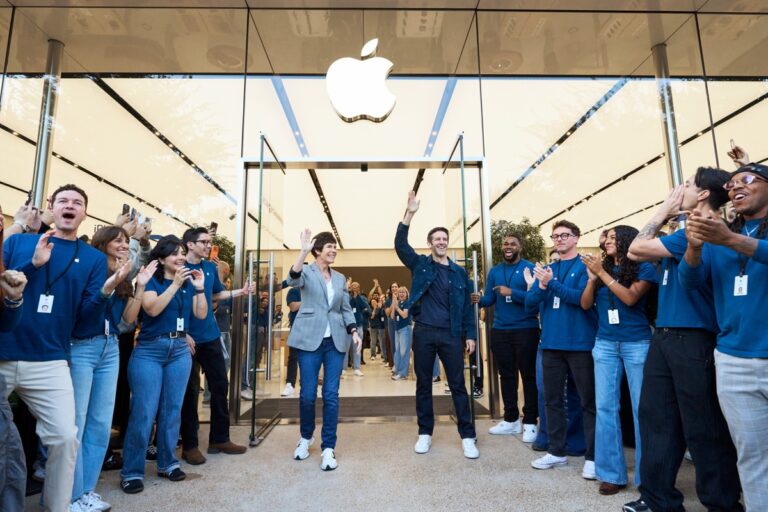
Apple’s launch update showed Ternus welcoming customers in Austin, alongside retail activity in New York, London, Mumbai and Shanghai. As we previously reported, the launch expanded Apple’s premium lineup, but queues and delivery estimates do not establish total sales.
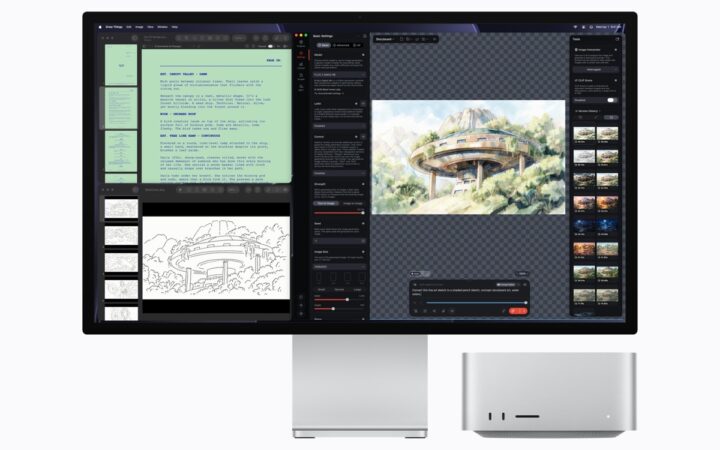
The next near-term milestone is the touchscreen MacBook Pro. Apple opened preorders on October 28, with availability beginning November 6. Its announcement confirms 14- and 16-inch models with tandem OLED displays, touch input and Dynamic Island.
We covered the launch’s significance for AAPL ahead of earnings. The timing means those laptops can support the holiday outlook, while today’s September-quarter figures cannot measure their retail performance.
Services and Siri Add Another Test
Hardware is also a route into Apple’s wider ecosystem. Investors will be looking for evidence that a larger installed base and new device capabilities translate into continued spending on software and services.
Apple’s June-quarter release described an all-time Services revenue record and highlighted its new Siri and artificial intelligence features. The touchscreen Mac announcement also places Siri AI within the new computer experience, showing how closely the software strategy is being tied to hardware upgrades.
Product announcements alone do not quantify incremental AI revenue. The financial discussion will be more useful if management explains adoption, spending or the effect on customer engagement, while distinguishing those indicators from revenue already recognized.
AAPL Enters With a Demanding Valuation
Apple ended October 30 at $344.63 a share. As we reported, it regained the lead over Nvidia in market capitalization at roughly $5 trillion even though both stocks fell that session.
That valuation puts the emphasis on execution. Today’s call offers the first financial assessment under Ternus, with the holiday forecast, component costs and delivery schedules providing concrete measures against which investors can judge the new product cycle.