Key Notes
- Foxconn’s chairman sees an opportunity to capture half the global AI server market as the manufacturer expands its infrastructure business.
- The company’s second-quarter revenue rose 41% and net profit rose 35%, providing financial context for its AI manufacturing expansion.
- US capacity investment and a shift toward more complex systems put execution, operating margins and cash generation at the center of the shareholder outlook.
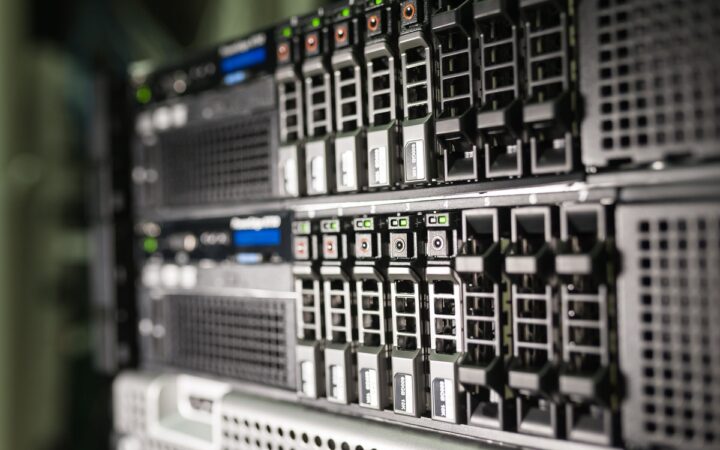
Hon Hai Precision Industry Co., better known as Foxconn (TWSE: 2317), could capture half the global AI server market within a couple of years, Chairman Young Liu told CNBC, outlining a larger role for the manufacturer in the infrastructure investment cycle.
Liu put its current share at around 40%, with roughly 45% possible next year. He said capacity was booked for at least 18 months and expected AI infrastructure to generate 60%–65% of revenue within three to five years, excluding edge AI devices.
For investors, the ambition raises two separate questions: how much of the expanding hardware market Foxconn can supply, and how profitably it can finance that expansion. A larger market share would not automatically produce a comparable increase in earnings or cash flow.
AI Servers Reshape Foxconn’s Growth Profile
The shift is already visible in Foxconn’s reported financial performance. Its August results showed second-quarter revenue of NT$2.53 trillion, up 41% from a year earlier, and net profit of NT$60 billion, up 35%. Earnings reached NT$4.27 a share.
Operating profit rose 68% to NT$94.8 billion, with an operating margin of 3.75%. The difference between that margin and the much larger revenue total is important: the company must convert enormous production volumes into earnings while controlling manufacturing costs.
At that time, Foxconn expected full-year AI rack shipments to more than double and forecast continued strong capacity demand in 2027. Those were management projections, rather than completed full-year results.
The investment case therefore extends beyond assembling more machines. Product complexity, the value of components supplied internally and the efficiency of new production capacity all influence how much profit reaches shareholders.
A Growing Market Comes With Higher Costs
Industry researcher TrendForce forecast on October 14 that AI server revenue would reach approximately $479 billion in 2026 and nearly $920 billion in 2027. It projected shipment growth of 32.2% this year and almost 36% next year.
The much faster projected increase in revenue reflects higher system prices as well as more shipments. TrendForce cited increasingly complex rack-scale products and rising component costs, including memory, as factors lifting prices.
Its estimate for combined capital expenditure by nine leading cloud service providers was $957 billion in 2026, potentially exceeding $1.5 trillion in 2027. These are research forecasts, not spending commitments independently confirmed by every company.
TrendForce’s market-value estimates and Liu’s share figures should not be multiplied together to create a Foxconn revenue forecast. The interview does not establish that the measures use identical market definitions or revenue-recognition methods.
US Expansion Raises the Investment Stakes
Liu also described a broader US manufacturing push, initially emphasizing higher-margin server racks and data-center equipment. He said annual AI investment could exceed a planned $3 billion–$5 billion depending on the depth of vertical integration, while warning against excessive spending.
Foxconn’s earlier financial release had already identified Texas, Wisconsin, Ohio and California among locations where it planned to increase research and manufacturing capabilities. The geographic expansion connects the company’s growth strategy with customers’ demand for local production.
Building closer to buyers can reduce some logistical constraints, but the financial outcome depends on utilization, execution and operating costs. A factory that supports rapid deliveries still needs sufficient profitable orders to justify the capital committed to it.
Foxconn’s calendar lists its third-quarter investor conference for November 12, providing a forthcoming opportunity to assess whether the operating performance is keeping pace with the expansion plans.
Foxconn Is Also an AI Customer
The company is using the technology inside its own operations. An October 26 update described its FoxBrain model and specialized systems for manufacturing and urban services, running on Nvidia (NASDAQ: NVDA) infrastructure.
Foxconn reported a 25% reduction in labor hours devoted to production scheduling and a 50% reduction in engineering workload for injection-molding changeovers. These are company-reported improvements in specific processes, rather than an equivalent reduction in groupwide costs.
Through Visionbay.ai, it is also extending infrastructure and AI services to enterprises and governments in Asia. That gives Foxconn exposure to both hardware production and the operation of computing services, with different investment requirements in each business.
For shareholders, internal productivity gains could help support margins as manufacturing becomes more complex. The published process-level figures, however, do not by themselves quantify the effect on consolidated earnings.
Cash Returns Remain the Key Test
The outlook arrives as markets question the returns on heavy AI spending. As we reported earlier, Amazon retained a $220 billion 2026 cash capital-spending plan while reporting negative trailing annual free cash flow, and Intel’s weak fourth-quarter guidance overshadowed an adjusted earnings beat.
Microsoft and Alphabet also showed different cash-flow outcomes in their September-quarter reports, which we previously covered. Strong demand for computing equipment does not mean every supplier or buyer will generate the same return on its investment.
Foxconn’s target points to an opportunity to supply more of that equipment. Its next financial reports will provide a more concrete test: whether shipment growth, manufacturing expansion and operating efficiency are translating into sustained profits and cash generation.