Anthropic’s implied valuation climbed to $1.2 trillion in the pre-IPO market, marking a 900% increase since October 2025 as investor demand for AI companies intensifies.
By Michael Foster | Edited by Oleg Petrenko
Published:
Anthropic’s implied valuation in the pre-IPO market rose to $1.2 trillion, up 900% since October 2025 amid surging investor demand for AI companies. Photo: Oleg Petrenko / MarketSpeaker
Anthropic has reached an implied valuation of approximately $1.2 trillion in the pre-IPO market, marking one of the most dramatic valuation surges in the artificial intelligence sector to date.
The company’s valuation has climbed roughly 900% since October 2025, fueled by aggressive investor demand, strategic partnerships, and expectations that AI infrastructure spending will continue accelerating globally.
The latest jump reportedly followed a 20% rise in secondary market pricing over the past seven days alone, underscoring how rapidly sentiment around leading AI firms continues to strengthen.
Investor Demand Accelerates Across AI Sector
Anthropic’s rise reflects the broader wave of capital flowing into artificial intelligence companies as investors search for exposure to the next phase of technological growth.
The startup has increasingly been viewed as one of the strongest competitors to OpenAI, particularly in enterprise AI systems and large language model development. Strategic backing from major technology firms has further boosted confidence in its long-term prospects.
As previously covered, AI infrastructure has become one of the most important investment themes in global markets, driving unprecedented spending on chips, cloud computing, and data center capacity.
Reports indicate that large-scale investment commitments tied to AI infrastructure expansion have contributed significantly to Anthropic’s valuation momentum. Investors are betting that demand for advanced AI systems will continue growing at an exponential pace over the coming decade.
The pre-IPO market has also become increasingly active, with institutional investors competing for limited access to high-profile AI startups before public listings.
Implications for Markets and Tech Valuations
Anthropic’s implied valuation highlights how aggressively markets are pricing future AI growth. At $1.2 trillion, the company would rank among the world’s most valuable technology firms if publicly traded today.
The surge also reflects a broader shift in investor behavior, where AI firms are being valued less on current revenue and more on their perceived strategic importance in the future digital economy.
Some analysts caution that expectations may be becoming stretched, particularly as valuations in the AI sector continue to outpace traditional financial metrics. However, bullish investors argue that transformative technologies often command premium valuations during early growth phases.
The rapid appreciation in Anthropic’s value may also increase pressure on competitors, including OpenAI and other major AI developers, to secure additional funding and infrastructure partnerships.
For financial markets, the trend reinforces a central narrative of 2026: artificial intelligence remains the dominant driver of investor enthusiasm, capital allocation, and long-term growth expectations across the technology sector.
BlackRock CEO Larry Fink said growing shortages in AI infrastructure could eventually create a futures market for computing power, similar to oil or energy trading.
By David Sinclair | Edited by Oleg Petrenko
Published:
BlackRock CEO Larry Fink said mounting shortages in AI infrastructure could eventually lead to a futures market for computing power, similar to the way oil and energy are traded today. Photo: Oleg Petrenko / MarketSpeaker
Larry Fink said the rapid expansion of artificial intelligence could eventually lead to the creation of a new financial asset class centered on computing power.
Speaking at the Milken Institute Global Conference, the BlackRock chief executive argued that demand for AI-related computing resources is growing so quickly that markets may eventually develop futures contracts tied to access to compute capacity.
Fink compared the potential market to existing commodities trading systems for oil, electricity, and natural gas, where companies hedge future supply needs through financial instruments.
AI Infrastructure Constraints Become a Market Theme
The comments reflect growing concern across the technology and financial sectors that the world may not have enough computing infrastructure to support the accelerating pace of AI adoption.
Demand for advanced chips, memory systems, networking equipment, and data center capacity has surged over the past two years, fueled by massive investments in generative AI and machine learning applications.
“As previously covered”, companies such as Nvidia, AMD, and major cloud providers have benefited from a sharp increase in AI-related spending as enterprises race to secure computing resources.
Fink suggested that shortages in semiconductors and infrastructure could force markets to develop more sophisticated allocation mechanisms. Under such a system, companies could effectively “reserve” future computing capacity through tradable contracts.
Analysts note that this concept mirrors how airlines hedge fuel costs or utilities secure future energy supply, potentially creating an entirely new category of financial derivatives linked to AI infrastructure.
Implications for Markets and Investors
The idea of “compute futures” underscores how central AI infrastructure has become to the global economy. Computing power is increasingly viewed not just as a technological resource, but as a strategic economic asset.
If such markets emerge, they could significantly reshape capital allocation within the tech industry. Companies with access to large-scale computing infrastructure may gain additional pricing power, while financial institutions could develop new products tied to AI demand.
Investor interest in AI-related assets has already driven strong gains across semiconductor and data center stocks. Fink’s comments suggest the next phase of the AI boom may extend beyond equities into entirely new financial instruments.
However, experts caution that creating a standardized market for computing power would be complex. Compute resources vary widely depending on hardware architecture, performance, and energy efficiency, making contract standardization difficult.
Still, the broader takeaway remains clear: AI demand is expanding rapidly enough to challenge existing infrastructure capacity, potentially forcing financial markets to evolve alongside the technology itself.
SpaceX plans a $55 billion semiconductor facility in Texas, with total investment potentially reaching $119 billion. The Terafab project targets AI, robotics, and data center chips.
By Michael Foster | Edited by Oleg Petrenko
Published:
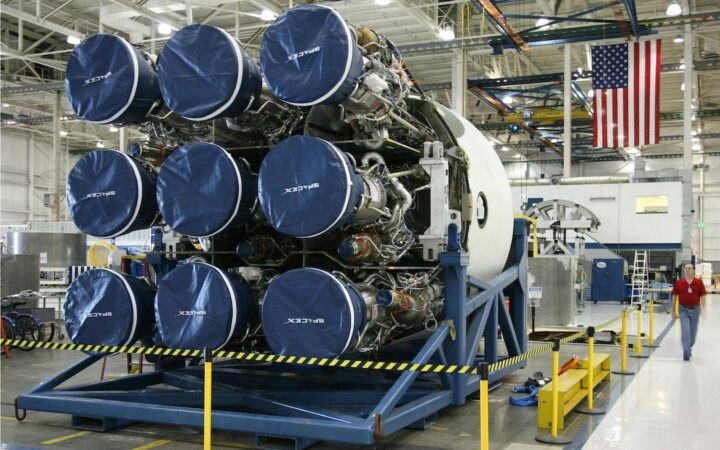
SpaceX is planning a $55 billion semiconductor facility in Texas, with total investment potentially climbing to $119 billion. The Terafab project will focus on chips for AI, robotics, and data centers. Photo: SpaceX
SpaceX has proposed an initial $55 billion investment to build a large-scale semiconductor manufacturing facility in Texas, marking a significant expansion into the chip industry as demand for AI infrastructure accelerates.
The project, known as Terafab, could see total capital expenditures rise to as much as $119 billion, positioning it among the largest semiconductor investments globally. The facility is expected to produce advanced chips for artificial intelligence, robotics, and data center applications.
The initiative follows earlier comments from Elon Musk outlining plans to establish a vertically integrated chip ecosystem to support next-generation technologies.
Strategic Push Into AI and Semiconductor Supply Chains
Terafab represents a major strategic shift, bringing together multiple companies across Musk’s ecosystem. Intel has joined the project alongside Tesla and xAI, signaling a collaborative effort to build domestic chip manufacturing capacity.
The move comes amid intensifying global competition in semiconductors, where governments and corporations are investing heavily to secure supply chains. AI-driven demand has become a central catalyst, with chips for data centers and machine learning systems in particularly high demand.
“As previously covered”, semiconductor production has emerged as a critical bottleneck in the AI boom, prompting companies to invest across the entire value chain from design to fabrication and infrastructure.
The scale of the Terafab project suggests a long-term commitment to addressing these constraints, with potential implications for both supply availability and pricing dynamics in the global chip market.
Market Impact and Investment Implications
If executed, the Terafab facility could reshape the competitive landscape in semiconductors by introducing a new large-scale manufacturing hub in the United States. The involvement of Intel adds technical expertise, while Tesla and xAI provide demand across multiple high-growth sectors.
The project also aligns with broader U.S. policy efforts to expand domestic chip production and reduce reliance on overseas manufacturing. Large-scale investments like Terafab are increasingly seen as essential to maintaining technological leadership.
However, analysts note that execution risks remain significant. Semiconductor fabs require years to build and ramp up, with substantial capital intensity and operational complexity.
Investor reaction is likely to focus on the potential long-term benefits versus near-term costs. While the project could unlock new growth avenues, it also represents a major financial commitment that will take time to generate returns.
The Terafab initiative underscores a broader trend: the AI revolution is driving unprecedented levels of capital investment, extending far beyond software into the physical infrastructure that powers modern computing.
Nvidia and Corning announced a major optical fiber partnership to expand U.S. manufacturing, aiming to meet surging demand from AI data centers.
By Michael Foster | Edited by Oleg Petrenko
Published:
Nvidia and Corning unveiled a major optical fiber partnership to scale U.S. manufacturing, targeting rising demand from AI data centers. Photo: Amir Shtanger / Wikimedia
Nvidia has entered a major partnership with Corning to expand U.S. optical fiber manufacturing, marking a significant step in scaling the infrastructure behind artificial intelligence.
The agreement includes the construction of three advanced manufacturing facilities in North Carolina and Texas, dedicated to producing optical connectivity solutions for AI data centers. The expansion is expected to increase Corning’s optical manufacturing capacity by up to tenfold and boost fiber output by more than 50%.
As part of the deal, Nvidia is also committing capital to secure supply, with investments reportedly reaching hundreds of millions of dollars.
AI Infrastructure Extends Beyond Chips
The partnership underscores a critical shift in the AI ecosystem: demand is no longer limited to semiconductors but extends to the underlying infrastructure that enables large-scale computing.
Modern AI workloads require thousands of GPUs operating simultaneously, creating massive data transfer needs within data centers. Optical fiber has emerged as a key technology to handle this load efficiently, offering higher bandwidth and lower latency compared to traditional copper connections.
“As previously covered,” Nvidia has been aggressively securing its supply chain across key bottlenecks, from advanced packaging to memory and now optical connectivity. The company has also invested billions into optical and photonics technologies to ensure future scalability.
For Corning, the deal represents a major growth opportunity. The company raised its long-term sales outlook following the announcement, with shares surging sharply in early trading.
Market Impact and Strategic Implications
The agreement highlights how the AI boom is reshaping the broader industrial landscape. Suppliers of critical components from fiber optics to cooling systems – are increasingly benefiting from rising capital expenditure in AI infrastructure.
Corning’s stock jumped as much as 17–19% following the announcement, reflecting investor optimism around its role in the AI supply chain. Nvidia shares also edged higher, signaling confidence in its long-term infrastructure strategy.
Beyond financial markets, the partnership carries broader economic implications. The new facilities are expected to create more than 3,000 jobs and strengthen domestic manufacturing capabilities in the United States.
Analysts view the deal as a potential “game changer” for AI infrastructure, as optical technologies become a critical bottleneck in scaling next-generation data centers. The shift from copper to photonics is increasingly seen as essential for sustaining the exponential growth of AI workloads.
The takeaway for investors is clear: the AI investment cycle is expanding rapidly beyond chips, with infrastructure providers emerging as key beneficiaries of the next phase of growth.
Uber shares rose after stronger-than-expected bookings guidance offset a $1.5 billion hit to net income from equity revaluations in Q1.
By Sophia Reynolds | Edited by Oleg Petrenko
Published:
Updated:
Uber shares climbed after better-than-expected bookings guidance outweighed a $1.5 billion hit to net income from equity revaluations in the first quarter. Photo: Roberto Hund / Pexels
Shares of Uber surged around 10% after the company issued stronger-than-expected bookings guidance, reassuring investors about underlying demand despite a significant hit to reported profits in the first quarter.
The company reported gross bookings of $53.7 billion, up 25% year-over-year, while projecting second-quarter bookings between $56.25 billion and $57.75 billion above Wall Street expectations.
However, net income was impacted by a $1.5 billion loss tied to the revaluation of Uber’s equity investments, reducing reported profit to $263 million for the quarter.
Strong Demand Offsets Earnings Volatility
Despite the accounting-related profit decline, Uber’s core business showed continued strength. Total trips rose 20% year-over-year to 3.6 billion, while monthly active users increased 17%, signaling robust consumer engagement across both ride-hailing and delivery segments.
Adjusted EBITDA climbed 33% to approximately $2.5 billion, reflecting improving margins and operational efficiency. The delivery segment, in particular, delivered strong growth, contributing significantly to overall bookings expansion.
“As previously covered”, Uber has been focusing on profitability and cash flow rather than growth at any cost, a strategy that appears to be resonating with investors.
The upbeat forward guidance suggests that demand remains resilient despite macroeconomic headwinds such as higher fuel costs and geopolitical uncertainty.
Investor Outlook and Strategic Positioning
The market reaction underscores a broader trend: investors are prioritizing forward guidance and demand indicators over short-term accounting volatility. Uber’s ability to exceed expectations on bookings has reinforced confidence in its long-term growth trajectory.
The company continues to expand beyond ride-hailing, investing in delivery, freight, and autonomous vehicle partnerships. These initiatives are expected to support future revenue streams and diversify its business model.
At the same time, the $1.5 billion hit highlights the volatility associated with equity investments, which can distort headline earnings even as core operations remain strong.
Looking ahead, Uber’s performance will likely hinge on its ability to sustain demand growth while managing costs and executing on its autonomous vehicle strategy.
For now, the strong bookings outlook signals that consumer activity remains solid, positioning Uber as a key player in the evolving mobility and delivery ecosystem.
FOX is offering $50,000 to a single fan willing to watch all 104 World Cup matches live in Times Square. The role includes content creation and audience engagement over 39 days.
By Michael Foster | Edited by Oleg Petrenko
Published:
Updated:
FOX is offering $50,000 to one fan willing to watch all 104 World Cup matches live from Times Square, with responsibilities including content creation and engaging audiences over a 39-day stretch. Photo: FOX Sports / X
FOX Sports has launched an unconventional hiring campaign, offering $50,000 to a single fan willing to watch every match of the upcoming FIFA World Cup in a highly public setting.
The selected candidate will be stationed in Times Square, where all 104 matches will be broadcast on large screens. Over a 39-day period, the individual will watch the games under continuous camera coverage while participating in live-streamed content production.
The initiative is part of a broader partnership involving FOX and Indeed, aimed at blending entertainment, marketing, and audience engagement during one of the world’s most-watched sporting events.
A Marketing Play Built on Fan Engagement
The role, titled “Chief World Cup Watcher”, goes beyond passive viewing. The selected participant will be responsible for energizing the crowd, interacting with fans, and contributing to social media content throughout the tournament.
Executives describe the campaign as a way to amplify fan participation and create a continuous stream of digital content tied to live matches. By placing the viewer in a high-traffic location like Times Square, FOX aims to maximize visibility and engagement both on-site and online.
“As previously covered”, media companies are increasingly investing in experiential marketing strategies that combine live events with digital storytelling. This approach helps drive audience retention and expand reach across platforms.
The $50,000 compensation reflects both the intensity of the commitment and the promotional value of the campaign.
Implications for Media and Gig Economy Trends
The campaign highlights a growing intersection between entertainment, influencer culture, and short-term contract work. Roles like this blur the line between traditional employment and content creation, offering high visibility but limited duration.
For participants, the opportunity provides not only financial compensation but also potential exposure, which could translate into future media or sponsorship opportunities. For companies, it represents a cost-effective way to generate viral content and sustained audience engagement.
However, the demands are significant. The selected fan will need to maintain energy and presence across all 104 matches, often under varying weather conditions and constant public attention.
The initiative underscores how major sporting events are evolving into multi-platform experiences, where audience participation becomes part of the content itself.
As competition for viewer attention intensifies, campaigns like this signal a shift toward immersive, personality-driven coverage strategies in sports media.
Intel stock jumped 12% to a record high, driven by AI chip optimism and reports of a potential Apple partnership. The rally has also boosted the value of major institutional holdings.
By Sophia Reynolds | Edited by Oleg Petrenko
Published:
Updated:
Intel shares surged 12% to an all-time high, fueled by optimism around AI chips and speculation over a potential partnership with Apple, lifting the value of major institutional stakes. Photo: Coolcaesar / Wikimedia
Shares of Intel surged 12% in a single session, reaching an all-time high as investor enthusiasm around artificial intelligence and potential strategic partnerships continues to build.
The rally marks one of the strongest daily moves for the stock in recent years, extending a broader upward trend fueled by renewed confidence in Intel’s positioning within the global semiconductor market. Over the past year, shares have steadily climbed as the company pivots toward advanced chip manufacturing and AI-focused products.
Reports that Apple is exploring manufacturing partnerships with Intel and other chipmakers added further momentum. The potential collaboration is seen as a strategic effort by Apple to diversify its supply chain and reduce reliance on existing partners.
AI Demand and Strategic Partnerships Drive Momentum
The primary catalyst behind Intel’s surge is the accelerating demand for AI-related chips, particularly those used in data centers and advanced computing systems. As global investment in AI infrastructure expands, semiconductor companies are experiencing a surge in orders and pricing power.
Intel has been working to regain competitiveness in both chip design and manufacturing, with a focus on expanding its foundry services. A potential partnership with Apple would represent a major validation of its manufacturing capabilities and could significantly boost long-term revenue prospects.
“As previously covered”, the semiconductor sector has become a central pillar of the current market cycle, with capital flowing heavily into companies tied to AI and high-performance computing.
The combination of improving fundamentals and strategic positioning has helped shift investor sentiment, with many viewing Intel as a turnaround story gaining traction.
Market Impact and Investor Gains
The stock’s sharp rise has also translated into substantial gains for major stakeholders. Institutional investors who accumulated shares during earlier phases of Intel’s turnaround are now sitting on significant unrealized profits.
The rally reflects broader optimism in the semiconductor space, where companies linked to AI are commanding premium valuations. Intel’s move to record highs signals that investors are increasingly confident in its ability to compete with industry leaders.
However, some analysts caution that expectations are rising quickly. Sustaining this momentum will depend on execution, particularly in delivering next-generation chips and securing high-profile partnerships.
The speculation around Apple underscores how critical strategic alliances have become in the semiconductor industry. If confirmed, such a deal could reshape competitive dynamics and further strengthen Intel’s market position.
For now, the surge highlights a key market theme: AI-driven demand continues to redefine valuation benchmarks and investor priorities across the tech sector.
Ferrari topped Wall Street’s first-quarter expectations and reaffirmed its full-year guidance as it prepares for its first electric vehicle debut.
By Emma Clarke | Edited by Oleg Petrenko
Published:
Updated:
Ferrari beat Wall Street’s first-quarter estimates and reaffirmed its full-year outlook as it moves closer to launching its first electric vehicle. Photo: Jakub Neskora / Unsplash
Ferrari reported stronger-than-expected first-quarter results, beating Wall Street estimates and reaffirming its full-year outlook as the company moves closer to launching its first fully electric vehicle.
The luxury automaker posted revenue of €1.7 billion, exceeding analyst expectations of approximately €1.6 billion. Net profit came in at €350 million, while adjusted EBITDA reached €620 million, reflecting continued pricing power and strong demand across key markets.
Shares edged higher following the release, as investors responded positively to the company’s consistent execution and confidence in its 2026 guidance. Ferrari reiterated its expectation for full-year revenue above €7.0 billion and EBITDA margins remaining above 38%.
Strong Pricing Power and Brand Demand
Ferrari’s performance continues to be driven by its ability to command premium pricing and maintain tight control over production volumes. Limited supply and high customization options have supported margins, even amid broader macroeconomic uncertainty.
The company highlighted robust demand for its core models, particularly in North America and Europe. Order books remain strong, with deliveries largely sold out well into 2027, underscoring the brand’s exclusivity.
“As previously covered”, Ferrari has maintained a disciplined approach to growth, prioritizing profitability over volume expansion. This strategy has allowed it to outperform many peers in the automotive sector, particularly during periods of economic volatility.
Management also pointed to increased revenue from personalization and lifestyle segments, which continue to contribute to higher margins and diversified income streams.
EV Transition and Market Outlook
Looking ahead, Ferrari’s upcoming electric vehicle debut remains a key focus for investors. The company confirmed that its first EV model is on track for launch in 2026, marking a significant milestone in its long-term strategy.
While Ferrari has historically relied on internal combustion engines, the shift toward electrification reflects broader industry trends and regulatory pressures. However, executives emphasized that the EV will retain the brand’s performance DNA and exclusivity.
Investor sentiment remains constructive, with many viewing Ferrari as uniquely positioned to navigate the transition without compromising margins. The company’s affluent customer base and strong brand loyalty provide a competitive advantage in introducing high-end electric models.
Still, risks remain. The success of the EV launch will be critical in sustaining growth momentum, particularly as competition intensifies in the luxury electric vehicle segment.
Ferrari’s reaffirmed guidance signals confidence in its business model and strategic direction. As the company balances tradition with innovation, it continues to stand out as one of the most resilient players in the global automotive market.
Michael Burry sold his GameStop stake after Ryan Cohen’s proposed $55.5 billion eBay deal raised concerns over leverage. The investor warned against relying on debt-driven strategies.
By Daniel Wright | Edited by Oleg Petrenko
Published:
Michael Burry exited his GameStop position after Ryan Cohen’s proposed $55.5 billion eBay acquisition heightened concerns about leverage, cautioning against strategies heavily reliant on debt. Photo: michaeljburry / X
Investor Michael Burry has exited his position in GameStop following CEO Ryan Cohen’s proposed $55.5 billion acquisition of eBay, citing concerns over the scale of debt involved in the deal.
Burry, best known for predicting the 2008 financial crisis, said the transaction’s reliance on leverage undermined the investment thesis he had been developing. “Never confuse debt for creativity,” he noted, emphasizing skepticism toward strategies built on aggressive borrowing.
The comments came shortly after Cohen’s widely scrutinized interview on CNBC, where questions around financing the proposed acquisition remained largely unanswered. The deal, structured as a mix of cash and stock, has raised concerns about a potential $16 billion to $20 billion funding gap.
Leverage Concerns Undermine Investment Case
Burry’s decision underscores broader investor unease about the financial structure of the proposed acquisition. For a company with a market capitalization near $12 billion, absorbing a $55.5 billion target would require a combination of substantial equity issuance and significant debt financing.
Analysts estimate that the deal could involve up to $20 billion in new debt, dramatically increasing GameStop’s leverage. Such a shift would alter the company’s risk profile and potentially strain future cash flows, particularly if integration challenges arise.
“As previously covered,” GameStop has struggled to generate consistent EBITDA, limiting its capacity to service large debt obligations without external support. In contrast, eBay generates several billion dollars annually in EBITDA, making it an attractive but complex acquisition target.
Market participants have also pointed to the risk of shareholder dilution. Funding the deal with equity would likely expand the share base significantly, potentially weighing on per-share metrics and near-term valuation.
Market Reaction and Broader Implications
Burry’s exit adds pressure on GameStop shares, which have already experienced volatility amid uncertainty surrounding the deal. His departure is seen by some investors as a signal that the risk-reward balance has shifted unfavorably.
The episode highlights a broader debate in equity markets about capital allocation discipline, particularly in an environment where companies are pursuing transformational deals tied to growth narratives.
Investor sentiment remains divided. While some see strategic merit in acquiring a profitable platform like eBay to accelerate GameStop’s transition, others question whether the execution risks outweigh the potential benefits.
The situation also reflects heightened sensitivity to leverage in the current market environment. With interest rates still relatively elevated, large debt-financed transactions face increased scrutiny from both investors and analysts.
Ultimately, Burry’s warning reinforces a key market principle: sustainable growth strategies are expected to be supported by fundamentals rather than financial engineering. Until clearer details emerge, GameStop is likely to remain under close watch from both institutional and retail investors.
South Korea’s KOSPI index surged 37% in just 34 days to a record high, driven by booming global demand for AI semiconductors. The rally added roughly $1 trillion in market value.
By Michael Foster | Edited by Oleg Petrenko
Published:
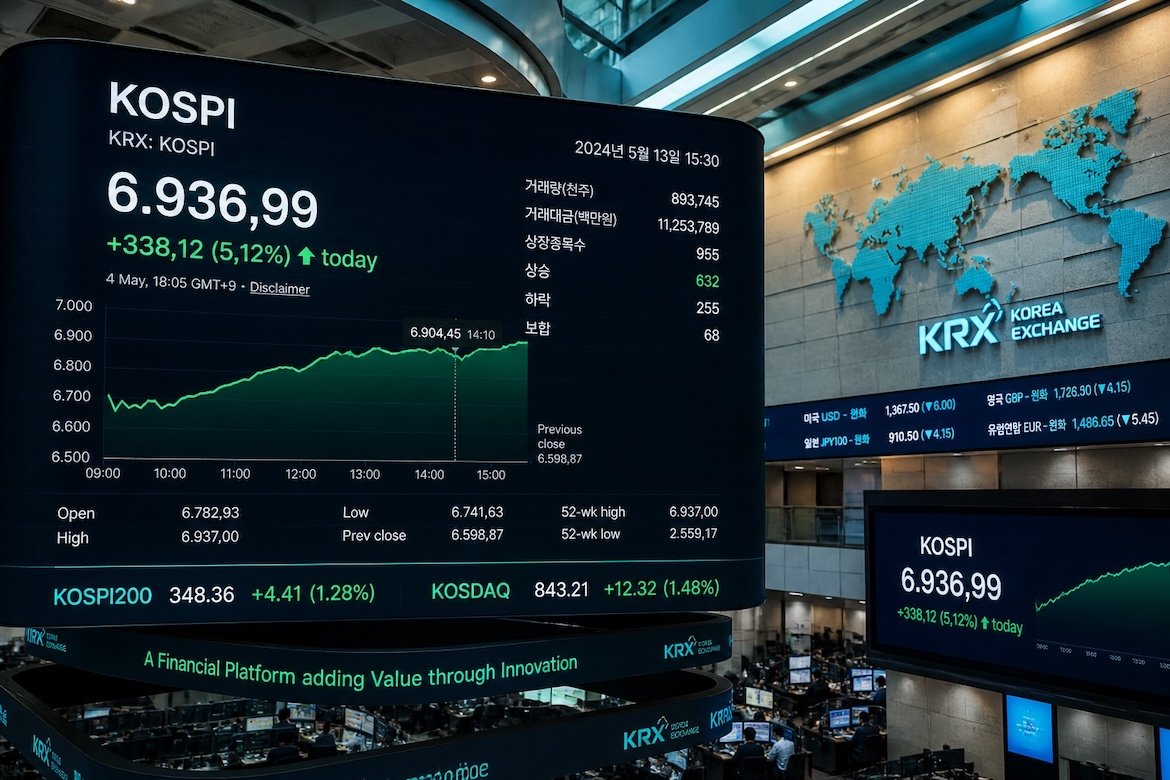
South Korea’s KOSPI index jumped 37% in just 34 days to reach a record high, fueled by surging global demand for AI semiconductors. The rally has added approximately $1 trillion in market capitalization. Photo: Oleg Petrenko / MarketSpeaker
South Korea’s benchmark stock index, the KOSPI, has surged to an all-time high, marking one of the fastest rallies in its history as global demand for artificial intelligence chips accelerates.
The index has climbed approximately 37% over the past 34 trading days, adding around ₩1,600 trillion, or roughly $1 trillion, to its total market capitalization. Over the past year, the KOSPI has gained an extraordinary 172%, reflecting a powerful shift in investor sentiment toward semiconductor-heavy markets.
The rally has been largely driven by South Korea’s dominant chipmakers, including Samsung Electronics and SK Hynix, which together account for a significant portion of the index’s weighting.
AI Boom Powers Semiconductor Exports
The primary catalyst behind the surge is the rapid expansion of artificial intelligence infrastructure worldwide. Demand for high-performance chips used in data centers, machine learning, and generative AI applications has risen sharply, benefiting major semiconductor exporters.
South Korea, one of the world’s leading chip-producing nations, has seen semiconductor exports grow at a record pace. Rising global orders have translated into stronger revenues and margin expansion for key players in the sector.
“As previously covered,” the AI-driven investment cycle has reshaped capital flows across global markets, with investors increasingly concentrating exposure in companies tied to advanced computing and chip manufacturing.
Government data shows that semiconductor exports have posted double-digit growth rates in recent months, reinforcing expectations that earnings momentum will remain strong through the next several quarters.
Market Implications and Sustainability Risks
The rapid ascent of the KOSPI underscores both the strength of the current AI-driven bull cycle and the risks associated with concentrated market leadership. With a heavy reliance on a handful of semiconductor firms, the index remains highly sensitive to shifts in global chip demand.
Investors have poured capital into South Korean equities, viewing the market as a leveraged play on the global AI boom. The near-parabolic rise, however, has raised concerns about valuation levels and the potential for short-term corrections.
Analysts note that while earnings growth currently supports the rally, expectations have become increasingly elevated. Any slowdown in semiconductor demand or disruption in supply chains could trigger volatility.
Still, momentum remains firmly intact. As long as global tech spending continues to expand, South Korea’s equity market is likely to remain a focal point for investors seeking exposure to the AI ecosystem.
The KOSPI’s record-breaking performance highlights a broader trend: semiconductor-driven economies are emerging as key beneficiaries of the next phase of technological transformation.
GameStop stock swung after CEO Ryan Cohen’s interview on a proposed $55.5 billion eBay deal failed to clarify financing. Investors questioned a reported $16–20 billion funding gap.
By Daniel Wright | Edited by Oleg Petrenko
Published:
GameStop shares fluctuated after CEO Ryan Cohen’s interview on the proposed $55.5 billion eBay acquisition failed to provide clarity on financing, leaving investors focused on a potential $16–20 billion funding shortfall. Photo: Will Buckner / Wikimedia
GameStop shares traded with heightened volatility after CEO Ryan Cohen outlined an ambitious plan to acquire eBay for approximately $55.5 billion, but failed to clearly explain how the deal would be financed.
During a live interview on CNBC, Cohen repeatedly stated that the transaction would be funded “half in cash, half in stock.” However, he did not address a financing shortfall estimated by analysts at between $16 billion and $20 billion.
Even with a reported letter indicating potential access to up to $20 billion in debt financing, the numbers appeared inconsistent. When pressed for details, Cohen avoided direct answers, at times appearing uncertain, prompting visible reactions from interviewers and drawing attention across social media.
Financing Gaps and Strategic Questions
The proposed acquisition would represent one of the largest deals in the retail and e-commerce space in recent years. For GameStop, a company currently valued at roughly $12 billion, the scale of the transaction raises immediate questions about leverage, dilution, and execution risk.
Analysts note that issuing equity to fund a large portion of the deal would significantly increase the company’s share count. While this could mechanically raise total market capitalization, it would likely dilute existing shareholders and pressure the stock price in the near term.
“As previously covered,” GameStop has struggled to generate consistent earnings before interest, taxes, depreciation, and amortization (EBITDA), limiting its ability to fund large acquisitions organically. By contrast, eBay generates several billion dollars in annual EBITDA, making it an attractive but complex target.
Market participants also questioned the reliance on external financing. A $20 billion debt component would materially increase GameStop’s leverage, potentially affecting its credit profile and future flexibility.
Investor Sentiment and Compensation Debate
Beyond financing concerns, the proposed deal has sparked debate among investors regarding management incentives. Some market observers argue that acquiring a profitable company like eBay could rapidly boost GameStop’s consolidated EBITDA, potentially helping the company meet internal performance targets.
Cohen’s compensation structure has drawn particular attention. He reportedly holds approximately 171 million stock options tied to achieving specific milestones related to market capitalization and EBITDA performance. One key threshold includes reaching $2 billion in EBITDA and a $20 billion valuation.
If the eBay acquisition were completed, its earnings would be consolidated into GameStop’s financials, potentially accelerating progress toward those targets. However, analysts caution that such a strategy carries significant integration and financial risks.
Investor reaction has been mixed. While some view the move as a bold attempt to transform GameStop into a broader e-commerce player, others see it as a high-risk strategy lacking clear financial transparency.
The episode highlights broader concerns about governance, capital allocation, and strategic clarity. Until more concrete details emerge, GameStop shares are likely to remain sensitive to headlines and investor sentiment shifts.
GameStop has made a $55 billion bid to acquire eBay at $125 per share, signaling an aggressive move to expand into e-commerce.
By Daniel Wright | Edited by Oleg Petrenko
Published:
Updated:
Logos of GameStop and eBay displayed on digital screens. GameStop’s takeover bid marks a bold attempt to expand beyond gaming retail into global e-commerce. Photo: RealGPTV01 / Wikimedia
GameStop has made a takeover offer to acquire eBay in a deal valued at roughly $55 billion, marking one of the most ambitious moves yet by the meme-stock retailer to transform its business model.
The proposal values eBay shares at $125 each, representing a premium of about 20% over recent trading levels. The scale of the bid is notable, as it is nearly five times larger than GameStop’s own market capitalization.
The offer includes a mix of cash and stock and is part of a broader strategy to reposition GameStop as a major player in e-commerce.
Strategic Shift Toward E-Commerce Expansion
The bid reflects GameStop’s ongoing effort to evolve beyond its legacy brick-and-mortar gaming business and compete in the broader digital commerce space.
Acquiring eBay would instantly provide access to a global marketplace platform, millions of users, and established logistics and payments infrastructure.
The move aligns with leadership’s vision of transforming the company into a technology-driven retail and platform business.
As previously covered, GameStop has been exploring new growth avenues following its meme-stock surge, including digital assets, e-commerce, and platform strategies.
However, the scale of the proposed deal raises questions about financing and execution, given the significant size mismatch between the two companies.
Market Reaction Highlights Execution and Financing Risks
The proposed acquisition is likely to face skepticism from investors due to its size, complexity, and potential dilution.
Financing a $55 billion deal would require substantial capital, raising questions about how GameStop intends to structure the transaction.
There may also be regulatory hurdles, as well as concerns about integration and strategic alignment between the two businesses.
At the same time, the bold nature of the bid could attract attention from investors seeking high-risk, high-reward opportunities tied to transformation stories.
For markets, the development underscores a key theme: companies are increasingly willing to pursue aggressive strategic moves to reposition themselves in fast-changing industries.
Whether the deal progresses or not, GameStop’s bid highlights the ongoing convergence between traditional retail, e-commerce platforms, and technology-driven business models.
Elon Musk could receive a Tesla compensation package worth up to $158 billion, significantly increasing his wealth and pushing him closer to trillionaire status.
By Daniel Wright | Edited by Oleg Petrenko
Published:
Updated:
Elon Musk could receive a Tesla compensation package worth up to $158 billion, significantly boosting his wealth and bringing him closer to trillionaire status. Photo: Gage Skidmore / Wikimedia
Elon Musk could receive a Tesla compensation package valued at up to $158 billion, according to company filings, marking one of the largest potential payouts in corporate history.
The package has already contributed to Musk’s estimated net worth of around $650 billion, positioning him closer to becoming the world’s first trillionaire.
However, the compensation is tied to performance targets and other conditions, meaning the full payout depends on Tesla achieving specific milestones.
Performance-Based Structure Ties Payout to Growth
The compensation plan is structured around ambitious operational and financial goals, aligning Musk’s incentives with Tesla’s long-term performance.
Such packages are designed to reward sustained growth in areas like revenue, market capitalization, and operational expansion.
While the headline figure is massive, analysts note that the actual payout will depend on Tesla meeting these predefined targets over time.
As previously covered, Musk’s compensation has historically been heavily performance-based, often linked to Tesla’s stock performance and strategic milestones.
The approach reflects a broader trend among technology companies to tie executive pay to long-term value creation.
Market Implications Highlight Wealth Concentration and Governance Debate
The scale of the potential payout has reignited debate over executive compensation, corporate governance, and wealth concentration.
Supporters argue that the package incentivizes innovation and aligns leadership with shareholder interests.
Critics, however, question whether such large payouts are justified, particularly given their potential impact on corporate governance and investor perception.
For markets, the development underscores the outsized role of founder-led companies in driving value creation—and the financial rewards that can follow.
Musk’s trajectory will continue to be closely watched as a benchmark for both corporate performance and the evolving limits of executive compensation.
The potential payout reinforces a broader theme: in the era of megacap technology companies, wealth creation at the top end is reaching unprecedented levels.
SanDisk shares reached a new record high, rising nearly 4,000% over the past year as demand for AI data center storage continues to outpace supply.
By Daniel Wright | Edited by Oleg Petrenko
Published:
Updated:
SanDisk shares hit a new record high, surging nearly 4,000% over the past year as demand for AI data center storage continues to outstrip supply. Photo: SanDisk / X
SanDisk shares have reached a new all-time high, climbing nearly 4,000% over the past year as demand for data center storage tied to artificial intelligence continues to surge.
The rally reflects a broader shift in the technology landscape, where companies supplying critical infrastructure for AI are seeing explosive growth. SanDisk, known for producing NAND flash memory and SSDs, has emerged as a key beneficiary of this trend.
The scale of the increase is striking: a $50,000 investment a year ago would now be worth approximately $2 million, highlighting the intensity of the market’s focus on AI-linked assets.
AI Data Center Boom Drives Storage Demand
The rapid expansion of AI data centers is fueling unprecedented demand for high-performance storage solutions.
NAND flash memory plays a critical role in handling the massive volumes of data required for training and running AI models, making it an essential component of modern computing infrastructure.
As companies race to build new data centers, demand for storage has surged, while supply remains constrained due to the complexity of manufacturing advanced memory chips.
As previously covered, the AI boom has extended beyond chipmakers like Nvidia to include a wider ecosystem of suppliers, including storage, networking, and power infrastructure providers.
SanDisk is among a limited number of companies capable of producing NAND chips at scale, positioning it as a key player in meeting global demand.
Market Implications Highlight Supply Constraints and Valuation Risks
The stock’s dramatic rise underscores strong investor appetite for companies tied to AI infrastructure, particularly those with limited competition and high barriers to entry.
However, analysts caution that such rapid gains may reflect elevated expectations, raising the risk of volatility if growth slows or supply conditions change.
At the same time, supply constraints could continue to support pricing power and margins in the near term, benefiting companies like SanDisk.
Investors are also closely monitoring capital expenditure trends, as sustained investment in data centers will be critical to maintaining demand.
For markets, the development reinforces a key theme: the AI boom is reshaping multiple segments of the technology sector, creating significant opportunities—but also increasing the potential for overvaluation.
SanDisk’s performance will remain a key indicator of how long the current demand-supply imbalance in AI infrastructure can persist.
PayPal announced a strategic reorganization into three business segments, aiming to streamline operations and support future growth.
By Emma Clarke | Edited by Oleg Petrenko
Published:
PayPal announced a strategic reorganization into three business segments to streamline operations and drive future growth. Photo: Oleg Petrenko / MarketSpeaker
PayPal has announced a strategic restructuring aimed at simplifying its operations and sharpening its focus on key growth areas, as competition intensifies across digital payments and financial technology.
The company will reorganize into three core business segments: Payments and Checkout with PayPal, Consumer Financial Services centered around Venmo, and a dedicated Cryptocurrency and Payment Services unit.
The move reflects a broader effort to streamline decision-making and align resources with areas of highest growth potential.
Restructuring Targets Focus and Operational Efficiency
The new structure is designed to clarify PayPal’s strategic priorities and improve execution across its core platforms.
The Payments and Checkout segment will focus on merchant services and transaction processing, while the Venmo-led Consumer Financial Services unit will target user engagement and financial products.
The addition of a dedicated crypto and payment services division highlights PayPal’s continued commitment to digital assets and blockchain-based solutions.
As previously covered, fintech companies have been restructuring operations to better compete in a rapidly evolving landscape shaped by AI, crypto, and changing consumer behavior.
The simplified structure is expected to enhance accountability and accelerate product development across the organization.
The restructuring underscores PayPal’s efforts to remain competitive as new entrants and established players expand their offerings in payments and financial services.
Investors are likely to focus on how effectively the company can execute under the new structure and drive growth in each segment.
The emphasis on crypto services also reflects ongoing demand for digital asset integration within mainstream financial platforms.
At the same time, the payments sector remains highly competitive, with pressure on margins and user growth.
For markets, the move reinforces a key theme: fintech companies are increasingly reorganizing to focus on core strengths while adapting to emerging technologies.
PayPal’s success will depend on its ability to balance innovation with operational efficiency in a crowded and rapidly changing market.