SanDisk Shares Hit Record High, Up Nearly 4,000% as AI Storage Demand Surges

SanDisk shares reached a new record high, rising nearly 4,000% over the past year as demand for AI data center storage continues to outpace supply.

By Daniel Wright | Edited by Oleg Petrenko Published: Updated:
SanDisk Shares Hit Record High, Up Nearly 4,000% as AI Storage Demand Surges
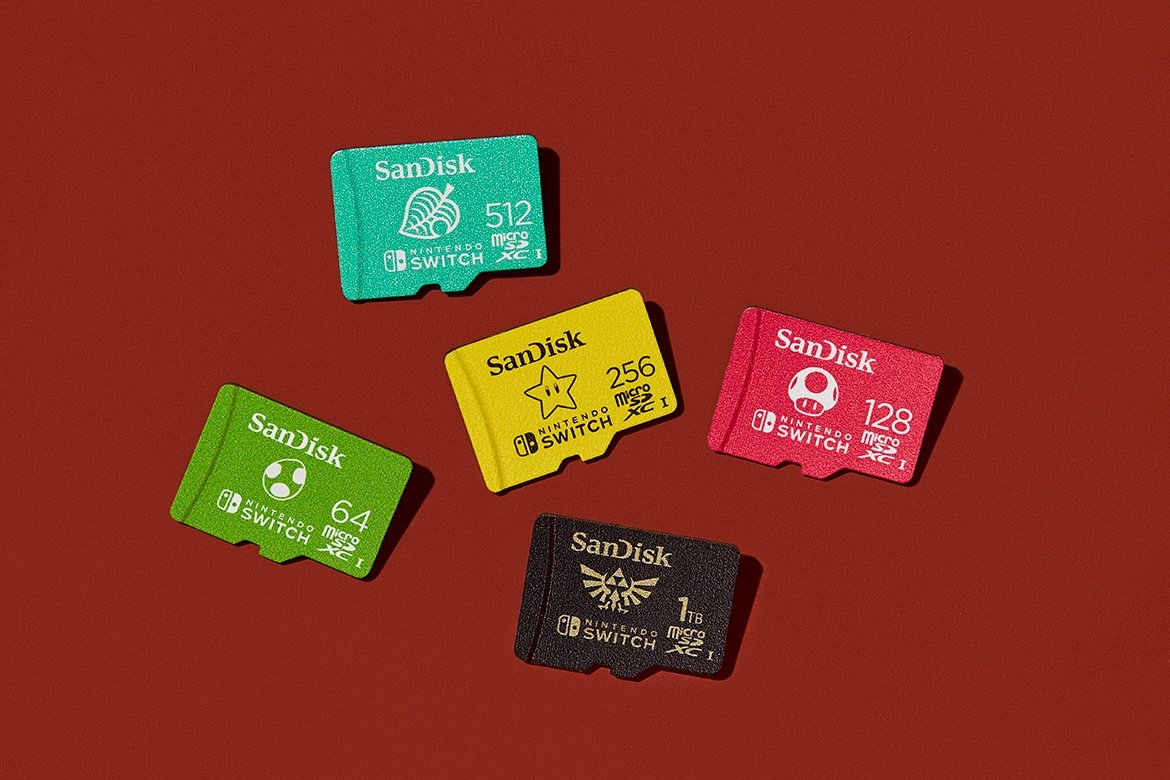
SanDisk shares hit a new record high, surging nearly 4,000% over the past year as demand for AI data center storage continues to outstrip supply. Photo: SanDisk / X

SanDisk shares have reached a new all-time high, climbing nearly 4,000% over the past year as demand for data center storage tied to artificial intelligence continues to surge.

The rally reflects a broader shift in the technology landscape, where companies supplying critical infrastructure for AI are seeing explosive growth. SanDisk, known for producing NAND flash memory and SSDs, has emerged as a key beneficiary of this trend.

The scale of the increase is striking: a $50,000 investment a year ago would now be worth approximately $2 million, highlighting the intensity of the market’s focus on AI-linked assets.

AI Data Center Boom Drives Storage Demand

The rapid expansion of AI data centers is fueling unprecedented demand for high-performance storage solutions.

NAND flash memory plays a critical role in handling the massive volumes of data required for training and running AI models, making it an essential component of modern computing infrastructure.

As companies race to build new data centers, demand for storage has surged, while supply remains constrained due to the complexity of manufacturing advanced memory chips.

As previously covered, the AI boom has extended beyond chipmakers like Nvidia to include a wider ecosystem of suppliers, including storage, networking, and power infrastructure providers.

SanDisk is among a limited number of companies capable of producing NAND chips at scale, positioning it as a key player in meeting global demand.

Market Implications Highlight Supply Constraints and Valuation Risks

The stock’s dramatic rise underscores strong investor appetite for companies tied to AI infrastructure, particularly those with limited competition and high barriers to entry.

However, analysts caution that such rapid gains may reflect elevated expectations, raising the risk of volatility if growth slows or supply conditions change.

At the same time, supply constraints could continue to support pricing power and margins in the near term, benefiting companies like SanDisk.

Investors are also closely monitoring capital expenditure trends, as sustained investment in data centers will be critical to maintaining demand.

For markets, the development reinforces a key theme: the AI boom is reshaping multiple segments of the technology sector, creating significant opportunities—but also increasing the potential for overvaluation.

SanDisk’s performance will remain a key indicator of how long the current demand-supply imbalance in AI infrastructure can persist.


Musk Could Receive $158 Billion Tesla Pay Package, Boosting Path to Trillionaire Status

Elon Musk could receive a Tesla compensation package worth up to $158 billion, significantly increasing his wealth and pushing him closer to trillionaire status.

By Daniel Wright | Edited by Oleg Petrenko Published: Updated:
Musk Could Receive $158 Billion Tesla Pay Package, Boosting Path to Trillionaire Status
Elon Musk could receive a Tesla compensation package worth up to $158 billion, significantly boosting his wealth and bringing him closer to trillionaire status. Photo: Gage Skidmore / Wikimedia

Elon Musk could receive a Tesla compensation package valued at up to $158 billion, according to company filings, marking one of the largest potential payouts in corporate history.

The package has already contributed to Musk’s estimated net worth of around $650 billion, positioning him closer to becoming the world’s first trillionaire.

However, the compensation is tied to performance targets and other conditions, meaning the full payout depends on Tesla achieving specific milestones.

Performance-Based Structure Ties Payout to Growth

The compensation plan is structured around ambitious operational and financial goals, aligning Musk’s incentives with Tesla’s long-term performance.

Such packages are designed to reward sustained growth in areas like revenue, market capitalization, and operational expansion.

While the headline figure is massive, analysts note that the actual payout will depend on Tesla meeting these predefined targets over time.

As previously covered, Musk’s compensation has historically been heavily performance-based, often linked to Tesla’s stock performance and strategic milestones.

The approach reflects a broader trend among technology companies to tie executive pay to long-term value creation.

Market Implications Highlight Wealth Concentration and Governance Debate

The scale of the potential payout has reignited debate over executive compensation, corporate governance, and wealth concentration.

Supporters argue that the package incentivizes innovation and aligns leadership with shareholder interests.

Critics, however, question whether such large payouts are justified, particularly given their potential impact on corporate governance and investor perception.

For markets, the development underscores the outsized role of founder-led companies in driving value creation—and the financial rewards that can follow.

Musk’s trajectory will continue to be closely watched as a benchmark for both corporate performance and the evolving limits of executive compensation.

The potential payout reinforces a broader theme: in the era of megacap technology companies, wealth creation at the top end is reaching unprecedented levels.

PayPal Restructures Into Three Core Units to Accelerate Growth Strategy

PayPal announced a strategic reorganization into three business segments, aiming to streamline operations and support future growth.

By Emma Clarke | Edited by Oleg Petrenko Published:
PayPal Restructures Into Three Core Units to Accelerate Growth Strategy
PayPal announced a strategic reorganization into three business segments to streamline operations and drive future growth. Photo: Oleg Petrenko / MarketSpeaker

PayPal has announced a strategic restructuring aimed at simplifying its operations and sharpening its focus on key growth areas, as competition intensifies across digital payments and financial technology.

The company will reorganize into three core business segments: Payments and Checkout with PayPal, Consumer Financial Services centered around Venmo, and a dedicated Cryptocurrency and Payment Services unit.

The move reflects a broader effort to streamline decision-making and align resources with areas of highest growth potential.

Restructuring Targets Focus and Operational Efficiency

The new structure is designed to clarify PayPal’s strategic priorities and improve execution across its core platforms.

The Payments and Checkout segment will focus on merchant services and transaction processing, while the Venmo-led Consumer Financial Services unit will target user engagement and financial products.

The addition of a dedicated crypto and payment services division highlights PayPal’s continued commitment to digital assets and blockchain-based solutions.

As previously covered, fintech companies have been restructuring operations to better compete in a rapidly evolving landscape shaped by AI, crypto, and changing consumer behavior.

The simplified structure is expected to enhance accountability and accelerate product development across the organization.

Market Implications Highlight Competitive Positioning

The restructuring underscores PayPal’s efforts to remain competitive as new entrants and established players expand their offerings in payments and financial services.

Investors are likely to focus on how effectively the company can execute under the new structure and drive growth in each segment.

The emphasis on crypto services also reflects ongoing demand for digital asset integration within mainstream financial platforms.

At the same time, the payments sector remains highly competitive, with pressure on margins and user growth.

For markets, the move reinforces a key theme: fintech companies are increasingly reorganizing to focus on core strengths while adapting to emerging technologies.

PayPal’s success will depend on its ability to balance innovation with operational efficiency in a crowded and rapidly changing market.

Anthropic Eyes $50 Billion Funding Round at Up to $900 Billion Valuation

Anthropic is reportedly in talks to raise up to $50 billion at a valuation approaching $900 billion, reflecting surging demand for AI investments.

By Sophia Reynolds | Edited by Oleg Petrenko Published:
Anthropic Eyes $50 Billion Funding Round at Up to $900 Billion Valuation
Anthropic is reportedly in talks to raise up to $50 billion at a valuation nearing $900 billion, underscoring strong demand for AI investments. Photo: Oleg Petrenko / MarketSpeaker

Anthropic is reportedly exploring a new funding round of up to $50 billion at a valuation between $850 billion and $900 billion, underscoring the extraordinary pace of capital inflows into artificial intelligence companies.

The potential raise would rank among the largest private funding rounds ever, positioning Anthropic as one of the most valuable technology companies globally even before a public listing.

The discussions come amid strong investor demand, with multiple pre-emptive offers reportedly submitted at elevated valuations.

Investor Demand Drives Record-Scale Funding Talks

Anthropic’s rapid valuation growth reflects intense competition among investors seeking exposure to leading AI developers.

The company, known for its Claude AI models, has emerged as a major competitor in the generative AI space, attracting significant interest from both institutional and strategic investors.

Large funding rounds have become increasingly common in the sector, as companies require substantial capital to build infrastructure, train models, and scale operations.

As previously covered, venture capital and private equity firms have significantly increased allocations to AI, driving valuations higher across the industry.

The potential $50 billion raise would further solidify Anthropic’s position as a central player in the global AI race.

Market Implications Highlight AI Valuation Surge

The scale of the proposed funding round highlights both the opportunity and the risks associated with current AI valuations.

While strong demand supports higher pricing, analysts caution that expectations for growth and monetization are also rising.

Investors will be closely watching whether companies like Anthropic can translate technological leadership into sustainable revenue streams.

At the same time, large private valuations may influence public markets, particularly as companies prepare for potential IPOs.

For markets, the development reinforces a key theme: AI remains one of the most capital-intensive and competitive sectors, with funding levels continuing to reach unprecedented levels.

Anthropic’s next move could set a benchmark for future fundraising and shape investor sentiment heading into a potential wave of major technology listings.

Meta to Pay Creators in Stablecoins via Stripe in Select Markets

Meta will begin paying creators in stablecoins through Stripe, starting in Colombia and the Philippines, as it expands digital payment options.

By David Sinclair | Edited by Oleg Petrenko Published:
Meta to Pay Creators in Stablecoins via Stripe in Select Markets
Meta will start paying creators in stablecoins via Stripe, initially in Colombia and the Philippines, as it expands its digital payment options. Photo: Oleg Petrenko / MarketSpeaker

Meta is set to begin paying creators in stablecoins through a partnership with Stripe, marking a renewed step into digital payments after its earlier cryptocurrency ambitions stalled.

The program will initially launch in Colombia and the Philippines, where creators will be able to receive payments in stablecoins and convert them into local currency.

The move highlights Meta’s effort to expand monetization tools for creators while leveraging blockchain-based payment infrastructure without issuing its own token.

Stablecoin Strategy Reflects Shift After Libra Setback

The initiative comes after Meta’s high-profile Libra (later Diem) project was discontinued in 2022 following regulatory pushback.

Instead of launching its own cryptocurrency, Meta is now opting to integrate existing stablecoin solutions, reducing regulatory risk while still benefiting from faster and cheaper cross-border payments.

Stripe’s infrastructure will facilitate the transactions, providing a compliant and scalable framework for handling crypto-based payouts.

As previously covered, stablecoins have gained traction as a practical use case for blockchain technology, particularly in international payments and remittances.

The focus on emerging markets reflects demand for more efficient payment systems in regions where traditional banking infrastructure can be limited or costly.

Market Implications Highlight Growing Role of Crypto Payments

The rollout underscores a broader trend of major technology companies exploring crypto-based payment solutions without directly issuing digital assets.

For creators, stablecoin payouts could offer faster settlement times and reduced fees compared to traditional payment methods.

For Meta, the move represents a cautious re-entry into the digital finance space, balancing innovation with regulatory considerations.

At the same time, adoption will depend on user trust, ease of conversion to local currencies, and regulatory clarity in different jurisdictions.

For markets, the development reinforces a key theme: stablecoins are emerging as one of the most viable applications of crypto technology, particularly for payments and financial inclusion.

Meta’s approach may serve as a model for other platforms seeking to integrate blockchain-based solutions without taking on the risks associated with launching proprietary tokens.

SpaceX IPO Structure Gives Musk Near-Total Control Over Leadership Decisions

SpaceX’s planned dual-class share structure will give Elon Musk dominant voting power, allowing him to retain control over key decisions, including leadership changes.

By Daniel Wright | Edited by Oleg Petrenko Published:
SpaceX IPO Structure Gives Musk Near-Total Control Over Leadership Decisions
SpaceX’s planned dual-class share structure will grant Elon Musk dominant voting power, enabling him to retain control over key decisions, including leadership changes. Photo: Gage Skidmore / X

SpaceX is preparing to go public with a dual-class share structure that will grant Elon Musk near-total control over the company, even after listing shares on public markets.

Under the proposed structure, the company will issue two classes of shares: standard shares for public investors and high-voting shares primarily held by founders and early investors.

Musk is expected to hold the majority of the high-voting stock, effectively giving him the ability to control major corporate decisions unilaterally.

Dual-Class Structure Ensures Founder Control

The dual-class system allows Musk to retain decision-making authority over key aspects of the company, including executive leadership and board composition.

This means that even as public investors buy into SpaceX, their voting power will remain limited compared to Musk’s concentrated control.

Such structures are increasingly common among major technology companies, enabling founders to pursue long-term strategies without being constrained by short-term market pressures.

As previously covered, similar governance models have been used by companies like Meta and Alphabet, where founders maintain outsized voting rights.

For SpaceX, the approach is designed to preserve strategic continuity as the company scales operations and enters public markets.

Market Implications Highlight Governance Trade-Offs

While the structure may appeal to investors seeking exposure to SpaceX’s growth, it also raises governance concerns.

Limited shareholder influence can reduce accountability and increase the risk of decisions being concentrated in the hands of a single individual.

At the same time, supporters argue that founder-led control can support long-term innovation, particularly in capital-intensive and high-risk industries like aerospace.

For investors, the key consideration will be whether Musk’s leadership continues to deliver strong performance and strategic execution.

The structure also reinforces a broader trend in tech IPOs, where companies prioritize control over traditional shareholder rights.

SpaceX’s governance model will likely become a focal point for market debate as the company moves closer to its anticipated public listing.