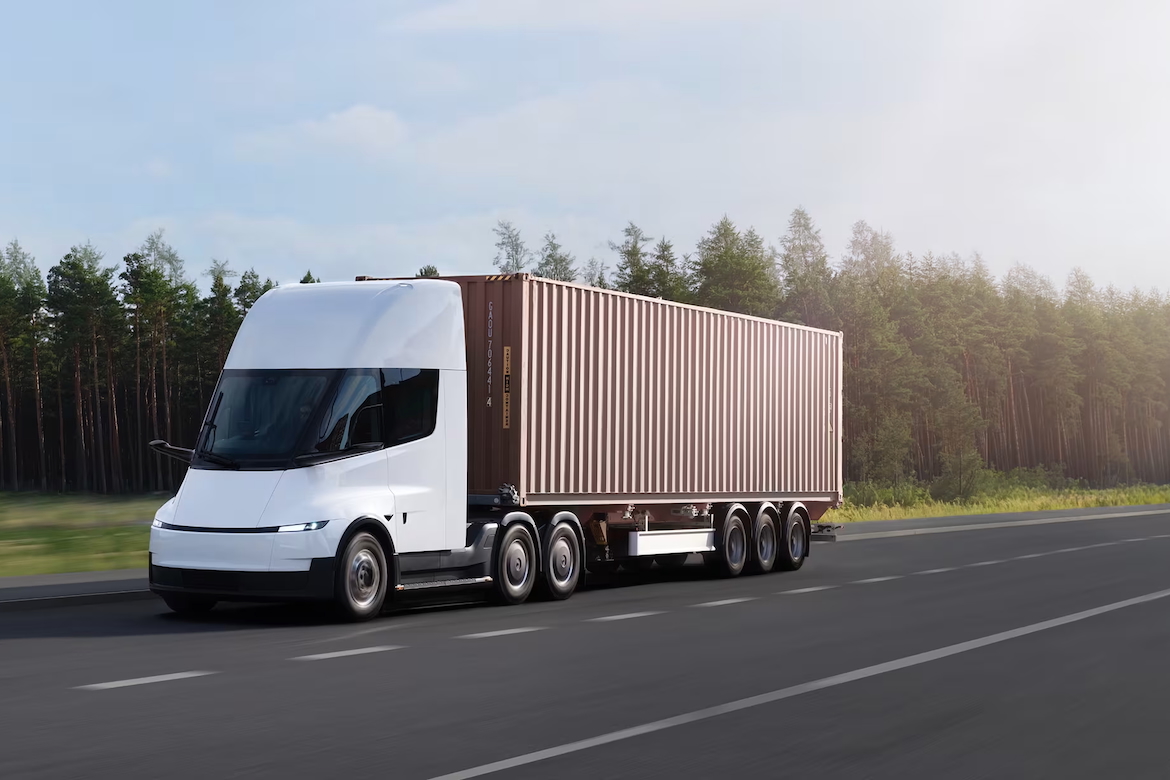
Tesla, Inc. (NASDAQ: TSLA) has officially opened its first factory dedicated to high-volume production of the Semi, marking a major step in the electric vehicle maker’s push beyond passenger cars and into the massive commercial trucking market.
The new facility in Sparks, Nevada, is designed to eventually produce as many as 50,000 Tesla Semi trucks annually. Tesla executives said the company is beginning deliveries to its first group of customers from the new production operation, nearly nine years after CEO Elon Musk first unveiled the electric heavy-duty truck.
Tesla Begins High-Volume Semi Production
Tesla inaugurated the Nevada facility on September 24 and said production had entered its high-volume phase. The first truck had already rolled off the new production line in April, but the factory opening represents the beginning of Tesla’s broader commercial ramp.
The company did not disclose its current production rate or provide a detailed timetable for reaching the plant’s 50,000-unit annual capacity. Tesla also declined to announce final pricing for the Semi during the event.
Initial customers include PepsiCo, DHL and US Foods, according to Tesla executives. PepsiCo has already operated early versions of the Semi after Tesla began limited deliveries in late 2022.
The commercial pipeline is also expanding. Tesla recently became the primary manufacturer selected for an order involving 2,500 electric Class 8 trucks organized by a coalition of major cargo owners that includes Microsoft and PepsiCo. Swedish freight technology company Einride has separately announced plans to add 500 Tesla Semis to its fleet.
Tesla Targets the Heavy-Duty Truck Market
The Semi gives Tesla access to a market far beyond the electric passenger vehicles that generate most of its automotive revenue.
Tesla says the truck can travel as far as 500 miles on a full charge while operating at a gross combined weight of 82,000 pounds. The company is pitching the Semi to fleet operators partly on operating economics, arguing that electricity can provide substantially lower energy costs per mile than diesel.
That argument has become more relevant as U.S. diesel prices have climbed sharply, increasing fuel expenses for trucking companies.
Musk said in a recorded message shown during the Nevada event that demand for the vehicle was already substantial and encouraged potential customers to place orders. He also reiterated Tesla’s plan to eventually bring autonomous-driving capabilities to the Semi.
Tesla has not provided a timetable for fully autonomous commercial operation.
Semi Finally Moves Beyond Limited Production
The production ramp represents an important milestone for a vehicle that has experienced years of delays.
Tesla unveiled the Semi in 2017 and originally expected production to begin in 2019. Limited deliveries eventually started in December 2022, primarily with PepsiCo, while Tesla continued developing the manufacturing system required for significantly larger volumes.
The dedicated Nevada plant changes that equation. The approximately 1.7 million-square-foot facility was built specifically to support high-volume Semi manufacturing and gives Tesla a production base capable of serving much larger commercial fleets.
Still, reaching the stated 50,000-unit capacity will require a substantial ramp from current production. Tesla did not say when it expects the factory to reach that level.
Tesla Stock Slips 0.57%
Tesla, Inc. (NASDAQ: TSLA) shares closed September 24 at $377.94, down 0.57%, giving the company a market capitalization of roughly $1.5 trillion.
The stock traded between $375.70 and $383.33 during the regular session. Because Tesla’s Semi event took place after the U.S. market close, the day’s decline largely preceded the company’s detailed factory presentation and cannot be attributed directly to the rollout.
Extended-hours trading showed little immediate reaction, with Tesla shares around 0.05% higher at $378.14 later Thursday evening.
For investors, the larger question is whether Semi can eventually become a meaningful contributor to Tesla’s automotive business. A factory operating anywhere near its planned 50,000-truck annual capacity would represent a significant expansion into commercial transportation, but Tesla has not yet disclosed enough information on production costs, pricing or margins to determine the financial impact.
The Nevada opening nevertheless moves Semi from years of limited deployment toward commercial-scale manufacturing. Tesla now has to demonstrate that it can turn its growing order pipeline into sustained high-volume production.