Key Notes
- KOSPI fell 7.4% intraday as Samsung and SK hynix slumped, with a five-minute program-selling restriction triggered earlier in the session.
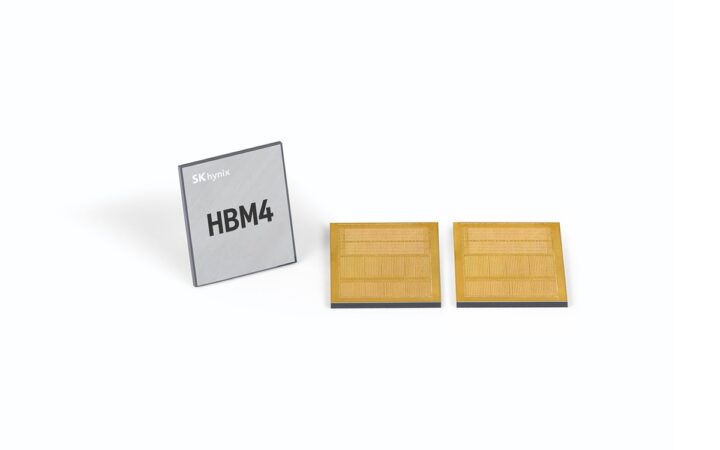
- CXMT’s planned server-memory launch raises competitive concerns, although the timetable does not establish a proven production or technology lead.
- Korea separately approved restrictions on 27 crypto websites and is preparing a 2027 gains-tax framework with a combined 22% rate.
South Korea’s KOSPI sank 7.4% in intraday trading on October 13 as investors sold major memory-chip makers amid concerns about Chinese competition and the durability of the AI boom. The selloff coincided with separate moves to restrict access to unregistered crypto platforms and prepare for a digital-asset tax in 2027.
The Associated Press reported the benchmark at 5,914.35, its lowest level since late July. Samsung Electronics Co. Ltd. (KRX: 005930) fell 7.7%, while SK hynix Inc. (KRX: 000660) dropped 8.8%.
Those figures come from AP’s report updated at 03:24 UTC, or 12:24 p.m. in Seoul, and describe the session in progress rather than closing returns. The distinction matters during a volatile day when prices and percentage losses can change quickly.
A Chip Selloff Triggers Trading Curbs
The Korea Exchange activated a five-minute sell-side sidecar at 9:47:58 a.m. Korean time, Yonhap reported, after KOSPI 200 futures fell 5.08% from the previous reference level.
Under the exchange’s rules, a futures move of at least 5% lasting one minute can temporarily suspend the effectiveness of program-trading orders in that direction. The measure limits automated selling pressure; it is narrower than a suspension of all stock-market trading.
The weakness followed another difficult session. Foreign investors sold approximately ₩2 trillion of Korean shares on October 12, when the KOSPI fell 3.65%, SBS reported. On Wall Street that Monday, Micron Technology Inc. (NASDAQ: MU) lost 3.9%, according to AP.
CXMT’s Plans Raise a Competitive Question
A fresh concern is the technology roadmap of China’s ChangXin Memory Technologies, or CXMT, the memory business of ChangXin Technology (SSE: 688825). Yicai reported that CXMT president Cao Kanyu outlined a 4F² DRAM architecture at an October 10 semiconductor conference in Shanghai.
Cao said the company expected to introduce DDR5 registered memory modules for servers using the architecture by year-end. The design reduces the area occupied by a memory cell relative to the mainstream 6F² approach, potentially increasing the amount of data stored in a given chip area.
The announcement is a product-development claim and launch target, rather than proof that CXMT has already displaced established suppliers. Server memory also requires reliability, customer qualification and production consistency before new technology can translate into substantial commercial sales.
The often-cited two-year lead over Samsung refers to reported product roadmaps. Money Today noted that an early introduction would not establish overall technological superiority, and that initial products may adopt only part of the new approach. Yield, cost and production scale remain important tests.
Strong Earnings Do Not Remove Share-Price Risk
The selloff illustrates how quickly investors can reassess future competition even when recent operating results are strong. A company’s latest profit measures business already generated; its share price also reflects expectations for future prices, demand and margins.
As we previously reported, Samsung shares fell after its record preliminary third-quarter operating-profit estimate. The latest decline adds a different concern: whether emerging memory suppliers could eventually challenge the profitability investors have come to expect.
For Korean equities, concentrated selling in major chipmakers can influence the broader index and fund flows. Tuesday’s price action establishes investor concern, but does not by itself quantify any future loss of market share or earnings.
Crypto Spillover Is a Risk, Not a Proven Flow
Losses in shares can affect other assets through reduced risk appetite and demands for cash. An investor facing a stock-related margin call might sell a liquid crypto holding to meet it; another might simply reduce speculative exposure after a portfolio drawdown.
Those are possible transmission channels, not evidence that forced crypto selling caused a particular token’s move on October 13. Demonstrating that link would require transaction, liquidation or investor-positioning data beyond the stock-market reports.
The exchange-access restrictions are a separate regulatory development. They should not be presented as the cause of the chip selloff or as proof that Korean investors are withdrawing from all crypto markets.
Authorities Approve Blocks on 27 Crypto Websites
South Korea’s Financial Intelligence Unit announced that domestic access restrictions had been approved for 27 active websites operated by unregistered crypto service providers, following communications-regulator reviews on October 6 and 7.
The decision includes KuCoin, MEXC, Phemex, BingX and Bitrue, as CoinScreamer reported. It extends earlier app-installation and update restrictions to websites, under rules requiring registration when platforms target Korean customers.
The FIU acknowledged that existing users could encounter withdrawal difficulties and said it would coordinate guidance through the Digital Asset Exchange Alliance and the operators. Its notice does not establish a single activation time for every website or every internet connection.
Crypto Tax Preparations Point to 2027
National Tax Service commissioner Lim Kwang-hyun said officials were preparing to implement crypto taxation without disruption, Yonhap reported from an October 13 parliamentary audit. He also acknowledged challenges in tracking some wallet-to-wallet activity.
The NTS’s guidance sets January 1, 2027 as the start date for taxable income from transferring or lending virtual assets. It lists an annual ₩2.5 million basic deduction and a 20% national rate; the combined burden is 22% with local income tax, as law firm Yulchon explains.
The levy concerns taxable income, rather than 22% of every sale or an investor’s entire crypto balance. The first annual reporting period for 2027 income is May 2028. For investors, the immediate issues are stock-market volatility and platform access, while the tax changes the framework for next year’s activity.