Key Notes
- Intel and Broadcom’s CEOs warn that financing costs and the need for returns could constrain AI infrastructure expansion.
- Both executives remain positive on near-term computing demand despite the longer-term funding risks.
- Company filings show strong AI-related sales, while the IEA highlights growing reliance on capital markets.
The chief executives of Intel Corp. (NASDAQ: INTC) and Broadcom Inc. (NASDAQ: AVGO) warned that access to capital could become a major constraint on the AI infrastructure boom, even as demand for computing capacity remains strong.
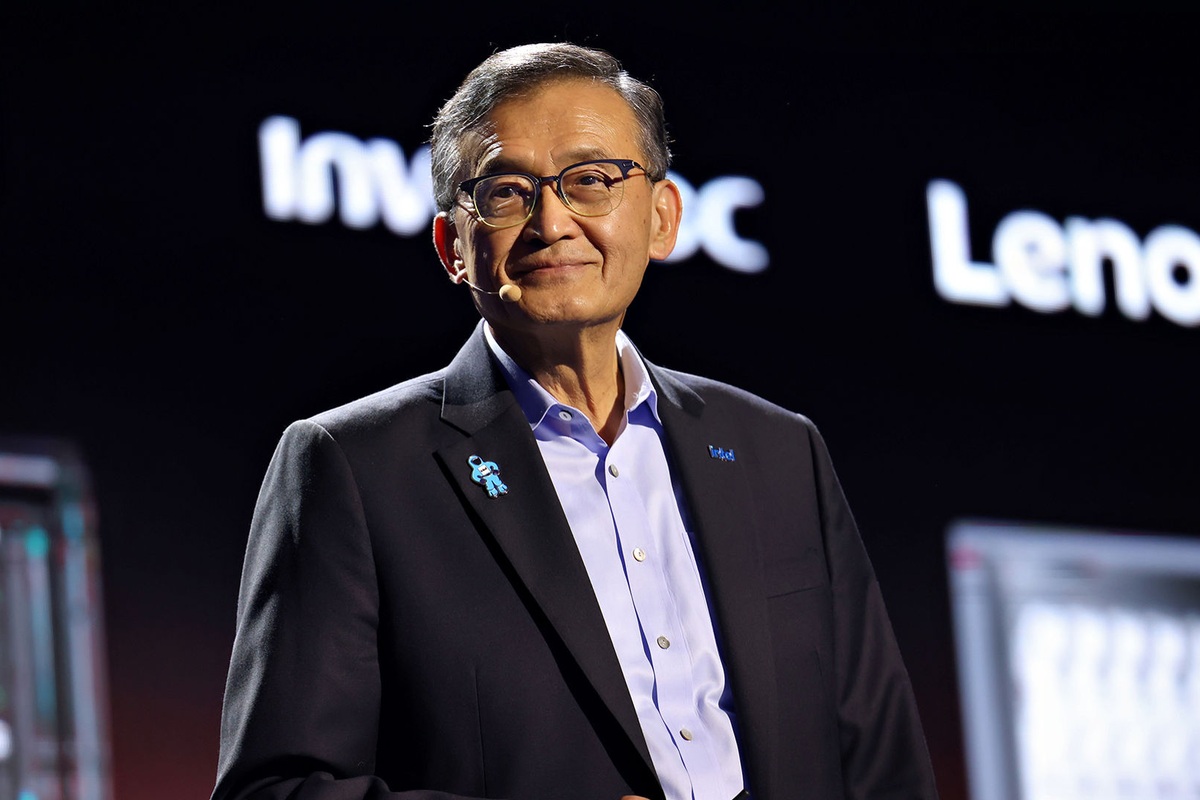
Broadcom’s Hock Tan and Intel’s Lip-Bu Tan made the remarks at the DBS Asia Future Forward Conference in Singapore on October 12, CNBC reported. DBS’s official agenda confirms their joint appearance in a session on financing the next trillion dollars in AI, moderated by DBS chief executive Tan Su Shan.
The warning puts funding alongside chips, electricity and construction capacity as a test of how quickly the industry can expand. For investors, the issue is whether projects can secure affordable capital and earn enough to justify their cost.
Capital Becomes a Constraint
Hock Tan identified capital as potentially the biggest bottleneck. Lip-Bu Tan emphasized financing costs and the need to demonstrate returns, according to CNBC.
They nevertheless expected robust demand in the next few years. Hock Tan saw computing demand exceeding supply into 2029, potentially 2030, while warning that weaker adoption or slowing model improvements could eventually curb expansion.
Those comments describe risks to future investment, rather than an announcement of canceled projects or reduced company guidance. The distinction matters when assessing a sector whose suppliers, cloud operators and model developers have different spending commitments and sources of funding.
The Buildout Is Outgrowing Balance Sheets
The International Energy Agency’s 2026 assessment provides a financial backdrop. Capital expenditure by the largest technology companies exceeded $400 billion in 2025 and was expected to rise another 75% in 2026. The latter figure is an estimate, not a completed annual spending total.
The agency argues that data-center investment has become too large to rely on company balance sheets alone. Access to capital markets therefore influences the pace of construction, alongside investor expectations for returns and broader financing conditions.
It also estimates that global data-center electricity consumption grew 17% in 2025, with AI-focused facilities expanding much faster. That creates overlapping funding needs: processors require servers, cooling, network equipment and reliable power before they can serve customers.
The IEA’s analysis does not say every proposed facility will be built. A project pipeline signals ambition, while completed construction, available electricity and paying customers determine how much capacity becomes commercially useful.
Broadcom’s Results Show Demand Is Already Generating Revenue
Broadcom’s latest results illustrate why the financing warning should be separated from a claim that AI demand has disappeared.
For its fiscal third quarter ended August 2, the company reported $29.6 billion in revenue, up 86% year over year. AI semiconductor revenue reached $16.7 billion, an increase of 221%, driven by custom accelerators and networking.
Operating cash flow was $14.2 billion, while capital expenditure was approximately $500 million. Broadcom reported $13.7 billion in free cash flow, its measure of operating cash generation after capital spending.
Those figures describe Broadcom’s finances, not the cash available to every buyer of its products. A supplier can generate substantial cash while customers still need external funding to deploy the equipment they order.
Broadcom’s September outlook called for approximately $34.8 billion in fourth-quarter revenue. That was company guidance at the time of the release, rather than a new forecast issued at the Singapore conference.
Intel’s Opportunity Also Depends on Execution
Intel’s July 23 filing reported second-quarter revenue of $16.1 billion, up 25% from a year earlier. Its Data Center and AI segment generated $6.3 billion, an increase of 59%.
Lip-Bu Tan’s accompanying statement identified opportunities across CPUs, custom chips, advanced packaging and foundry manufacturing. The figures provide evidence of demand across Intel’s business, but do not quantify the returns customers will earn from their own AI spending.
Intel’s manufacturing exposure also makes the timing of investment important. Building capacity and qualifying production precede the revenue those assets may generate. Matching expansion to customer commitments remains different from assuming that broad enthusiasm guarantees profitable utilization.
Financing Terms Matter as Much as Headline Amounts
The scale of the funding requirement is already visible in individual transactions. Space Exploration Technologies Corp. (NASDAQ: SPCX), better known as SpaceX, has discussed a $40 billion financing package for AI chips, as we previously reported. The talks should not be treated as a completed debt placement.
Lambda’s fundraising plans show another route to financing computing capacity, as we reported. New equity and borrowing have different consequences: equity can dilute ownership, while debt adds interest payments and repayment obligations.
Higher borrowing costs raise the cash a project must generate to cover financing. They can also reduce the present value investors assign to earnings expected years ahead, making the timing and reliability of customer revenue more important.
The practical tests now extend beyond securing chips. Investors will be watching funding commitments, deployment schedules, utilization and cash generation to judge whether the next wave of AI capacity can finance itself over time.