The global economy connects countries through trade, finance, production, technology, migration, and policy. Learn how those links transmit growth, inflation, and risk.
The global economy appears frequently in economic news, policy discussions, business planning, and market analysis. The term can look simple at first, yet its meaning depends on definitions, measurement choices, timing, and the mechanism connecting it with the wider economy. A clear framework is therefore more useful than memorizing one headline number.
This beginner’s guide explains the concept step by step and connects it with our published guides to GDP, interest rates, and recessions. It also builds a path into the related explanations of tariffs, inflation, and economic indicators in this Economy series.
What Is the Global Economy?
The global economy is the combined system of national and regional economies connected through trade, investment, finance, technology, migration, information, and institutions. It is not one government or market, but a network in which decisions in one place affect outcomes elsewhere.
A useful starting point is to separate the definition from its consequences. The concept describes a particular economic relationship; whether that relationship is beneficial or harmful depends on its size, duration, causes, distribution, and the conditions already present when it changes.
Trade in Goods and Services
Countries exchange goods and services because resources, skills, technologies, preferences, and production costs differ. Trade can expand choice and specialization, but gains are unevenly distributed and adjustment can be painful for exposed workers, industries, and regions.
The mechanism is a chain rather than a single event. Households, companies, banks, investors, and governments respond at different speeds, and one group’s adjustment becomes another group’s income, cost, asset, or liability. That is why the final outcome can differ from the first-round effect.
Global Supply Chains
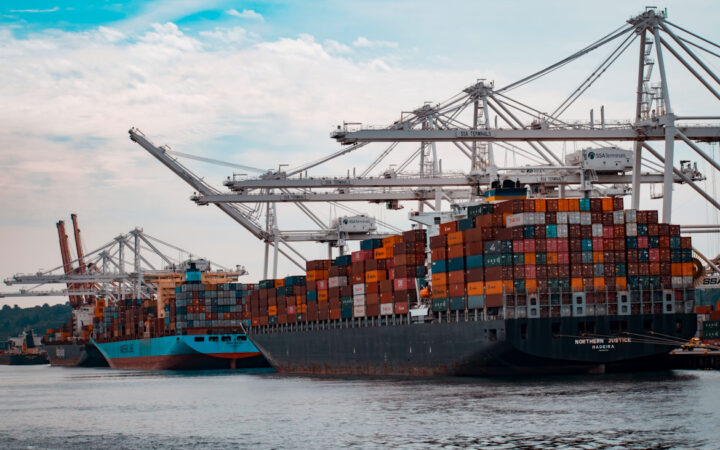
Modern products often cross borders several times before reaching a consumer. Design, components, assembly, logistics, and marketing may occur in different economies. This specialization can reduce costs while creating exposure to transport disruption, conflict, disasters, and policy barriers.
Measurement requires a stated population, time period, data source, and comparison basis. Readers should check whether a figure is monthly, quarterly, annualized, nominal, real, seasonally adjusted, or revised. Similar-looking percentages can answer very different questions.
For additional context, MarketSpeaker’s glossary explains assets and factor markets, two terms that often appear beside this subject in financial and economic reporting.
Capital Flows and International Finance
Savings can finance investment abroad through bonds, loans, equities, and direct investment. Capital flows support growth and diversification but can reverse suddenly when risk appetite or interest-rate expectations change, placing pressure on currencies, banks, and borrowers.
Several forces normally operate together, which makes one-cause explanations unreliable. Analysts should ask which driver changed first, how broadly the effect spread, whether financing conditions amplified it, and what evidence would disprove the preferred explanation.
In this section, the essential analytical lens is the cross-border flows of goods, services, capital, people, technology, information, and policy spillovers. That lens makes it easier to distinguish a broad economic development from a short-lived statistical movement and to connect the data with decisions made in households, boardrooms, markets, and public institutions.
Currencies and Exchange Rates
Exchange rates translate prices and incomes between currencies. Appreciation makes imports cheaper and exports less competitive, while depreciation usually does the reverse and can add inflation. The result depends on contracts, market structure, policy, and how quickly volumes adjust.
For households, averages can hide large differences. Income, age, location, employment, housing, savings, debt, and consumption patterns determine exposure. The same economic change may help a saver, hurt a borrower, and leave another family almost unaffected.
Personal experience remains valuable but incomplete. A household can observe real pressure before it appears clearly in an average, or feel little change while national data move sharply. Comparing lived experience with a transparent benchmark is more informative than treating either one as automatically decisive.
Labor, Migration, and Remittances
People move for work, safety, education, and family. Migration can relieve skill shortages and raise output while creating adjustment needs in housing and services. Remittances transfer income across borders and are important to many household and national budgets.
Companies experience the issue through revenue, wages, input costs, inventories, financing, investment, and customer demand. Market power and balance-sheet strength determine how much a firm can absorb, pass on, hedge, or postpone before employment and production change.
Business responses also create second-round effects. A decision to change prices, hiring, inventories, borrowing, or investment affects suppliers and workers, whose responses then influence demand elsewhere. These feedback loops explain why small initial changes sometimes become economy-wide movements.
Technology and Productivity Diffusion
Ideas, equipment, management practices, and digital services spread through trade and investment. Technology diffusion can raise productivity beyond the country where an invention began. Access remains unequal because infrastructure, skills, finance, institutions, and intellectual-property rules differ.
Financial markets look forward, so prices often react before official statistics confirm a turn. Investors compare new information with expectations and then reconsider cash flows, discount rates, risk premiums, liquidity, and policy. A predictable result may produce little movement.
Market prices provide continuous information, but they are not objective forecasts. Positioning, liquidity, regulation, and risk tolerance can move prices alongside economic expectations. Using market signals with the underlying data produces a more balanced interpretation.
How Global Shocks Spread
Energy shocks, pandemics, wars, financial stress, and policy changes travel through prices, supply chains, capital markets, confidence, and trade. Exposure is not uniform: import dependence, debt currency, reserves, economic diversity, and institutions determine resilience.
Policy works with delays and incomplete information. Officials must distinguish a temporary disturbance from a persistent shift while considering side effects. Action that is too small may lack credibility, while action that is too large can create unnecessary economic and financial damage.
The policy debate should include distribution and time horizon as well as the average effect. A measure that supports activity today may create costs later, while a policy that improves long-term stability can cause near-term strain. There is rarely a tool without trade-offs.
Global Institutions and Cooperation
Institutions provide forums, lending, data, standards, and dispute procedures. Cooperation can address problems that cross borders, but agreements reflect different interests and power. National governments retain authority over many decisions even when coordination would improve collective outcomes.
Connections with other indicators provide a reliability check. Output, employment, prices, credit, income, and expectations should tell a broadly coherent story. When they diverge, the divergence is often the most informative part of the analysis rather than a reason to ignore inconvenient data.
Cross-checking is especially important when the economy is near a turning point. Data arrive at different frequencies and may be revised, so apparent contradictions are normal. A sequence of consistent releases is more convincing than one isolated surprise.
How the Global Economy Affects Households and Firms
Global links influence jobs, wages, consumer prices, investment returns, and product choice. Companies gain larger markets and suppliers but face exchange-rate, regulatory, geopolitical, and logistics risks. Households experience both lower-cost imports and competition-driven adjustment.
A common mistake is to treat a label as a verdict. Economic terms organize evidence; they do not by themselves prove a cause, predict a date, or settle who gains and loses. Good analysis moves from definition to mechanism and then tests the conclusion against several observations.
How to Read Global Economic Conditions
No single number summarizes the world. Analysts compare growth, inflation, trade volumes, commodity prices, purchasing-manager surveys, financial conditions, and country data. Weighting by market exchange rates or purchasing power can also change the apparent global picture.
For practical reading, note the latest level, its direction, its rate of change, and its historical range. Then compare the release with expectations and earlier revisions. This routine reduces the temptation to overreact to a single dramatic number or isolated news story.
The Bottom Line for Beginners
The global economy is a network of interdependence, not a perfectly integrated whole. Understanding transmission channels helps explain why a distant rate decision, commodity shock, shipping delay, or tariff can affect local prices, employment, and investment.
The most durable lesson is to focus on relationships and trade-offs. A beginner does not need a perfect forecast to reason well; identifying what is measured, what could change it, who is exposed, and which signals would confirm the story is already a strong foundation.
Frequently Asked Questions
What is the global economy in simple terms?
The global economy is the combined system of national and regional economies connected through trade, investment, finance, technology, migration, information, and institutions. It is not one government or market, but a network in which decisions in one place affect outcomes elsewhere.
How is the global economy measured or observed?
Modern products often cross borders several times before reaching a consumer. Design, components, assembly, logistics, and marketing may occur in different economies. This specialization can reduce costs while creating exposure to transport disruption, conflict, disasters, and policy barriers.
What can cause the global economy to change?
Exchange rates translate prices and incomes between currencies. Appreciation makes imports cheaper and exports less competitive, while depreciation usually does the reverse and can add inflation. The result depends on contracts, market structure, policy, and how quickly volumes adjust.
Why does the global economy matter to households?
Energy shocks, pandemics, wars, financial stress, and policy changes travel through prices, supply chains, capital markets, confidence, and trade. Exposure is not uniform: import dependence, debt currency, reserves, economic diversity, and institutions determine resilience.
What is the main lesson for beginners?
The global economy is a network of interdependence, not a perfectly integrated whole. Understanding transmission channels helps explain why a distant rate decision, commodity shock, shipping delay, or tariff can affect local prices, employment, and investment.
U.S. Treasury yields have climbed to multi-decade highs, with the 10-year approaching 5.3% and the 30-year topping 5.6% as investors confront persistent inflation, higher rates and mounting federal…