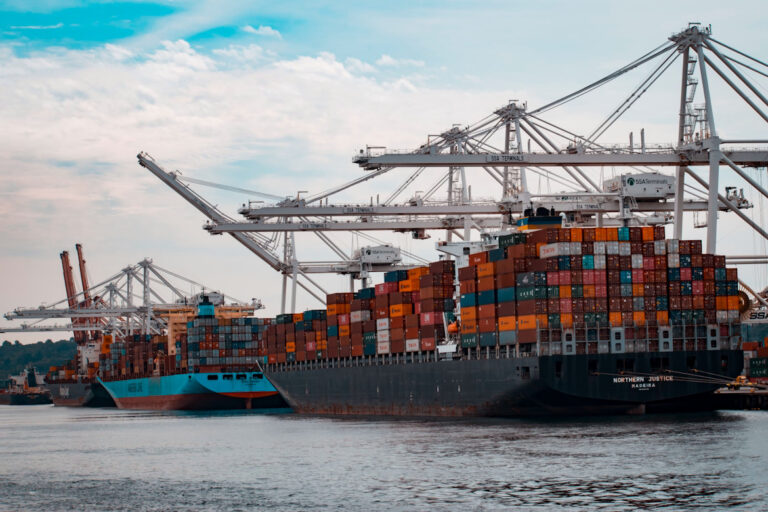
Tariffs are taxes on imported goods. Learn how tariff rates are calculated, who pays them, how they affect prices and trade, and why governments use them.
Tariffs appear frequently in economic news, policy discussions, business planning, and market analysis. The term can look simple at first, yet its meaning depends on definitions, measurement choices, timing, and the mechanism connecting it with the wider economy. A clear framework is therefore more useful than memorizing one headline number.
A tariff is a tax or duty imposed on goods when they cross a border, most commonly on imports. Customs authorities collect it from the importer, but the final economic burden may be divided among importers, foreign producers, downstream businesses, workers, and consumers.
A useful starting point is to separate the definition from its consequences. The concept describes a particular economic relationship; whether that relationship is beneficial or harmful depends on its size, duration, causes, distribution, and the conditions already present when it changes.
Ad Valorem and Specific Tariffs
An ad valorem tariff is a percentage of the customs value, while a specific tariff is a fixed amount per unit, weight, or volume. Some schedules combine both. The same headline protection can therefore change as product prices move.
The mechanism is a chain rather than a single event. Households, companies, banks, investors, and governments respond at different speeds, and one group’s adjustment becomes another group’s income, cost, asset, or liability. That is why the final outcome can differ from the first-round effect.
How Customs Value and Origin Matter
Calculating a tariff requires classifying the product, determining its customs value, and identifying its origin. Trade agreements may offer lower rates when goods satisfy detailed origin rules. Errors can produce delays, penalties, or unexpected costs.
Measurement requires a stated population, time period, data source, and comparison basis. Readers should check whether a figure is monthly, quarterly, annualized, nominal, real, seasonally adjusted, or revised. Similar-looking percentages can answer very different questions.
For additional context, MarketSpeaker’s glossary explains expenses and fixed costs, two terms that often appear beside this subject in financial and economic reporting.
Who Actually Pays a Tariff?
The importer pays customs initially, but economic incidence depends on bargaining power and alternatives. Retail prices may rise, foreign suppliers may cut margins, importers may absorb costs, or buyers may switch products. Most episodes distribute the burden rather than assigning it to one side.
Several forces normally operate together, which makes one-cause explanations unreliable. Analysts should ask which driver changed first, how broadly the effect spread, whether financing conditions amplified it, and what evidence would disprove the preferred explanation.
In this section, the essential analytical lens is the legal tariff rate, customs value, country of origin, pass-through, retaliation, and adjustment across supply chains. That lens makes it easier to distinguish a broad economic development from a short-lived statistical movement and to connect the data with decisions made in households, boardrooms, markets, and public institutions.
Why Governments Use Tariffs
Governments cite revenue, protection of strategic industries, bargaining leverage, national security, unfair trade, employment, or infant-industry development. Each goal has different evidence requirements, and a tariff designed for one purpose may create costs elsewhere.
For households, averages can hide large differences. Income, age, location, employment, housing, savings, debt, and consumption patterns determine exposure. The same economic change may help a saver, hurt a borrower, and leave another family almost unaffected.
Personal experience remains valuable but incomplete. A household can observe real pressure before it appears clearly in an average, or feel little change while national data move sharply. Comparing lived experience with a transparent benchmark is more informative than treating either one as automatically decisive.
How Tariffs Affect Consumer Prices
Tariffs increase the landed cost of affected imports unless someone in the supply chain absorbs the charge. Domestic competitors may also raise prices when foreign competition weakens. The total effect depends on the product’s weight in consumer spending and available substitutes.
Companies experience the issue through revenue, wages, input costs, inventories, financing, investment, and customer demand. Market power and balance-sheet strength determine how much a firm can absorb, pass on, hedge, or postpone before employment and production change.
Business responses also create second-round effects. A decision to change prices, hiring, inventories, borrowing, or investment affects suppliers and workers, whose responses then influence demand elsewhere. These feedback loops explain why small initial changes sometimes become economy-wide movements.
How Tariffs Affect Businesses and Supply Chains
Companies using imported components can face higher costs even if their final product is made domestically. They may change suppliers, redesign products, relocate production, seek exclusions, or reduce margins. Adjustment takes time and can require expensive new capacity.
Financial markets look forward, so prices often react before official statistics confirm a turn. Investors compare new information with expectations and then reconsider cash flows, discount rates, risk premiums, liquidity, and policy. A predictable result may produce little movement.
Market prices provide continuous information, but they are not objective forecasts. Positioning, liquidity, regulation, and risk tolerance can move prices alongside economic expectations. Using market signals with the underlying data produces a more balanced interpretation.
Tariffs, Jobs, and Economic Growth
Protected industries may gain output and employment, while downstream users and exporters may lose competitiveness. Economy-wide effects include resource reallocation, uncertainty, retaliation, and weaker productivity if protection reduces competitive pressure. Outcomes should be measured across sectors, not only at protected factories.
Policy works with delays and incomplete information. Officials must distinguish a temporary disturbance from a persistent shift while considering side effects. Action that is too small may lack credibility, while action that is too large can create unnecessary economic and financial damage.
The policy debate should include distribution and time horizon as well as the average effect. A measure that supports activity today may create costs later, while a policy that improves long-term stability can cause near-term strain. There is rarely a tool without trade-offs.
Retaliation and Trade Wars
Trading partners may respond with tariffs of their own, often targeting politically sensitive exports. Escalation can reduce trade and investment even before every measure takes effect because companies delay plans and build precautionary inventories. Negotiation may later remove or replace the barriers.
Connections with other indicators provide a reliability check. Output, employment, prices, credit, income, and expectations should tell a broadly coherent story. When they diverge, the divergence is often the most informative part of the analysis rather than a reason to ignore inconvenient data.
Cross-checking is especially important when the economy is near a turning point. Data arrive at different frequencies and may be revised, so apparent contradictions are normal. A sequence of consistent releases is more convincing than one isolated surprise.
Tariffs Versus Other Trade Barriers
Quotas limit quantities, subsidies support domestic production, and standards or licensing rules can restrict market access. Exchange rates and sanctions also influence trade. Comparing policies requires examining transparency, legal obligations, distribution, and the specific market failure claimed.
A common mistake is to treat a label as a verdict. Economic terms organize evidence; they do not by themselves prove a cause, predict a date, or settle who gains and loses. Good analysis moves from definition to mechanism and then tests the conclusion against several observations.
How to Evaluate a Tariff Proposal
Ask which products and countries are covered, the rate and duration, exemptions, likely retaliation, and the availability of substitutes. Separate gross gains to a protected sector from net effects on consumers, taxpayers, downstream firms, and exporters.
For practical reading, note the latest level, its direction, its rate of change, and its historical range. Then compare the release with expectations and earlier revisions. This routine reduces the temptation to overreact to a single dramatic number or isolated news story.
The Bottom Line for Beginners
Tariffs are border taxes whose effects spread through prices, supply chains, investment, jobs, and international relations. The importer writes the first check, but economic incidence and long-term adjustment determine who ultimately bears the cost.
The most durable lesson is to focus on relationships and trade-offs. A beginner does not need a perfect forecast to reason well; identifying what is measured, what could change it, who is exposed, and which signals would confirm the story is already a strong foundation.
Frequently Asked Questions
What are tariffs in simple terms?
A tariff is a tax or duty imposed on goods when they cross a border, most commonly on imports. Customs authorities collect it from the importer, but the final economic burden may be divided among importers, foreign producers, downstream businesses, workers, and consumers.
How are tariffs measured or observed?
Calculating a tariff requires classifying the product, determining its customs value, and identifying its origin. Trade agreements may offer lower rates when goods satisfy detailed origin rules. Errors can produce delays, penalties, or unexpected costs.
What can cause tariffs to change?
Governments cite revenue, protection of strategic industries, bargaining leverage, national security, unfair trade, employment, or infant-industry development. Each goal has different evidence requirements, and a tariff designed for one purpose may create costs elsewhere.
Why do tariffs matter to households?
Protected industries may gain output and employment, while downstream users and exporters may lose competitiveness. Economy-wide effects include resource reallocation, uncertainty, retaliation, and weaker productivity if protection reduces competitive pressure. Outcomes should be measured across sectors, not only at protected factories.
What is the main lesson for beginners?
Tariffs are border taxes whose effects spread through prices, supply chains, investment, jobs, and international relations. The importer writes the first check, but economic incidence and long-term adjustment determine who ultimately bears the cost.
U.S. Treasury yields have climbed to multi-decade highs, with the 10-year approaching 5.3% and the 30-year topping 5.6% as investors confront persistent inflation, higher rates and mounting federal…