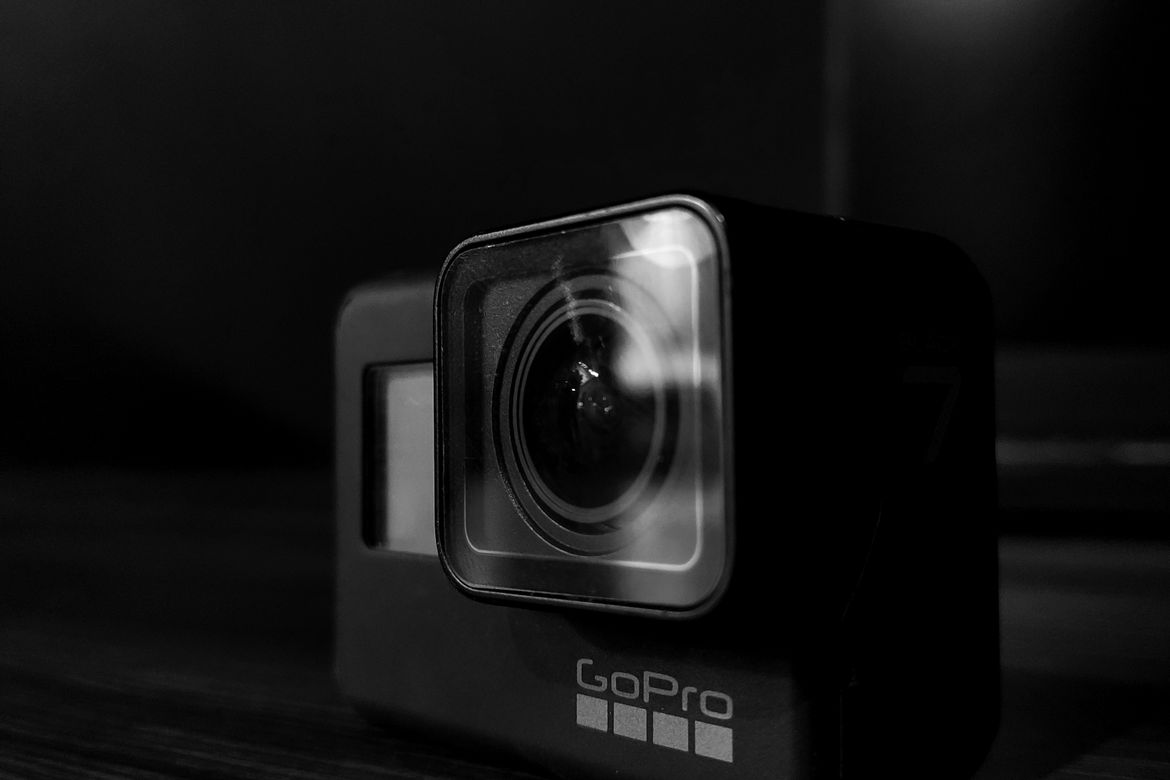
GoPro shares surged 37% following the announcement of a $285 million merger agreement, as investors reacted to a deal that could transform the struggling action-camera maker into a broader optical technology company focused partly on AI infrastructure.
The transaction involves Action Acquisitions LLC and its subsidiary Starman Optical, a privately held U.S. optical-photonics company. Under the agreement, Starman will merge into GoPro, with GoPro continuing as the surviving company and becoming a subsidiary of Action Acquisitions.
GoPro stock climbed roughly 37% following the announcement and rose as much as about 50% intraday, according to Blockonomi.
GoPro Shareholders Get Cash and Equity
Under the merger agreement, existing GoPro shareholders will receive $1.14 in cash per share while retaining an equity interest in the combined company.
Collectively, current GoPro investors are expected to own approximately 10% of the company following the transaction. GoPro will also remain publicly listed on Nasdaq rather than disappearing from public markets.
The transaction provides another important benefit for the company’s balance sheet: approximately $92 million of outstanding GoPro debt is expected to be repaid in full at closing, leaving the business substantially debt-free.
The deal is expected to close by the end of 2026, subject to regulatory clearance, GoPro shareholder approval and other customary conditions.
GoPro Makes an AI Infrastructure Pivot
The market’s reaction also reflects expectations that the transaction could give GoPro a new growth story beyond consumer action cameras.
Starman specializes in optical transceivers and related photonics technologies. Those components are used to convert electrical signals into optical signals, making them important for moving enormous quantities of data through modern computing infrastructure.
Following the transaction, Starman’s U.S.-made optical transceiver operations are expected to become part of GoPro’s portfolio, giving the combined company exposure to the rapidly expanding AI data center infrastructure market.
The companies also plan to use GoPro’s imaging expertise, optics technology and portfolio of more than 2,500 U.S. patents across government, defense, robotics and aerospace applications.
GoPro Searches for a Second Act
The merger comes after years of financial pressure on a company that was once one of the most recognizable consumer technology brands.
GoPro’s valuation soared following its 2014 IPO but subsequently collapsed as smartphone cameras improved and competition intensified. Its annual sales peaked at $1.62 billion in 2015 before falling to $651.5 million in 2025.
The Starman transaction gives GoPro an opportunity to reposition itself around markets with stronger structural growth while continuing to support its existing cameras, subscription service and cloud platform.
For investors, the combination of debt repayment, recapitalization and exposure to AI infrastructure appears to have changed the near-term narrative around the stock.
The 37% rally shows that traders are increasingly viewing GoPro not simply as a struggling action-camera manufacturer, but as a potential participant in the booming market for optical technology powering AI data centers.