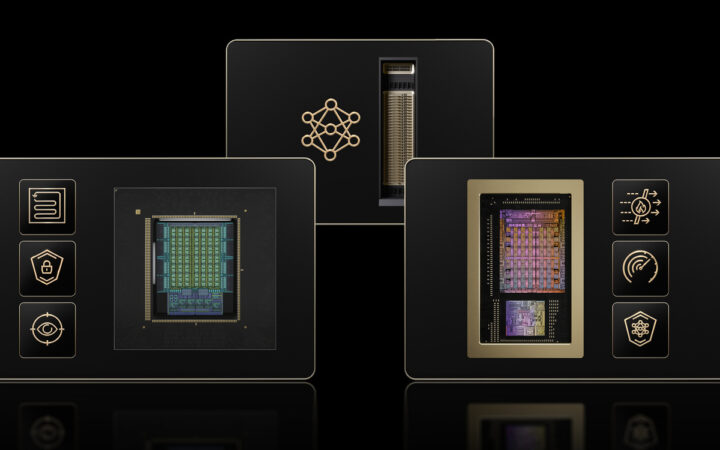
Nvidia is making an aggressive push to become the technology platform powering the world’s robots, autonomous vehicles and other intelligent machines, betting that physical AI could develop into one of its largest businesses over the next decade.
The company’s physical AI operations already generate about $10 billion in annual revenue, and CEO Jensen Huang expects the business to grow roughly tenfold over the next decade, according to The Wall Street Journal.
Nvidia’s ambition is to extend the dominance it established in AI data centers into machines capable of interacting with the physical world. Instead of simply providing chips, the company is building an ecosystem combining processors, software, simulation tools and open AI models designed specifically for robots and autonomous vehicles.
Nvidia Wants to Become the Platform for Physical AI
The strategy closely resembles the playbook Nvidia used to dominate accelerated computing.
Nearly two decades ago, the company introduced CUDA, allowing developers to write software specifically for Nvidia processors. The combination of hardware and software created an ecosystem that became increasingly difficult for customers to leave.
Nvidia is now attempting to build a similar advantage in robotics.
Its physical AI portfolio includes specialized computing platforms alongside open-weight models such as GR00T and Cosmos, which developers can download and modify when building robots.
The company believes physical AI could eventually extend Nvidia’s addressable market far beyond data centers and into factories, warehouses, vehicles and humanoid robots.
Autonomous vehicles are expected to be one of the first major commercial opportunities. Nvidia already supplies technology to customers including Waymo, Tesla and several Chinese autonomous-driving companies.
China Becomes Critical to Nvidia’s Robotics Strategy
China is emerging as a particularly important part of Nvidia’s robotics ambitions.
The country is already the world’s largest industrial robot market and has developed one of the world’s most extensive humanoid robotics ecosystems. Chinese manufacturers accounted for roughly 90% of global humanoid robot shipments during the first half of 2026, according to figures cited by the Journal.
Chinese companies including Unitree, Agibot and Fourier have also supplied humanoid robots used by Nvidia for research, data collection and experimentation.
Unitree and other Chinese robotics developers have used Nvidia’s Thor processors and software tools to train and operate their machines. Nvidia has simultaneously expanded its robotics and autonomous-driving teams in China.
The relationship is notable because Washington restricts Nvidia from selling its most advanced AI data-center chips to China. Robotics and automotive processors, however, remain available under current trade rules.
China Has Hardware, but Robot Intelligence Remains a Challenge
China’s robotics industry has made rapid progress in manufacturing, but significant technological challenges remain.
Reuters recently reported that China now has more than 150 humanoid robotics companies, supported by substantial government investment. Yet today’s machines still struggle with general-purpose factory work, particularly when environments or objects differ from their training conditions.
That gap between sophisticated hardware and capable robot intelligence could create an opportunity for Nvidia.
The company wants its computing platforms and AI models to become the underlying technology that allows machines to perceive their surroundings, make decisions and translate those decisions into physical actions.
Nvidia Looks Beyond the Data Center
Nvidia’s robotics push represents a broader effort to ensure that its AI dominance continues as artificial intelligence moves from digital applications into the physical economy.
The company remains overwhelmingly associated with the GPUs powering generative AI, but Huang increasingly describes robotics as one of AI’s next major frontiers.
If Nvidia can establish the same type of developer ecosystem in robotics that it created around CUDA, the company could become not simply a supplier of processors for robots, but a core computing platform behind an emerging generation of autonomous machines.
China’s enormous manufacturing base and rapidly expanding robotics industry could play a central role in determining whether that strategy succeeds.