Deprecated: Function WP_Dependencies->add_data() was called with an argument that is deprecated since version 6.9.0! IE conditional comments are ignored by all supported browsers. in /home/u752143311/domains/marketspeaker.com/public_html/wp-includes/functions.php on line 6131
Musk Dissolves xAI, Integrates AI Operations Into New SpaceXAI Division | MarketSpeaker

Musk Dissolves xAI, Integrates AI Operations Into New SpaceXAI Division

Elon Musk said xAI will be dissolved and absorbed into a new SpaceXAI division focused on artificial intelligence products. The move comes as Anthropic reportedly leases the Colossus 1 data center.

By Michael Foster | Edited by Oleg Petrenko Published:
Musk Dissolves xAI, Integrates AI Operations Into New SpaceXAI Division
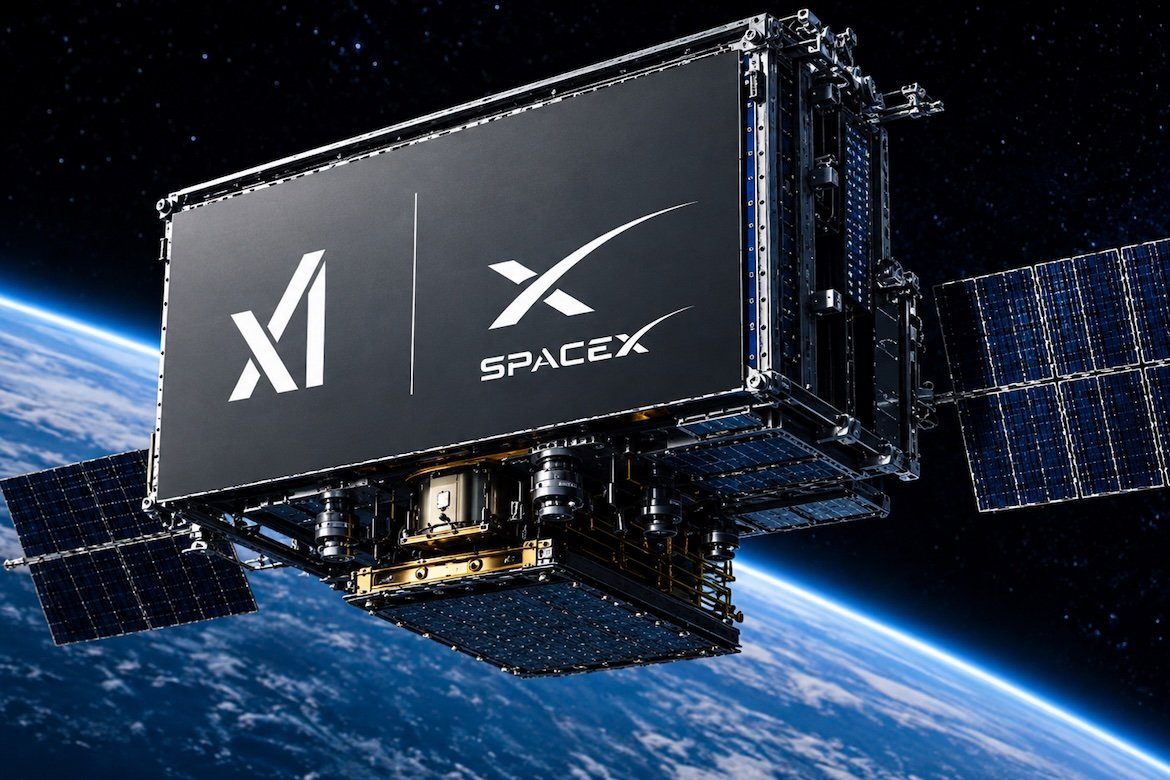
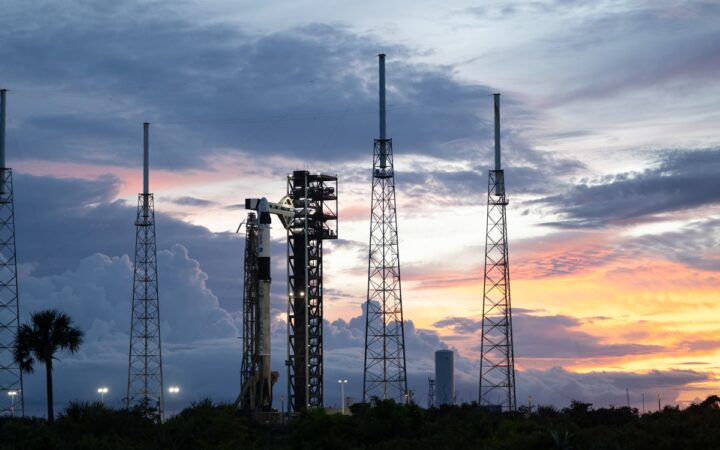
Elon Musk said xAI will be dissolved and integrated into a new SpaceXAI division dedicated to artificial intelligence products, as Anthropic reportedly leases the Colossus 1 data center. Photo: Oleg Petrenko / MarketSpeaker

Elon Musk announced that xAI will be dissolved and integrated into a new artificial intelligence division within SpaceX, marking a major restructuring of his AI strategy as competition for computing infrastructure intensifies.

The new unit, called SpaceXAI, will oversee the development of AI products and infrastructure across Musk’s broader technology ecosystem. According to Musk, maintaining xAI as a standalone company is no longer necessary as artificial intelligence becomes increasingly integrated with SpaceX operations.

The announcement follows reports that Colossus 1, Musk’s flagship AI-focused data center, has been fully leased to Anthropic, underscoring the growing demand for large-scale computing resources.

AI Consolidation Reflects Infrastructure Race

The restructuring highlights how rapidly the AI industry is evolving from standalone model development toward vertically integrated infrastructure ecosystems.

Musk has increasingly emphasized the importance of compute power, data centers, and semiconductor access as core competitive advantages in artificial intelligence. Integrating xAI directly into SpaceX could streamline operations while centralizing access to engineering talent, infrastructure, and capital.

As previously covered, the AI sector is facing mounting shortages of advanced chips, memory, and data center capacity, prompting technology firms to invest aggressively in compute infrastructure.

The reported leasing of Colossus 1 to Anthropic also reflects how AI companies are competing intensely for access to high-performance computing resources. Large language model development now requires enormous data center capacity, creating a booming market for AI infrastructure providers.

Analysts say the move positions SpaceXAI as both an AI developer and an infrastructure operator, potentially giving Musk a stronger foothold across multiple layers of the AI ecosystem.

Implications for AI Competition and Markets

The dissolution of xAI signals a broader shift toward consolidation within the artificial intelligence industry. As AI development becomes more capital-intensive, companies are increasingly combining software, hardware, and infrastructure under unified structures.

For investors, the move reinforces the idea that future AI leadership may depend less on standalone models and more on control over compute resources and energy-intensive infrastructure.

The integration could also deepen connections between Musk’s companies, including Tesla, SpaceX, and AI-related ventures, potentially enabling shared technology and operational synergies.

However, some analysts caution that combining aerospace and AI operations could introduce execution complexity and increase scrutiny around governance and resource allocation.

Still, market sentiment around AI infrastructure remains highly bullish. The demand for data centers, chips, and computing power continues to expand rapidly as enterprises accelerate adoption of generative AI technologies.

The broader takeaway is that artificial intelligence is becoming increasingly infrastructure-driven, with control over compute emerging as one of the most valuable strategic assets in the technology sector.
SoftBank Shares Surge 16% as Tech Rally Pushes Nikkei to Record High

SoftBank shares jumped more than 16% as Japan’s technology-led rally pushed the Nikkei 225 to fresh record highs following the Golden Week holiday break.

By Sophia Reynolds | Edited by Oleg Petrenko Published:
SoftBank Shares Surge 16% as Tech Rally Pushes Nikkei to Record High
SoftBank shares soared more than 16% as Japan’s tech-driven market rally pushed the Nikkei 225 to new record highs after the Golden Week holiday reopening. Photo: Oleg Petrenko / MarketSpeaker

Shares of SoftBank Group surged more than 16% as Japan’s equity market rallied sharply, pushing the Nikkei 225 index to a new all-time high following the country’s extended Golden Week holidays.

The Nikkei 225 advanced more than 5% during the session, driven primarily by gains in technology and artificial intelligence-related stocks. Investors returned from the holiday break with renewed optimism surrounding global AI demand and semiconductor investment trends.

SoftBank emerged as one of the strongest performers in the market, benefiting from its broad exposure to AI-related investments and technology infrastructure.

AI Optimism Drives Japan’s Market Rally

The latest rally reflects growing investor confidence that Japan is becoming an increasingly important beneficiary of the global AI investment boom.

SoftBank’s exposure to artificial intelligence spans semiconductors, data centers, robotics, and venture capital investments through its Vision Fund portfolio. Investor sentiment has improved significantly as AI-related companies continue attracting large capital inflows worldwide.

“As previously covered,” technology and semiconductor stocks have become the dominant force behind major equity rallies across Asia, the United States, and Europe, fueled by rising spending on AI infrastructure.

Japanese chip equipment manufacturers and technology firms also posted strong gains during the session, reinforcing expectations that the country’s export-heavy economy could benefit from sustained demand for advanced computing systems.

The rally was further supported by a weaker yen, which tends to improve earnings prospects for Japanese exporters and large multinational corporations.

Market Implications and Investor Outlook

The Nikkei’s record-breaking performance underscores how heavily global markets are currently being driven by AI-related themes. Investors are increasingly positioning around companies tied to semiconductors, cloud computing, and next-generation infrastructure.

For SoftBank, the surge signals renewed confidence after years of volatility tied to its investment portfolio. The company is now viewed by many investors as a leveraged play on the long-term growth of artificial intelligence.

However, analysts caution that the pace of the rally has become increasingly aggressive. Valuations across the technology sector continue to climb rapidly, raising concerns that expectations may be outpacing near-term fundamentals.

Still, momentum remains strong as global investors continue rotating capital into growth-oriented assets. Japan’s market, once considered relatively undervalued compared to U.S. technology stocks, has become an increasingly attractive destination for international investment flows.

The broader takeaway is that AI enthusiasm is no longer concentrated solely in Silicon Valley. Markets across Asia are now emerging as major participants in the next phase of the global technology cycle.

Bank of America Warns SpaceX and Anthropic IPOs Could Signal Market Peak

Bank of America warned that potential IPOs from SpaceX and Anthropic, both valued above $1 trillion, may signal late-stage bull market conditions.

By Michael Foster | Edited by Oleg Petrenko Published:
Bank of America Warns SpaceX and Anthropic IPOs Could Signal Market Peak
Bank of America warned that potential IPOs from SpaceX and Anthropic, each valued at more than $1 trillion, could be a sign that the bull market is entering its final stages. Photo: Oleg Petrenko / MarketSpeaker

Bank of America analysts warned that potential public offerings from SpaceX and Anthropic could represent a turning point for financial markets, arguing that the scale of current AI-driven valuations resembles conditions often seen near the end of major bull cycles.

The warning comes as both companies reportedly surpassed implied valuations of $1 trillion in private markets, underscoring the extraordinary investor appetite surrounding artificial intelligence and next-generation technology firms.

According to the bank, proposed rule changes designed to accelerate index inclusion and adjustments to free-float calculations are signs of increasingly aggressive market behavior typically associated with late-stage rallies.

Mega-Valuations Raise Concerns About Market Excess

The rapid rise in valuations for privately held AI companies has become one of the defining themes of the current market cycle. Investors have poured capital into firms tied to artificial intelligence infrastructure, advanced computing, and aerospace innovation.

Anthropic’s valuation has surged sharply over the past year, fueled by growing demand for generative AI systems and enterprise AI applications. Meanwhile, SpaceX continues to attract investor interest through its satellite network, launch business, and broader technology ecosystem.

As previously covered, AI-related stocks and infrastructure companies have driven a significant portion of global equity gains in 2026, with investors increasingly willing to pay premium multiples for future growth potential.

Bank of America analysts suggested that enthusiasm surrounding these companies may reflect speculative excess rather than purely fundamental valuation metrics. Historically, periods marked by blockbuster IPOs and extreme valuations have often coincided with later stages of market expansions.

Implications for Investors and Equity Markets

The prospect of trillion-dollar IPOs could have far-reaching implications for public markets. Large offerings of this scale may absorb significant liquidity and reshape benchmark indices, potentially increasing concentration within technology sectors.

Analysts also noted that changes to market structure and index rules designed to accommodate mega-cap listings could amplify volatility if investor sentiment shifts.

While bullish investors argue that AI represents a transformational economic shift capable of justifying elevated valuations, skeptics warn that expectations may already be pricing in years of future growth.

The comparison to previous market peaks, including the dot-com era, has become increasingly common as speculative activity intensifies across both public and private markets.

Still, momentum in AI-related assets remains strong, supported by continued spending on chips, cloud infrastructure, and advanced computing systems. For now, investors appear willing to prioritize long-term technological disruption over short-term valuation concerns.

The broader takeaway from Bank of America’s warning is that investor optimism surrounding AI and next-generation technology may be approaching levels historically associated with overheated markets.

Anthropic’s Implied Valuation Soars to $1.2 Trillion Ahead of IPO

Anthropic’s implied valuation climbed to $1.2 trillion in the pre-IPO market, marking a 900% increase since October 2025 as investor demand for AI companies intensifies.

By Michael Foster | Edited by Oleg Petrenko Published:
Anthropic’s Implied Valuation Soars to $1.2 Trillion Ahead of IPO
Anthropic’s implied valuation in the pre-IPO market rose to $1.2 trillion, up 900% since October 2025 amid surging investor demand for AI companies. Photo: Oleg Petrenko / MarketSpeaker

Anthropic has reached an implied valuation of approximately $1.2 trillion in the pre-IPO market, marking one of the most dramatic valuation surges in the artificial intelligence sector to date.

The company’s valuation has climbed roughly 900% since October 2025, fueled by aggressive investor demand, strategic partnerships, and expectations that AI infrastructure spending will continue accelerating globally.

The latest jump reportedly followed a 20% rise in secondary market pricing over the past seven days alone, underscoring how rapidly sentiment around leading AI firms continues to strengthen.

Investor Demand Accelerates Across AI Sector

Anthropic’s rise reflects the broader wave of capital flowing into artificial intelligence companies as investors search for exposure to the next phase of technological growth.

The startup has increasingly been viewed as one of the strongest competitors to OpenAI, particularly in enterprise AI systems and large language model development. Strategic backing from major technology firms has further boosted confidence in its long-term prospects.

As previously covered, AI infrastructure has become one of the most important investment themes in global markets, driving unprecedented spending on chips, cloud computing, and data center capacity.

Reports indicate that large-scale investment commitments tied to AI infrastructure expansion have contributed significantly to Anthropic’s valuation momentum. Investors are betting that demand for advanced AI systems will continue growing at an exponential pace over the coming decade.

The pre-IPO market has also become increasingly active, with institutional investors competing for limited access to high-profile AI startups before public listings.

Implications for Markets and Tech Valuations

Anthropic’s implied valuation highlights how aggressively markets are pricing future AI growth. At $1.2 trillion, the company would rank among the world’s most valuable technology firms if publicly traded today.

The surge also reflects a broader shift in investor behavior, where AI firms are being valued less on current revenue and more on their perceived strategic importance in the future digital economy.

Some analysts caution that expectations may be becoming stretched, particularly as valuations in the AI sector continue to outpace traditional financial metrics. However, bullish investors argue that transformative technologies often command premium valuations during early growth phases.

The rapid appreciation in Anthropic’s value may also increase pressure on competitors, including OpenAI and other major AI developers, to secure additional funding and infrastructure partnerships.

For financial markets, the trend reinforces a central narrative of 2026: artificial intelligence remains the dominant driver of investor enthusiasm, capital allocation, and long-term growth expectations across the technology sector.

BlackRock’s Larry Fink Predicts Future Market for AI Computing Power

BlackRock CEO Larry Fink said growing shortages in AI infrastructure could eventually create a futures market for computing power, similar to oil or energy trading.

By David Sinclair | Edited by Oleg Petrenko Published:
BlackRock’s Larry Fink Predicts Future Market for AI Computing Power
BlackRock CEO Larry Fink said mounting shortages in AI infrastructure could eventually lead to a futures market for computing power, similar to the way oil and energy are traded today. Photo: Oleg Petrenko / MarketSpeaker

Larry Fink said the rapid expansion of artificial intelligence could eventually lead to the creation of a new financial asset class centered on computing power.

Speaking at the Milken Institute Global Conference, the BlackRock chief executive argued that demand for AI-related computing resources is growing so quickly that markets may eventually develop futures contracts tied to access to compute capacity.

Fink compared the potential market to existing commodities trading systems for oil, electricity, and natural gas, where companies hedge future supply needs through financial instruments.

AI Infrastructure Constraints Become a Market Theme

The comments reflect growing concern across the technology and financial sectors that the world may not have enough computing infrastructure to support the accelerating pace of AI adoption.

Demand for advanced chips, memory systems, networking equipment, and data center capacity has surged over the past two years, fueled by massive investments in generative AI and machine learning applications.

“As previously covered”, companies such as Nvidia, AMD, and major cloud providers have benefited from a sharp increase in AI-related spending as enterprises race to secure computing resources.

Fink suggested that shortages in semiconductors and infrastructure could force markets to develop more sophisticated allocation mechanisms. Under such a system, companies could effectively “reserve” future computing capacity through tradable contracts.

Analysts note that this concept mirrors how airlines hedge fuel costs or utilities secure future energy supply, potentially creating an entirely new category of financial derivatives linked to AI infrastructure.

Implications for Markets and Investors

The idea of “compute futures” underscores how central AI infrastructure has become to the global economy. Computing power is increasingly viewed not just as a technological resource, but as a strategic economic asset.

If such markets emerge, they could significantly reshape capital allocation within the tech industry. Companies with access to large-scale computing infrastructure may gain additional pricing power, while financial institutions could develop new products tied to AI demand.

Investor interest in AI-related assets has already driven strong gains across semiconductor and data center stocks. Fink’s comments suggest the next phase of the AI boom may extend beyond equities into entirely new financial instruments.

However, experts caution that creating a standardized market for computing power would be complex. Compute resources vary widely depending on hardware architecture, performance, and energy efficiency, making contract standardization difficult.

Still, the broader takeaway remains clear: AI demand is expanding rapidly enough to challenge existing infrastructure capacity, potentially forcing financial markets to evolve alongside the technology itself.

SpaceX Proposes $55 Billion Terafab Chip Plant in Texas With Intel, Tesla Backing

SpaceX plans a $55 billion semiconductor facility in Texas, with total investment potentially reaching $119 billion. The Terafab project targets AI, robotics, and data center chips.

By Michael Foster | Edited by Oleg Petrenko Published:
SpaceX Proposes $55 Billion Terafab Chip Plant in Texas With Intel, Tesla Backing
SpaceX is planning a $55 billion semiconductor facility in Texas, with total investment potentially climbing to $119 billion. The Terafab project will focus on chips for AI, robotics, and data centers. Photo: SpaceX

SpaceX has proposed an initial $55 billion investment to build a large-scale semiconductor manufacturing facility in Texas, marking a significant expansion into the chip industry as demand for AI infrastructure accelerates.

The project, known as Terafab, could see total capital expenditures rise to as much as $119 billion, positioning it among the largest semiconductor investments globally. The facility is expected to produce advanced chips for artificial intelligence, robotics, and data center applications.

The initiative follows earlier comments from Elon Musk outlining plans to establish a vertically integrated chip ecosystem to support next-generation technologies.

Strategic Push Into AI and Semiconductor Supply Chains

Terafab represents a major strategic shift, bringing together multiple companies across Musk’s ecosystem. Intel has joined the project alongside Tesla and xAI, signaling a collaborative effort to build domestic chip manufacturing capacity.

The move comes amid intensifying global competition in semiconductors, where governments and corporations are investing heavily to secure supply chains. AI-driven demand has become a central catalyst, with chips for data centers and machine learning systems in particularly high demand.

“As previously covered”, semiconductor production has emerged as a critical bottleneck in the AI boom, prompting companies to invest across the entire value chain from design to fabrication and infrastructure.

The scale of the Terafab project suggests a long-term commitment to addressing these constraints, with potential implications for both supply availability and pricing dynamics in the global chip market.

Market Impact and Investment Implications

If executed, the Terafab facility could reshape the competitive landscape in semiconductors by introducing a new large-scale manufacturing hub in the United States. The involvement of Intel adds technical expertise, while Tesla and xAI provide demand across multiple high-growth sectors.

The project also aligns with broader U.S. policy efforts to expand domestic chip production and reduce reliance on overseas manufacturing. Large-scale investments like Terafab are increasingly seen as essential to maintaining technological leadership.

However, analysts note that execution risks remain significant. Semiconductor fabs require years to build and ramp up, with substantial capital intensity and operational complexity.

Investor reaction is likely to focus on the potential long-term benefits versus near-term costs. While the project could unlock new growth avenues, it also represents a major financial commitment that will take time to generate returns.

The Terafab initiative underscores a broader trend: the AI revolution is driving unprecedented levels of capital investment, extending far beyond software into the physical infrastructure that powers modern computing.