Key Notes
- Alibaba began selling Qwen Glasses N1 in China from 2,999 yuan, with the higher-end N1 Pro priced at 3,499 yuan.
- The Pro model adds eye tracking and iris-based payment features, while Alibaba claims up to nine hours of music playback for the glasses.
- Bose-developed Qwen Clip earbuds cost 1,299 yuan and offer translation, note-taking and voice-driven tasks through the Qwen assistant.
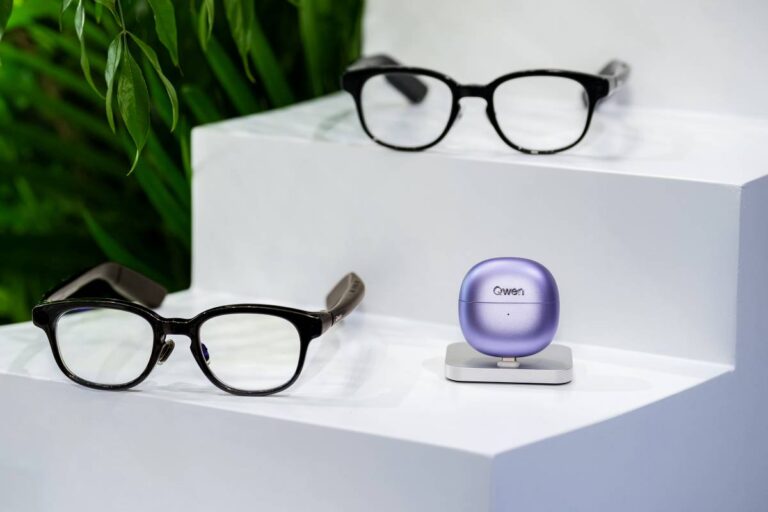
Alibaba Group Holding Ltd. (NYSE: BABA; HKEX: 9988) began selling its Qwen Glasses N1 series in China on October 13, expanding its consumer AI hardware lineup with voice-controlled smart glasses and a higher-end model that adds eye tracking.
The standard N1 starts at 2,999 yuan, approximately $450, before discounts, while the N1 Pro costs 3,499 yuan. Alibaba also launched Qwen Clip, a pair of open-ear AI earbuds co-developed with Bose, priced at 1,299 yuan, Bloomberg reported from an event in Hangzhou.
The launch gives Alibaba more physical entry points to Qwen, its AI assistant, alongside the company’s existing apps and cloud services. For investors, the opportunity extends beyond selling devices: Alibaba wants its AI tools to help people complete everyday tasks, including shopping and payments.
N1 Pro Adds Eye Tracking and Iris Payments
Alibaba’s earlier announcement at the Apsara Conference described a 50-megapixel camera sensor for first-person capture across the N1 series. The Pro version adds eye tracking to support visual interaction, including recognizing objects and verifying payments through the wearer’s iris.
Eye tracking gives the assistant another signal about what a user is looking at, rather than relying only on a spoken question and the camera’s wider view. That could make requests about nearby objects more direct, although Alibaba’s feature descriptions do not establish how reliably the system performs in every setting.
Bloomberg reported that users can speak to Qwen through bone-conduction microphones and that the glasses support shopping, payment and health-tracking functions. The Pro’s iris-based payment capability is a specific addition described by Alibaba, rather than a feature to assume is included in the cheaper N1.
Alibaba claims up to nine hours of music playback or 25 hours on standby from one charge. Those are different usage measures; they should not be read as a promise of nine hours of continuous camera recording or AI interaction.
Qwen Clip Offers a Lower-Priced Route Into AI
Qwen Clip broadens the launch beyond glasses. Alibaba says the earbuds use a clip-on, open-ear design and integrate Qwen for face-to-face translation, AI note-taking and tasks initiated by voice.
The 1,299-yuan price places them below both glasses models. That gives customers a less expensive way to try a wearable assistant without choosing a camera-equipped frame or paying for the Pro’s visual features.
Alibaba first presented the wearables at its September Apsara Conference. Preorders opened on September 22, with October 13 designated as the official sales date. Today’s development therefore moves the products from the earlier announcement and reservation stage into commercial availability in China.
The Commercial Opportunity Runs Through Shopping
Alibaba already has a transaction platform behind its assistant. In May, the company connected Qwen to Taobao’s full product catalog and introduced a Qwen-powered shopping assistant inside the Taobao app.
Alibaba said that integration covers more than four billion products across Taobao and Tmall. Users in China can browse, compare items, place orders and manage deliveries through conversation, with AI tools supporting logistics and after-sales tasks.
Those are capabilities of the app and commerce integration; the announcement does not establish that every app function is available on each new wearable. The business logic is nevertheless clear: a device that makes an assistant easier to access could bring more interactions into Alibaba’s existing services.
That creates a different test from hardware sales alone. Frequent use, successful task completion and repeat purchases would matter alongside the number of glasses shipped. A product can attract initial interest without becoming a regular part of how customers shop.
Wearables Extend an Existing AI Hardware Strategy
The N1 range follows Alibaba’s earlier Quark glasses, as we reported. It adds new camera and interaction features to a consumer hardware business that the company has already begun building.
Alibaba’s broader effort also reaches into AI chips, foundation models and data centers, as we previously reported. Wearables sit at the customer-facing end of that strategy, putting the assistant into products people can use away from a computer.
The integration offers Alibaba a way to connect its AI development with an established commerce ecosystem. It also requires the company to deliver a convincing physical product, where comfort, audio quality, battery performance and dependable interaction affect whether buyers keep using it.
AI Growth Comes With Heavy Investment
Alibaba’s June-quarter results show the scale of its wider AI business. External cloud revenue grew 45% year over year, while AI-related product revenue recorded triple-digit growth for a twelfth consecutive quarter.
Investment remains substantial. The company reported a free-cash-flow outflow of 44.67 billion yuan for the quarter, which it attributed mainly to increased cloud infrastructure spending.
The glasses launch adds another potential source of customer engagement to that effort. Its financial contribution will depend on sales, repeat use and the economics of supporting AI features, rather than the product specifications alone. For BABA shareholders, evidence of sustained adoption will be more informative than treating a new hardware launch as an immediate earnings driver.