Key Notes
- CoreWeave and Nebius fell almost 5% in after-hours trading following Microsoft’s results, while IREN declined about 3%.
- Microsoft reported $45.2 billion of quarterly capex including finance leases, below a $50.7 billion estimate, even as Azure revenue grew 48%.
- Equipment-payment timing, lease mix and infrastructure delivery remain central to assessing whether neocloud operators can turn customer contracts into cash.
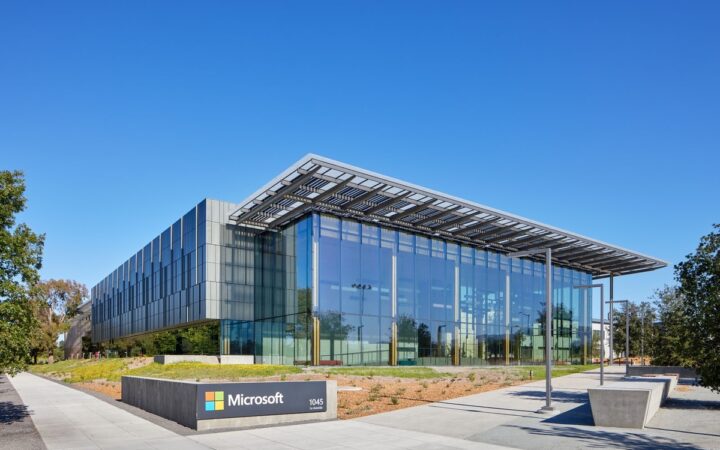
CoreWeave Inc. (NASDAQ: CRWV) and Nebius Group N.V. (NASDAQ: NBIS) fell almost 5% in extended trading on October 28 after Microsoft Corp. (NASDAQ: MSFT) reported capital expenditure below expectations. IREN Ltd. (NASDAQ: IREN) declined about 3%.
The moves were after-hours snapshots in CNBC’s 5:14 p.m. Eastern report, rather than regular-session closing returns. The network linked the reaction to concerns that infrastructure partners are taking longer to deliver data-center capacity.
Microsoft’s quarterly spending, including finance leases, reached $45.2 billion, compared with a $50.7 billion StreetAccount analyst estimate. That shortfall adds an execution question to a sector already under pressure over borrowing costs and the returns from AI infrastructure.
Microsoft’s Spending Falls Short of Forecasts
The spending figure was still about 30% higher than a year earlier. Coming in below consensus therefore does not mean capital expenditure declined year over year, or establish that Microsoft has cut its entire long-term investment program.
Microsoft’s earnings materials pointed to differences between receiving equipment and paying for it, as well as a lower proportion of finance leases, CNBC reported. Those factors matter because a quarterly spending number combines investment activity with the timing and accounting treatment of the underlying transactions.
For specialist cloud providers, known as neoclouds, investors are watching when contracted infrastructure becomes available for customer use. Construction, power connections and equipment installation must progress far enough for a project to begin generating the revenue expected to support its financing.
Azure Growth Remains Strong
Microsoft’s official results show Azure revenue increasing 48% to $33.165 billion in the quarter ended September 30. Total company revenue rose 19% to $92.279 billion, while operating income increased 21% to $45.915 billion.
That growth provides an important counterweight to the spending concern. Microsoft continues to expand its cloud business rapidly, even as the pace at which infrastructure spending is recorded falls short of the market’s quarterly forecast.
The cash-flow statement separately lists $39.367 billion of additions to property and equipment. That is the cash-spending measure and differs from the broader $45.2 billion capex figure that includes finance leases.
Operating cash flow was $58 billion. Subtracting cash additions to property and equipment leaves approximately $18.6 billion of free cash flow on that basis. This calculation does not deduct new finance-lease assets as though they were upfront cash purchases.
Nebius’s Microsoft Contract Puts Delivery Dates in Focus
Nebius’s September 2025 disclosure illustrates the link between a major customer and a specialist infrastructure supplier. The agreement provides Microsoft with dedicated GPU capacity at Nebius’s Vineland, New Jersey, data center over a five-year term.
The disclosed contract value is approximately $17.4 billion through 2031, potentially rising to $19.4 billion if Microsoft purchases additional services or capacity. Those amounts are subject to deployment and service availability; they are not revenue collected at signing.
The filing also gives Microsoft the right to terminate an affected service after agreed delivery dates are missed, a grace period has passed and alternative capacity cannot be supplied. That provision explains why deployment timing matters financially. Wednesday’s spending figure does not, by itself, establish that Microsoft has exercised such a right.
Debt Costs Magnify the Timing Risk
Nebius’s October 22 financing announcement shows that capital remains available on specific terms. The company secured a $3.5 billion senior secured facility with a 364-day maturity to help finance data-center development and GPU purchases.
The initial interest margin is 2.75 percentage points above Term SOFR, rising as high as 3.50 points, subject to adjustments. These are margins added to a benchmark rate, rather than the full borrowing cost.
The arrangement gives Nebius funding for expansion but also creates a relatively near-term repayment or refinancing requirement. Across the sector, a delay in billable capacity can push cash receipts further away while interest and other obligations continue.
CoreWeave’s stock and bonds have already reflected that concern, as we previously reported. Rising secondary-market bond yields can signal more expensive future financing without changing the fixed coupons on existing securities.
The Selloff Interrupts a Brief Recovery
The after-hours decline followed a partial rebound. CoreWeave had gained 18% over the three regular trading sessions through Wednesday and closed at $63.93, according to CNBC. Its subsequent extended-session move should be assessed separately from that closing price.
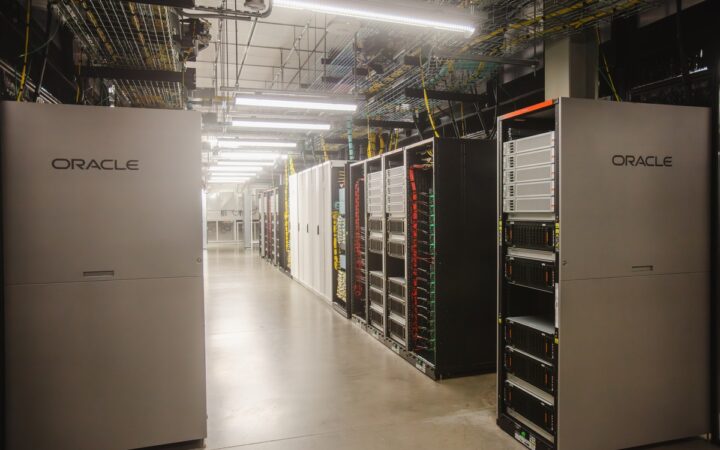
Elsewhere in the sector, Oracle (NYSE: ORCL) outlined a timetable for positive free cash flow and a limit on additional funding earlier Wednesday, as we reported. That update offered investors more detail about how one large cloud provider expects to finance its expansion.
For CRWV, NBIS and IREN investors, the next useful evidence will be delivery milestones, customer receipts and financing terms. Microsoft’s strong Azure growth supports the demand picture, but providers still need to turn contracted computing capacity into cash at a pace that can sustain their buildouts.