Key Notes
- About 60,000 Microsoft employees are eligible for voluntary buyouts, with the final number of departures still unknown.
- The offer covers selected teams in four countries and includes financial support and career-planning resources.
- MSFT investors face an October 28 earnings update as Microsoft balances major AI investment with workforce costs.
Microsoft Corp. (NASDAQ: MSFT) is opening voluntary buyouts to about 60,000 employees as it reshapes its workforce while investing heavily in artificial intelligence. The number describes workers eligible to apply, rather than 60,000 confirmed departures or positions already replaced by AI.
Chief People Officer Amy Coleman announced the Voluntary Exit Offer on Monday, October 26. Participating teams in the United States, Canada, India and the United Kingdom can offer financial assistance and career-planning support to eligible staff.
Microsoft confirmed the roughly 60,000 eligibility figure to GeekWire, which reported that the company expects a smaller take-up rate than under its earlier retirement program. The final number leaving remains unknown.
Who Is Eligible for Microsoft’s Buyouts
The offer covers employees at level 70 and below within participating organizations, according to Coleman’s memo. Participation depends on individual businesses’ staffing requirements and customer obligations, so the program does not extend uniformly across Microsoft.
Coleman presented the initiative as a way for employees considering a move outside the company to leave with support, while giving managers flexibility to respond to changing needs. The memo also emphasized training and opportunities to move into other roles internally.
Microsoft employed approximately 223,000 full-time workers at June 30, according to its annual filing. The new offer’s eligibility pool is therefore equivalent to about 27% of that dated workforce count. That comparison measures the program’s reach, not a planned reduction of the same size.
What the Voluntary Exit Package Includes
The company told GeekWire that the package resembles its standard severance: base pay tied to tenure and seniority, continued stock vesting, healthcare for a specified period and career-transition assistance. Employees have until the first week of December to decide.
The new program differs from the age-and-service-based retirement offer we previously reported. Bloomberg reported that more than 30% of roughly 8,750 eligible workers accepted that earlier offer, while Microsoft expects fewer takers this time.
A spokesperson also told GeekWire the initiative does not mean Microsoft needs fewer employees overall. The company said voluntary exits do not replace layoffs as an option. That leaves an important distinction between offering an exit package, an employee accepting it and management eliminating a position.
AI Investment Raises the Cost-Control Stakes
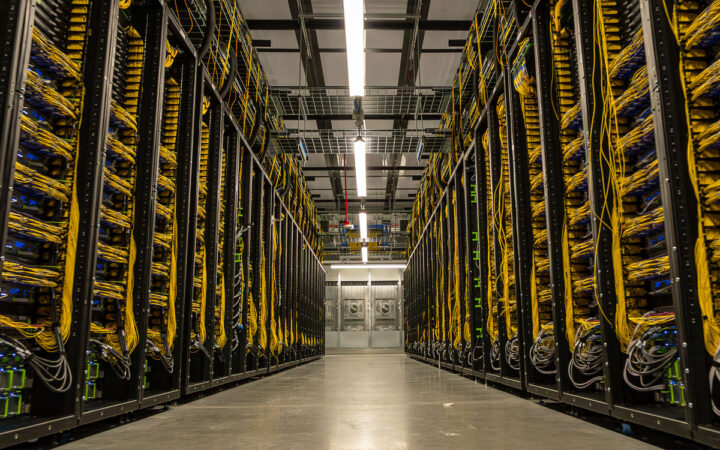
The workforce announcement comes as Microsoft directs substantial resources toward cloud capacity and AI. In its fiscal fourth-quarter earnings call, the company reported $41 billion of capital expenditure, including finance leases. Cash paid for property and equipment was $35.8 billion.
Those measures capture different parts of the investment burden. Finance leases bring infrastructure into use without the same immediate cash payment as an outright purchase, so total capital expenditure and cash spending should not be treated as interchangeable.
Chief Financial Officer Amy Hood said calendar-2026 capital expenditure expectations were approximately $175 billion after changes in lease classification. She said the underlying investment expectations were unchanged outside that accounting effect. Microsoft also projected more than $50 billion of capital expenditure for the September quarter.
Those commitments help explain investors’ attention to cost discipline. They do not establish that every employee eligible for a buyout has become redundant because of automation. Microsoft’s announcement describes a staffing choice across selected organizations, without quantifying jobs directly displaced by AI.
Cost management also extends to the technology itself. As we reported, Microsoft plans larger deployments of its own Maia processors starting in 2027 to improve AI inference economics. That hardware strategy and the buyouts address different costs; neither announcement provides a quantified saving from the other.
MSFT Investors Look to Wednesday’s Earnings
Microsoft will report fiscal 2027 first-quarter results after the market closes on Wednesday, October 28. Its earnings webcast is scheduled for 5:30 p.m. Eastern Time.
The previous quarter provides a strong operating baseline. Revenue rose 18% to $90 billion, operating income increased 18% to $40.6 billion, and Azure and other cloud-services revenue grew 43%, according to Microsoft’s July results.
As we reported in our earnings-week preview, the next test extends beyond headline profit. Investors will be comparing cloud growth, spending commitments and cash generation to assess the returns from the AI buildout.
The Final Workforce and Savings Impact Remains Open
Buyouts can reduce recurring payroll costs, but they can also create an initial expense for severance and benefits. The announcement does not provide a total cost, a savings target or a confirmed acceptance count, leaving the financial effect on MSFT uncertain.
The scale of eligibility makes this a significant workforce decision. Its ultimate impact will depend on how many people leave, which skills Microsoft retains and how effectively teams continue serving customers while the company expands its AI infrastructure.