Key Notes
- Eurozone GDP grew 0.4% quarter on quarter in Q3 2026, beating the 0.2% forecast but slowing from 0.6% in Q2.
- Annual growth reached 1.3%, above expectations of 1.1%, while Germany expanded modestly and France contracted.
- The preliminary figures arrive after an ECB rate pause, with higher energy and financing costs remaining risks to future demand.
The eurozone economy grew 0.4% in the third quarter of 2026, beating expectations even as the pace of expansion slowed from the previous three months. Output was 1.3% higher than a year earlier, offering evidence of continued growth as the European Central Bank weighs persistent inflation against rising financing costs.
Eurostat’s preliminary estimate, released October 30, followed quarterly growth of 0.6% and annual growth of 1.2% in the second quarter. The figures measure inflation-adjusted output and remain subject to revision.
The quarterly result exceeded the 0.2% forecast in Investing.com’s calendar. Annual growth also beat the 1.1% expectation shown in its corresponding release tracker. Both readings therefore surprised positively, although they describe different aspects of the economy’s performance.
Growth Beats Forecasts but Slows From Q2
The quarter-on-quarter figure shows that output increased between April–June and July–September. It is not an annualized growth rate. The 1.3% annual reading instead compares the third quarter with the same period of 2025.
That distinction explains how quarterly growth can slow while the annual rate edges higher. The economy expanded less quickly than in the second quarter, but its level of output moved further above the corresponding year-earlier level.
The broader European Union grew 0.5% over the quarter and 1.5% from a year earlier. Those figures cover the 27-member EU, while the euro-area aggregate covers the 21 countries using the common currency. The two measures should not be treated as interchangeable.
For investors, the surprise reduces the immediate concern that the currency bloc stalled in the third quarter. It does not establish how strongly consumption or investment contributed, or whether the same pace will continue into the final months of the year.
Member Countries Show Uneven Momentum
Germany grew 0.2% from the previous quarter, Spain expanded 0.6% and Italy was unchanged. France contracted 0.1%, underscoring the differences within the bloc despite the positive aggregate result.
Ireland recorded a 5.5% quarterly increase, the strongest among countries reporting data, while Estonia and the Netherlands each grew 0.6%. Eurostat cautioned that Ireland’s flash estimate is experimental and based on incomplete information.
The national results make the composition of growth important. An aggregate expansion does not mean every country, industry or listed company is experiencing stronger demand. Equally, weakness in one large economy does not automatically imply a contraction across the entire currency union.
The ECB Faces Growth and Inflation Pressures
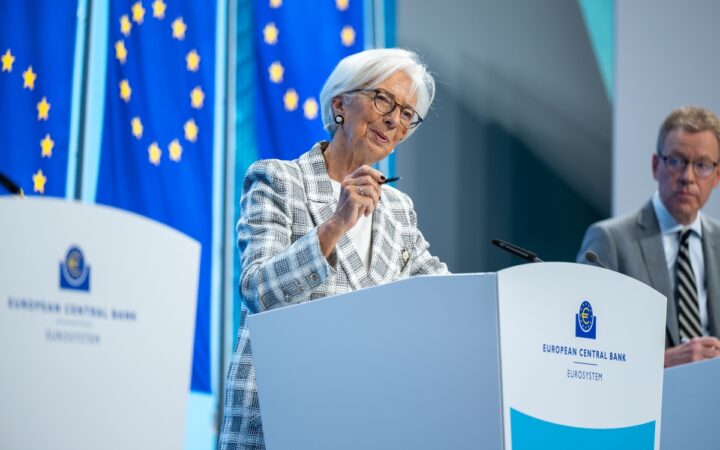
The GDP release came a day after the ECB left its three key rates unchanged. The deposit rate remains 2.50%, the main refinancing rate 2.65% and the marginal lending rate 2.90%, according to its decision.
As we reported, the pause left policymakers balancing energy-driven inflation against the risk of weaker growth. The Governing Council retained a meeting-by-meeting approach and made no commitment to a particular rate path.
In Thursday’s assessment, the ECB pointed to recovering services, AI-related business investment and government infrastructure and defense spending as support for activity. It also warned that renewed energy-price increases were hurting consumer confidence.
Friday’s expansion supports the central bank’s view that activity continued to grow during the quarter. It does not resolve the inflation problem or determine the next interest-rate decision: policymakers must assess both the durability of demand and the persistence of price pressures.
Financing Costs Remain a Test for Demand
The ECB said financial conditions had tightened since its previous meeting. Mortgage rates rose to 3.6% in August from 3.5% in July, mortgage demand declined substantially in the third quarter and banks tightened lending standards for businesses.
Those developments can affect the economy with a delay. Higher borrowing costs influence home purchases, corporate investment and working-capital decisions, so a positive GDP reading can coexist with increasing pressure on future spending.
For European equities, continued expansion provides a more supportive demand backdrop than stagnation would. For bonds and currencies, attention also turns to how resilient growth affects the room for monetary tightening. The GDP release alone cannot establish a specific market reaction or a uniform benefit for corporate earnings.
The Next GDP Estimate Arrives in November
Eurostat assembled the preliminary figures using information from 19 member states covering 96% of euro-area GDP and 94% of EU output. The high coverage makes the release informative, but the underlying sources remain incomplete.
The next estimate is due November 13, with a more detailed release scheduled for December 7. Further information can change both the headline growth rates and the assessment of what drove the expansion.
The immediate message is that eurozone growth exceeded expectations while remaining uneven and slower than in the second quarter. The next test is whether that resilience can continue as households and businesses absorb higher energy and financing costs.