Key Notes
- Bill Gross has launched a free catalog of more than 1.2 million AI-generated business ideas, with searches tailored to expertise and available capital.
- The platform provides source-backed briefs and financial estimates, but its matching scores do not establish that a business will succeed.
- Broader business-building tools are advertised for 2027, while partner services can carry charges and credits are separate from cash financing.
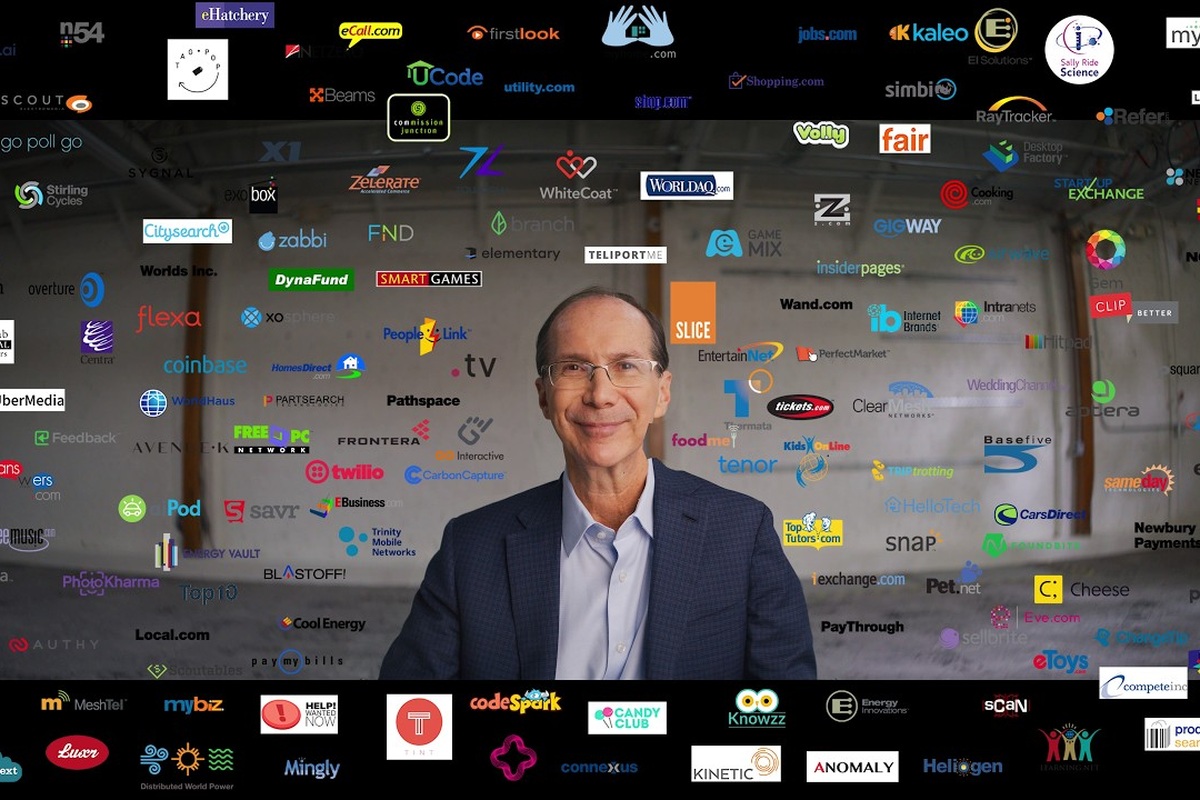
Idealab founder Bill Gross has launched Idealab.ai, a free platform offering more than 1.2 million AI-generated business ideas, in an effort to make the early stages of entrepreneurship more accessible to people outside traditional startup networks.
The idea engine lets users describe their expertise and narrow potential ventures by available capital, industry and time to market. Its public search pairs suggested businesses with financial estimates and background information, giving aspiring founders a starting point for research rather than a ready-made profitable company.
At launch, the platform says its system has read approximately 17.6 million sources, including news, research, patents, financial filings and customer complaints. Those are company-reported processing figures; the size of the database does not establish how many ideas will become viable businesses.
Business Ideas Matched to Skills and Capital
The search begins with a description of the user’s experience or an existing idea. Additional filters cover the capital needed to start, team size, market reach and other characteristics. That approach aims to connect a person’s knowledge and resources with a specific business problem, rather than simply produce a generic list of startup suggestions.
In a check using the website’s built-in example of a former manufacturing chief financial officer, the public search returned ideas including a fractional CFO service and a finance-automation business-case tool. Results displayed estimated starting capital, time to market and a fit score without requiring a login for that search.
The distinction between matching and validation is important. The interface describes fit as query similarity calculated from cosine distance, a measure of how closely information matches in the system. A high score is not a stated probability that the business will succeed or that customers will pay.
What Sits Behind the AI-Generated Briefs
Idealab.ai’s methodology sorts information into unmet needs, capabilities that could enable solutions, and structural changes that alter what is commercially possible. It then connects those signals into business concepts for further investigation.
The company says each full brief includes the intended founder profile, competitors, risks and a roadmap for the first 90 days. It also outlines starting costs, a possible time to the first customer and yearly revenue if the business succeeds. References are intended to let users inspect the material behind the proposal.
These features can help organize a first round of investigation. They do not replace conversations with customers, supplier quotations or evidence that a product can earn more than it costs to deliver. A revenue estimate conditional on success is different from an existing company’s sales record.
The underlying idea is not exclusive. The platform’s FAQ explicitly allows other people to select the same concept, emphasizing that the eventual business depends on how and where it is built. Access to the catalog therefore provides a research lead, rather than ownership of an uncontested market.
Free Ideas and a Wider Commercial Platform
Gross’s founder message says the system generates more ideas than Idealab could pursue itself. Public ideas are free to explore and use, and entrepreneurs do not have to buy the company’s paid services to take one forward.
The wider ambition extends beyond brainstorming. Idealab.ai is developing business-building tools and private applications for organizations seeking opportunities in their own research and intellectual property. Its public materials also describe work toward access to capital, but finding an idea does not itself secure financing.
A separate business framework maps 118 functions, ranging from demand validation and bookkeeping to fundraising and governance. The website advertises the broader operating tools as coming in 2027, with beta registration available. The map is visible today; that should not be confused with a completed suite of autonomous business services.
Credits Can Reduce Bills, but They Are Not Funding
Cloudflare Inc. (NYSE: NET) is listed as a premium partner. Idealab.ai’s business-tools FAQ says Cloudflare is offering $100,000 in credits to people who build their companies on the platform.
Those are service credits, rather than a cash investment or a founder’s salary. Their practical value depends on the services a business needs and the terms of the offer. The same FAQ says providers connected through the business framework set their own prices, with a mix of free and paid services.
For someone evaluating self-employment, free idea discovery can reduce the cost of exploring options while leaving the larger financial questions intact: how much cash is needed before revenue arrives, what recurring bills must be covered and whether the founder can sustain that period.
Experience and Execution Remain the Test
Gross founded the original Idealab in 1996. The new platform says it draws on methods developed across more than 175 companies, translating decades of company-building experience into a searchable resource rather than requiring every prospective founder to enter an incubator.
Access to people remains a separate part of building a business. As we previously reported, Slush’s young-founder program combines mentoring with introductions to investors and industry figures. A database can broaden the pool of people who have something to investigate without automatically providing those relationships.
Idealab.ai’s launch makes the discovery stage cheaper and more structured. The more consequential test will be whether users can turn its suggested opportunities into customers, sustainable margins and businesses they can afford to run.