Key Notes
- New US online iPhone Duo orders moved into January 2027 shortly after preorders opened on October 16.
- The $1,999 foldable puts premium demand and holiday supply constraints in focus for Apple shareholders.
- Earliest deliveries remain set for October 23, while the backlog does not quantify total sales.
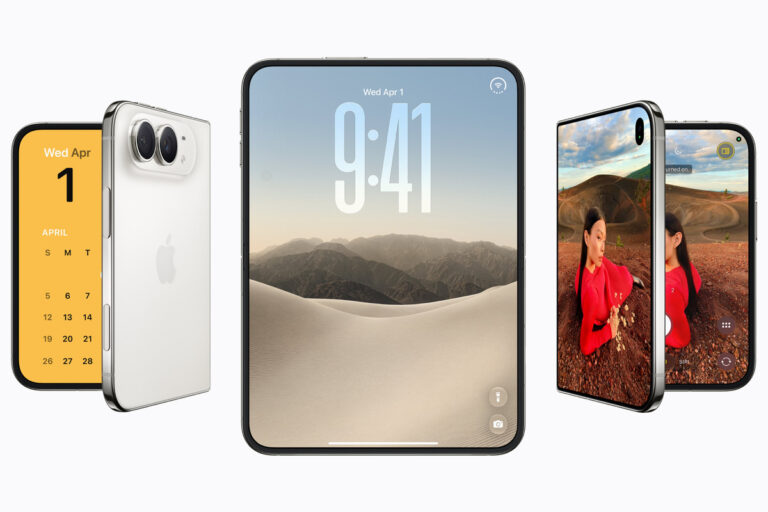
Apple Inc. (NASDAQ: AAPL) faces a holiday supply squeeze for its first foldable iPhone after new US online orders for the $1,999 iPhone Duo slipped into January 2027 within the opening stretch of preorders. The Christmas backlog puts Apple’s premium-device strategy in focus for shareholders, even as the earliest customers remain scheduled to receive their phones on October 23.
By 8:30 a.m. Eastern on October 16, all color and storage combinations were showing January shipping estimates, 9to5Mac reported. Apple’s US online store subsequently displayed a January 22 ship date for the unlocked 256GB Star White model when checked for this article.
The device is therefore effectively sold out through Christmas for new orders on that channel. Apple continues to accept preorders, however, and shipping estimates can change. The backlog does not establish that every carrier, retail store or country has the same availability.
Launch-Day Supply Disappears Within Minutes
Apple opened preorders at 5 a.m. Pacific, or 8 a.m. Eastern, on Friday. The rapid move into 2027 turned what began as a launch-week purchase into a wait extending beyond the holiday season for later online buyers.
The progression matters more than a single delivery date: early customers secured the first allocation, while subsequent orders were assigned substantially later fulfillment. It indicates that immediately available supply was insufficient for the opening wave of demand, without revealing how many phones Apple had allocated.
Apple’s previously announced release timetable still begins October 23. Those first deliveries and retail availability are separate from the estimated shipping dates attached to orders placed after the initial stock was committed.
Why the Backlog Matters for Apple Stock
For AAPL investors, the encouraging signal is that buyers are willing to queue for a substantially more expensive iPhone. As we reported at the September unveiling, Duo introduces a new form factor at the upper end of Apple’s most important hardware business.
At $1,999, the base model sits $700 above the $1,299 starting price of the iPhone 18 Pro Max. A successful foldable could help Apple capture more spending from customers seeking a larger display without moving to a separate device.
Higher prices alone do not settle the earnings question. The effect on revenue depends on shipment volumes and whether Duo attracts additional purchases or replaces sales of other iPhones. Its profit contribution also depends on manufacturing and component costs, which cannot be inferred from delivery estimates.
The stock-market implication is consequently a stronger early signal for the new product, rather than a quantified upgrade to Apple’s financial outlook. No confirmed unit-sales figure accompanies the opening backlog.
A Premium Foldable With a Broader Screen
Apple’s launch announcement describes a 7.6-inch folding inner display and a 5.4-inch outer screen, powered by its A20 Pro chip. The design lets customers switch between a compact phone and a larger workspace for applications, entertainment and multitasking.
The lineup comes in Star White and Night Sky, with 256GB, 512GB, 1TB and 2TB storage options. The US store lists prices rising from $1,999 for the base configuration to $3,199 for 2TB, placing the entire range firmly in the premium segment.
Apple is also adapting iOS 27 to the folding design. Split View and changes to how applications respond as the device opens or rotates are part of the effort to make the extra screen useful in everyday use, rather than simply a hardware novelty.
Strong Interest Does Not Remove Supply Risk
The financial stakes are substantial because the iPhone remains central to Apple’s accounts. Its June-quarter filing showed iPhone revenue of $54.25 billion, up 22% year over year, out of $109.42 billion in total sales. Those results predate the Duo launch.
Apple’s July earnings release also reported diluted profit of $2.02 per share, up 29%, including an $0.11 benefit from tariff refunds. That historical performance provides a benchmark, rather than a measure of how the foldable is selling.
Supply constraints can work in both directions for shareholders. A queue supports the case for consumer interest, but phones shipped in January cannot all satisfy Christmas purchases. Extended waits may defer spending, encourage customers to select another model or allow competitors another opportunity.
Apple has also warned in its filing about component supply imbalances and rising costs. Its ability to turn reservations into profitable shipments therefore matters alongside the speed at which the first preorder allocation disappears.
The Wider iPhone Cycle Still Matters
The Duo reception arrives after a more cautious signal elsewhere in the lineup. As we previously reported, Nikkei described component-order cuts for the iPhone 18 Pro and Pro Max amid softer demand. That report concerned different models and does not measure Duo sales.
For Apple stock, the next test is whether production can catch up while customers remain willing to wait. January shipping dates make the holiday shortage clear; sustained deliveries, the mix of models sold and management’s financial disclosures will determine how much that interest contributes to the broader iPhone business.