Key Notes
- Apple stock slipped about 0.8% in an October 9 overnight quote after gaining 1.11% during Thursday’s regular session.
- Nikkei reported component-order cuts for the iPhone 18 Pro and Pro Max as higher prices weighed on consumer demand.
- The size of the cuts and their effect on total iPhone sales remain unclear as investors assess the holiday revenue outlook.
Apple Inc. (NASDAQ: AAPL) shares slipped in overnight trading on October 9 as Nikkei Asia reported that the company had asked some suppliers to reduce component production for its recently launched iPhone 18 Pro and iPhone 18 Pro Max.
The report puts demand for Apple’s premium phones in focus just three weeks after they reached stores. Nikkei linked the softer consumer response to price increases driven by rising memory-chip costs, creating a test of how far Apple can raise handset prices without weakening sales.
Apple stock was quoted at $337.55, down $2.87, or 0.84%, from Thursday’s close in an extended-hours reading checked around 06:45 UTC. That is an overnight indication, separate from the October 9 regular session.
Apple Stock Gives Back Part of Thursday’s Gain
Apple had closed at $340.42 on October 8, gaining 1.11%. That completed-session advance preceded Nikkei’s report, which was published at 14:58 Japan time on Friday, or 05:58 UTC.
The overnight decline therefore reversed part of the previous day’s gain. It does not establish how the shares will finish Friday or quantify the eventual earnings impact of the reported production adjustment.
For AAPL shareholders, the concern is whether weaker demand for the more expensive models could weigh on iPhone revenue during the holiday shopping quarter. Higher selling prices can support revenue per device, but that benefit depends on how many customers still choose to upgrade.
Higher Prices Put the Pro Lineup to the Test
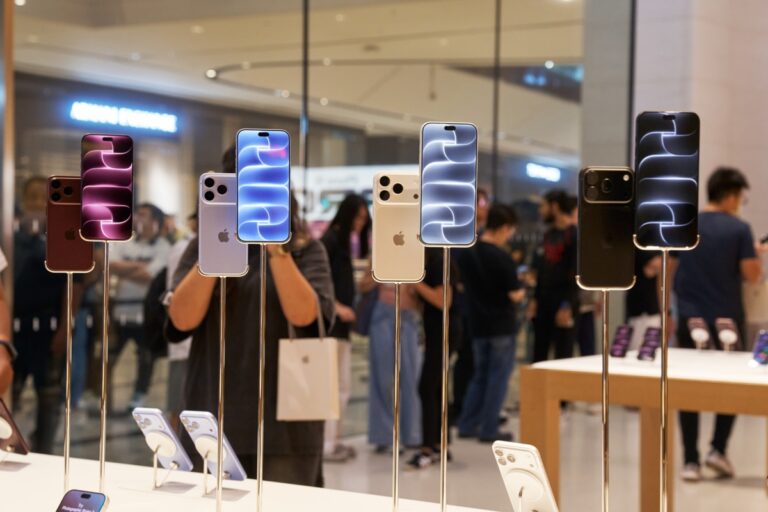
Apple introduced the two models on September 9, with U.S. starting prices of $1,199 for the iPhone 18 Pro and $1,299 for the Pro Max. Preorders opened September 12, followed by retail availability on September 18.
As we reported at the launch, those starting prices were $100 above the previous generation. The refresh also brought the A20 Pro processor, a variable-aperture main camera and updated AI capabilities.
The financial question is whether those improvements justify the higher outlay for enough buyers. Apple offers trade-in credits and carrier promotions, so the effective cost varies by customer and market. Nevertheless, Nikkei’s account suggests that suppliers are seeing a weaker response than anticipated.
A reduction in component orders is a signal about production plans. It is not a direct measure of completed retail sales, and it cannot by itself establish the percentage change in total iPhone shipments.
Earlier Resale Data Had Raised Demand Questions
The report follows an earlier caution from Jefferies. In a September 28 note described by Investing.com, the broker pointed to weaker Hong Kong resale pricing than at the equivalent stage of the previous year’s launch.
The iPhone 18 Pro was trading below official prices across almost all storage configurations, while Pro Max resale premiums had fallen sharply. The 256GB Pro Max retained an approximately 8% premium in the broker’s September 27 snapshot.
Those observations concern a secondary market at a specific date, rather than Apple’s worldwide sales. Jefferies also described mixed delivery-time trends across countries, illustrating why a single availability or resale indicator cannot settle the broader demand picture.
Record Results Set a High Benchmark
Apple entered the product cycle after a strong June quarter. Its July 30 results showed revenue of $109.4 billion, up 16% year over year, and diluted earnings of $2.02 per share, up 29%.
The company said iPhone, Mac and Services revenue each set June-quarter records. These results cover the period ended June 27 and predate the iPhone 18 launch, so they provide a historical benchmark rather than evidence of the new lineup’s performance.
That distinction matters for the stock. Strong results from an earlier product cycle can support investor expectations, while a change in current orders may prompt questions about whether the next quarter will sustain that momentum.
The Size of the Adjustment Remains Unclear
Reuters also carried Nikkei’s report, but its initial dispatch did not quantify the component cuts or supply a revised shipment target.
The key issues now are the scale and duration of the adjustment, whether demand differs materially by region, and whether customers are shifting toward other iPhone models. Apple’s next financial disclosures and management commentary will help show whether the reported weakness changes the revenue outlook or mainly reflects a narrower inventory correction.