Chinese robotics company Unitree has priced its initial public offering on the Shanghai Stock Exchange at a valuation of approximately 61 billion yuan ($9.04 billion), becoming the first mainland Chinese humanoid robot manufacturer to go public.
The company priced its IPO at 150.8 yuan per share and expects to raise approximately 6.1 billion yuan ($910 million). The listing marks another milestone for China’s rapidly growing robotics industry as investors increasingly view humanoid robots as one of the next major commercial applications of artificial intelligence.
China’s Humanoid Robotics Industry Continues to Grow
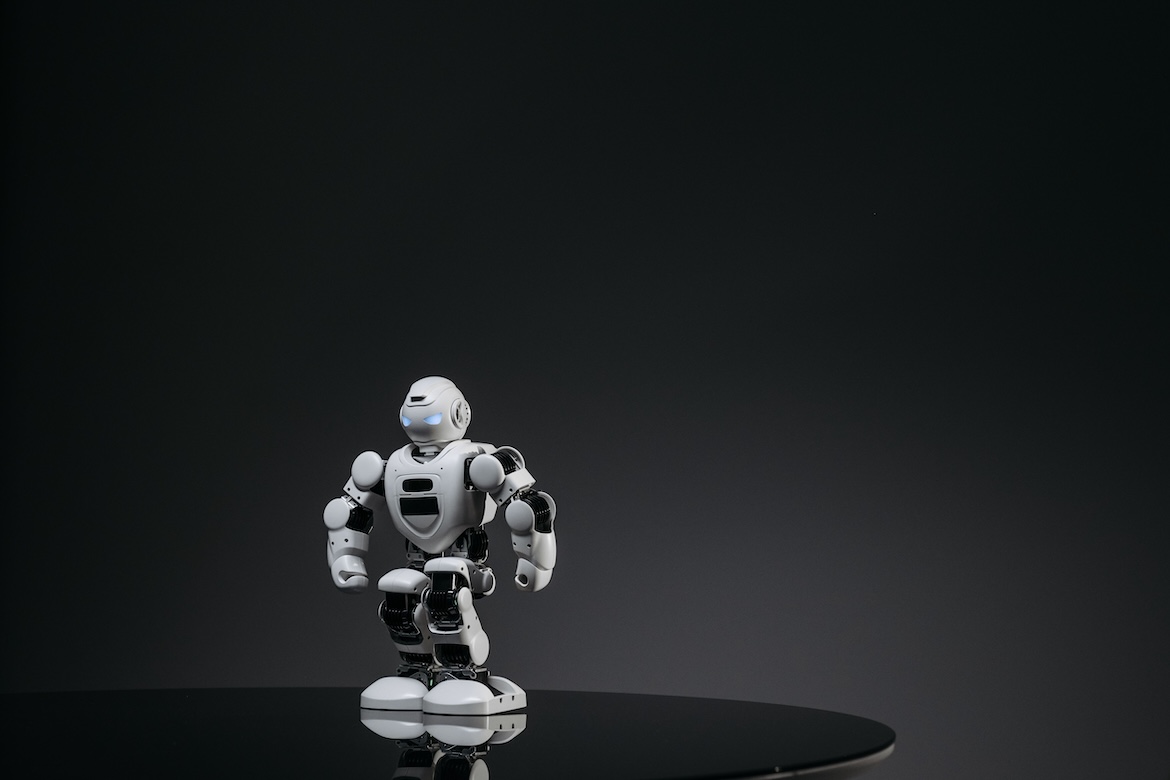
Founded in Hangzhou, Unitree has become one of China’s leading robotics companies through the development of both quadruped robots and full-sized humanoid robots.
Its machines have gained international attention for demonstrating increasingly sophisticated movement, balance, and autonomous capabilities while remaining significantly cheaper than many competing Western platforms.
As advances in artificial intelligence improve perception, reasoning, and motion control, humanoid robots are attracting growing interest from manufacturers, logistics companies, research institutions, and governments seeking to automate labor-intensive tasks.
AI Is Driving the Next Robotics Cycle
The IPO comes as artificial intelligence transforms the robotics industry.
Large language models and multimodal AI systems are making robots increasingly capable of understanding natural language, recognizing complex environments, and performing more flexible physical tasks.
Technology companies around the world—including Tesla, Figure AI, Agility Robotics, Boston Dynamics, and several Chinese manufacturers—are investing billions of dollars into humanoid robot development, betting that the technology could become one of the largest new computing platforms over the coming decade.
Unitree has emerged as one of China’s most prominent competitors in that race.
IPO Comes Amid Rising U.S.-China Technology Tensions
The public listing also takes place against the backdrop of growing geopolitical competition between the United States and China.
Washington has expanded restrictions on Chinese access to advanced semiconductor technology and introduced additional limitations affecting certain robotics technologies, while Beijing has responded with export controls and other countermeasures.
Despite those tensions, China continues to prioritize artificial intelligence and robotics as strategic industries, with substantial government and private-sector investment flowing into companies developing next-generation automation technologies.
Investors Bet on China’s Robotics Future
The successful IPO reflects growing investor confidence that humanoid robotics could become one of the fastest-growing sectors of the AI economy.
While commercial deployment remains in its early stages, advances in computing power, AI models, sensors, and battery technology are steadily improving robot capabilities while reducing production costs.
For Unitree, becoming a publicly traded company provides additional capital to expand research and development, increase manufacturing capacity, and compete more aggressively in what is expected to become one of the world’s most competitive technology markets.
As global investment in artificial intelligence increasingly extends beyond software into physical automation, Unitree’s listing represents another sign that investors believe humanoid robots could become one of the defining industries of the next decade.