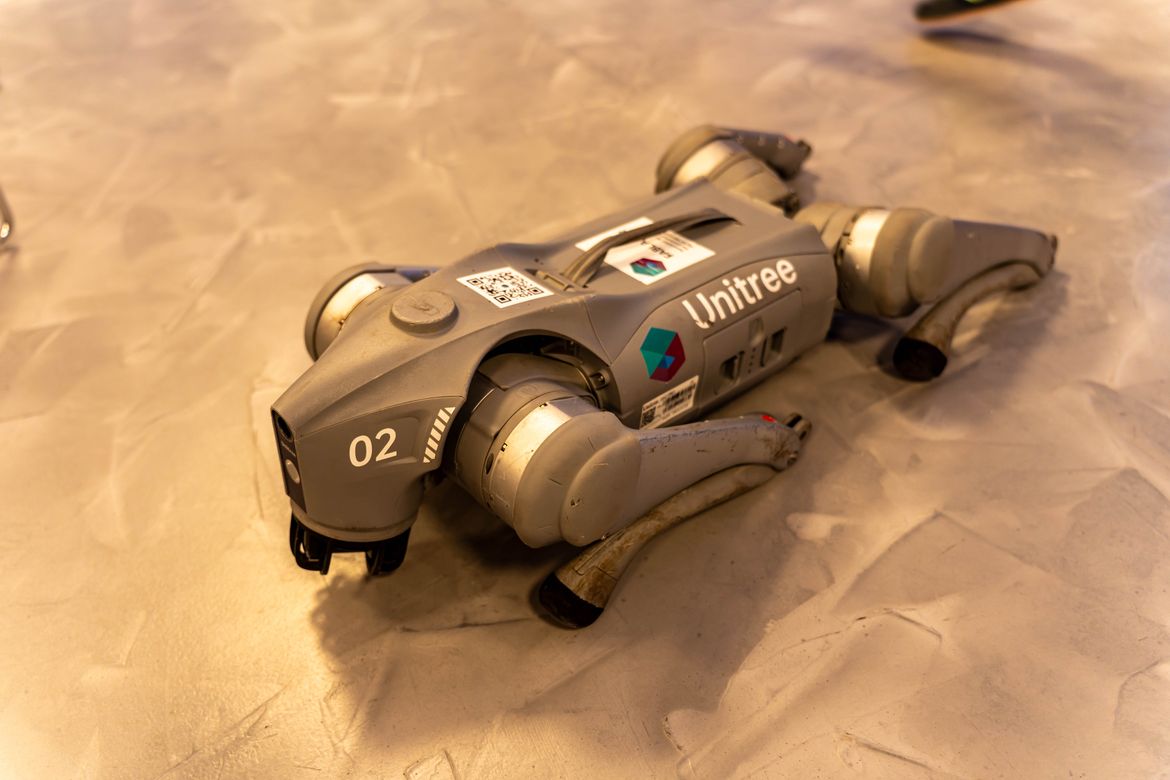
Unitree Robotics has erased roughly $30 billion in market value after one of China’s most spectacular technology IPOs, a dramatic reversal that is prompting fresh scrutiny of the country’s rapidly expanding humanoid robot sector.
Shares of the Chinese robotics company have fallen more than 40% since listing, according to the South China Morning Post, after initially soaring more than fivefold during their Shanghai debut. The extreme volatility has fueled speculation that Beijing could tighten approval standards for other humanoid robot companies seeking to go public.
Unitree’s valuation briefly reached approximately $66 billion after shares surged during their first trading session. The subsequent selloff erased around $30 billion from that peak, highlighting the enormous gap that can emerge between IPO enthusiasm and underlying business fundamentals.
Unitree’s Stock Remains Far Above Its IPO Price
The decline looks dramatic, but Unitree shares remain substantially above their original offering price.
The company priced its IPO at 150.80 yuan per share, valuing Unitree at roughly $9 billion. Shares then surged more than 400% during their first day of trading and reached an intraday high of 1,100 yuan, pushing the company’s valuation toward $66 billion.
Even after the subsequent decline, the stock remains multiple times above its IPO price.
That volatility has intensified debate over whether investor enthusiasm for humanoid robotics has moved faster than the industry’s commercial fundamentals.
Unitree generated approximately 1.7 billion yuan in revenue in 2025, with humanoid robots accounting for more than half of sales. Yet its valuation following the IPO reached multiples that assumed enormous future growth.
The company therefore became a highly visible test of how much investors are willing to pay today for the expected future commercialization of humanoid robots.
Beijing Could Raise the Bar for Robot IPOs
The consequences could extend well beyond Unitree.
Chinese regulators are expected to increase scrutiny of humanoid robot manufacturers seeking listings on mainland exchanges, according to reports cited by the South China Morning Post. Areas of focus could include the sustainability of revenue growth, prospects for profitability and evidence of genuine technological innovation.
That could affect companies including Deep Robotics and Leju Robot, both of which remain unprofitable after filing for IPOs.
Regulators have separately warned investment bankers against flooding China’s recovering IPO market with lower-quality companies. Authorities have emphasized conservative IPO pricing and greater selectivity as they seek to protect retail investor confidence.
Unitree’s extraordinary trading swings illustrate why.
A limited initial supply of shares combined with intense retail demand can produce dramatic first-day gains, but those valuations may prove difficult to sustain once the initial buying frenzy fades.
China’s Humanoid Robot Boom Faces a Reality Check
The regulatory shift arrives as capital pours into Chinese robotics startups.
Humanoid robots are a strategic priority for Beijing, and manufacturers are racing to develop machines capable of working in factories, logistics facilities and other commercial environments.
But commercialization remains at an early stage.
The concern is not necessarily that humanoid robotics lacks long-term potential. Instead, investors and regulators are increasingly asking whether current valuations already price in years of technological advances and commercial adoption that have yet to occur.
That reassessment is already affecting other companies. Regulatory uncertainty has complicated the planned Hong Kong IPO of Galaxea AI, while investors are becoming more selective about the valuations assigned to private robotics startups.
Unitree remains one of China’s most prominent robotics companies, and its shares are still far above their IPO price. But the $30 billion reversal has changed the conversation around the sector.
Instead of focusing solely on how large the humanoid robot market could eventually become, investors are increasingly examining recurring revenue, profitability and real-world deployments.
For China’s next generation of robot IPOs, demonstrating technological potential may no longer be enough.