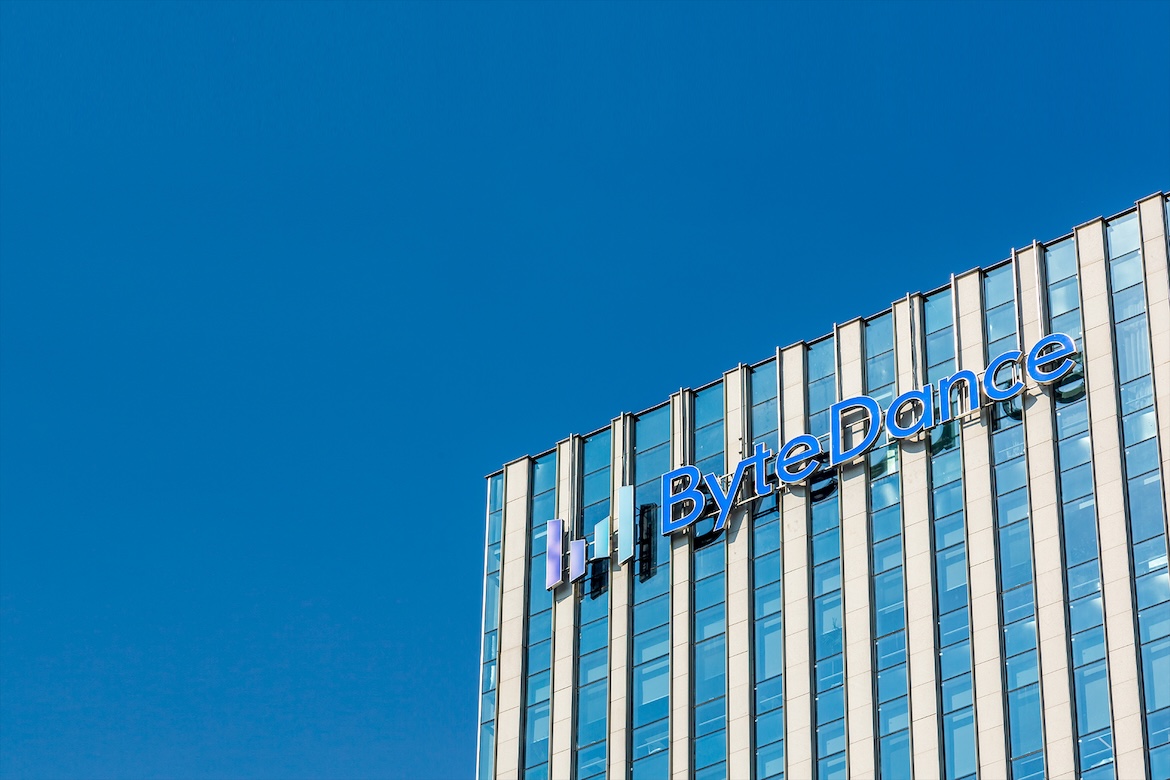
ByteDance has signed a $29.6 billion syndicated loan with 28 banks, securing one of Asia’s largest dollar-denominated financings this year as the TikTok owner accelerates its enormous investment in artificial intelligence.
The three-year facility, which can be extended to as long as five years, was increased substantially from the $20 billion ByteDance originally sought after lenders submitted more than $30 billion in commitments. Citigroup and JPMorgan coordinated the financing.
The scale of the deal highlights the extraordinary amount of capital required to compete in AI as ByteDance develops its own models, secures chips and expands computing infrastructure.
Chinese Banks Provide 64% of the Financing
Chinese lenders emerged as the largest group supporting the deal.
Fifteen Chinese banks committed a combined $18.9 billion, or 64% of the final loan, according to Bloomberg. Industrial and Commercial Bank of China provided $3 billion, Bank of China committed $2.5 billion and China Construction Bank contributed $1.5 billion. HSBC and two other foreign lenders each committed $1.5 billion.
The loan is unsecured, meaning ByteDance did not pledge specific assets as collateral. It carries an initial margin of just 68 basis points over SOFR, compared with 85 basis points on the company’s previous offshore loan.
Those unusually favorable terms, combined with the heavy oversubscription, suggest lenders remain highly confident in ByteDance despite the enormous capital requirements associated with its AI strategy.
The financing is also nearly three times the $10.8 billion ByteDance raised from roughly 20 banks in 2024.
ByteDance Is Spending Billions to Compete in AI
Officially, ByteDance told lenders that proceeds would be used for general corporate purposes. People familiar with the financing, however, told Reuters that the funds are expected to primarily support the company’s AI-related plans.
ByteDance has emerged as one of China’s most aggressive AI developers through Doubao, its family of consumer and enterprise AI models and applications.
That puts the TikTok owner in competition not only with Chinese technology companies but also with global AI leaders as the industry races to build increasingly powerful models.
The company has considered spending as much as $70 billion on capital expenditures in 2026, more than twice the previous year’s level, with much of that investment directed toward data centers and other AI infrastructure.
U.S. Chip Restrictions Push Infrastructure Overseas
ByteDance faces an additional complication that its U.S. competitors do not: restrictions on access to the most advanced American AI chips inside China.
The company has consequently been pursuing alternative processors while also reserving capacity at data centers under construction in Southeast Asia, giving it access to computing infrastructure outside mainland China.
That overseas strategy could become increasingly important as advanced AI models require ever-larger clusters of accelerators and enormous amounts of electricity.
The $29.6 billion loan demonstrates that banks are willing to finance that expansion on an extraordinary scale.
It is the second-largest dollar-denominated loan in Asia this year, behind only SoftBank’s $40 billion bridge facility signed in March.
For ByteDance, the financing provides another enormous pool of capital as AI increasingly becomes a central part of the company’s future beyond TikTok and Douyin.
For the broader technology industry, the deal illustrates something equally significant: competing at the frontier of AI is becoming so capital-intensive that tens of billions of dollars in financing can now represent a single company’s next step in the race.