Key Notes
- The FCC authorized up to 15,000 Starlink Mobile satellites and waived specified spectrum-leasing requirements, advancing SpaceX’s mobile carrier ambitions.
- SpaceX plans broadband directly to phones through next-generation satellites, while nationwide retail availability and pricing remain undefined.
- Connectivity generated $4.29 billion in second-quarter revenue, giving SPCX investors an established business alongside the costs of mobile expansion.
SpaceX (NASDAQ: SPCX) has moved closer to turning Starlink into a nationwide U.S. mobile competitor after regulators authorized a new 15,000-satellite network and granted a waiver allowing service on company-controlled spectrum.
The Federal Communications Commission’s October 6 order advances the regulatory framework for Starlink Mobile, which SpaceX plans to develop into a broader phone service offering high-speed internet directly to smartphones.
The approval is a step toward that ambition, rather than the launch of a fully operational nationwide retail carrier. SpaceX still needs to deploy the new network and turn its planned capabilities into a commercial service with defined pricing, availability and performance.
A Regulatory Path Beyond Carrier Partnerships
The FCC authorized SpaceX to deploy and operate up to 15,000 direct-to-device satellites in orbital shells approximately 326 to 335 kilometers above Earth. The grant covers mobile satellite services and supplemental cellular coverage in the United States, alongside specified operations outside the country.
A significant commercial provision waives the usual requirement for a lease agreement with a terrestrial wireless licensee in the authorized AWS-3 and AWS-H bands. That gives SpaceX greater flexibility to provide satellite mobile connectivity using spectrum rights it controls.
The waiver is narrower than a blanket exemption from wireless regulation. It applies to specified frequencies and remains subject to conditions, including interim emergency-calling requirements. The broader authorization also imposes coordination and interference protections.
Satellite numbers should likewise be read as an authorized deployment, not a count already in orbit. The order sets milestones requiring half the authorized constellation to be launched, placed in its assigned orbits and operational by October 7, 2032, with completion by October 7, 2035. Those are regulatory deadlines, not promised customer launch dates.
Broadband to Phones Is the Next Step
SpaceX’s current service overview describes Starlink Mobile’s next-generation V2 satellites as the route to broadband directly to phones. The company says they are designed for roughly 20x the throughput of a first-generation satellite.
Starlink expects the future network to support streaming and video calls, with a 5G experience comparable to terrestrial service in most environments. These are company performance expectations, rather than evidence that every U.S. smartphone can already receive that service.
The distinction from today’s offering is substantial. Starlink’s page lists data access through more than 40 apps on over 100 devices and voice through apps, while describing native calling as a future capability. It reports 650 launched satellite-to-mobile spacecraft across its current constellation.
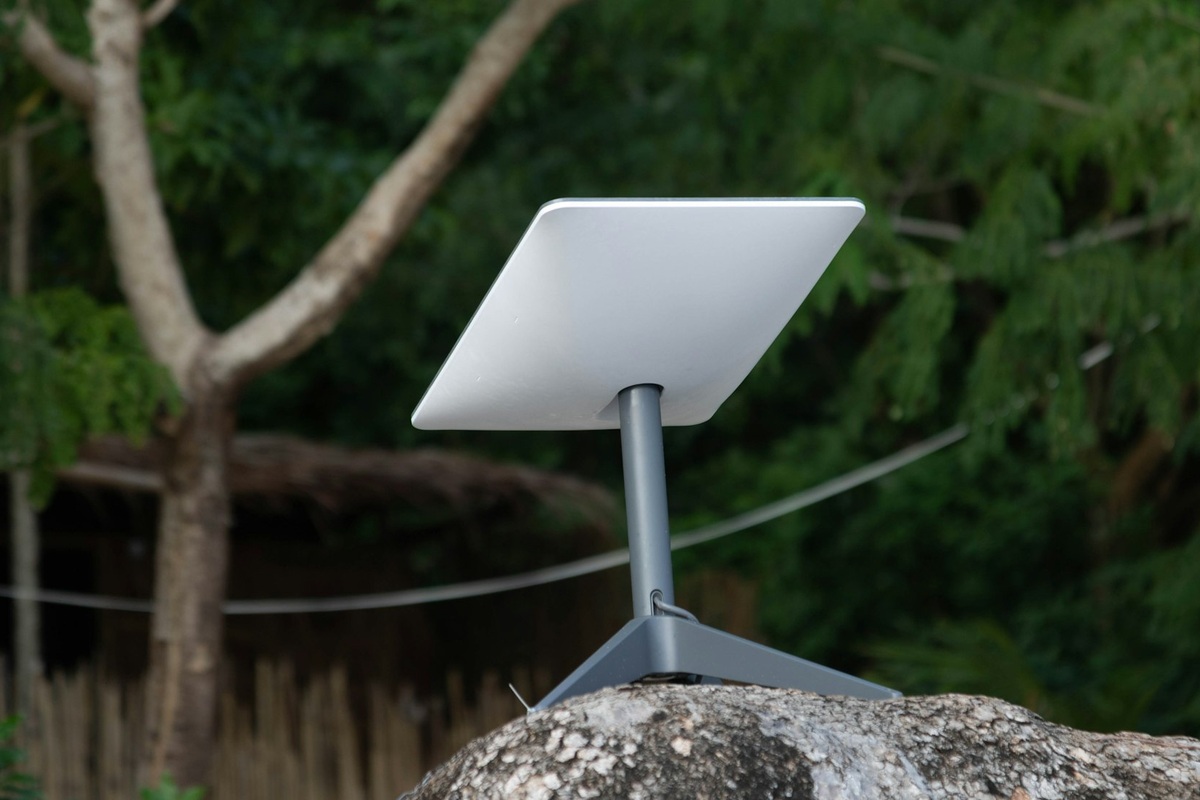
The existing system works with compatible LTE phones where users have a view of the sky. Direct-to-phone connectivity is separate from Starlink’s familiar broadband service that requires a dedicated terminal. A successful mobile rollout would reach customers through devices they already carry, rather than requiring every subscriber to install a dish.
Partner and Potential Rival to U.S. Carriers
SpaceX already works with T-Mobile US (NASDAQ: TMUS), which Starlink continues to list as its U.S. partner. Greater independence over spectrum therefore does not mean the company has abandoned carrier partnerships.
The broader ambition is to compete for customers served by T-Mobile, AT&T (NYSE: T) and Verizon Communications (NYSE: VZ). As we previously reported, SpaceX has explored a direct consumer mobile offering alongside its existing satellite partnerships.
The strategy also extends beyond adding satellites. On SpaceX’s August earnings call, President Gwynne Shotwell said the company intended to build terrestrial infrastructure using spectrum acquired from EchoStar, Reuters reported. She described the goal as making Starlink “a true mobile service.”
That leaves an important execution question: how SpaceX will combine space-based coverage with the capacity and reliability customers expect in densely populated areas. A wider geographic footprint does not, by itself, establish equivalent service inside buildings or under heavy demand.
Telecom analyst Craig Moffett told Reuters in August that competing with established carrier services within five years would be difficult without an agreement to use an existing operator’s network. That was an analyst assessment, not a regulatory finding, but it highlights the investment and operating work beyond obtaining satellite approval.
Why Starlink Mobile Matters for SPCX
Connectivity already provides a substantial financial foundation for SpaceX. Its second-quarter filing showed $4.29 billion in Connectivity revenue, up 65.8% from a year earlier, and approximately $1.66 billion in segment operating income.
Starlink reported 12 million subscriber service lines at June 30, twice the year-earlier level. That measure counts broadband subscriptions and is distinct from individual people or a customer count for a future standalone mobile carrier.
As we wrote during SPCX’s recent rally, investors are already weighing the established communications business against SpaceX’s large investment requirements. Mobile would add another potential source of recurring revenue, but deploying satellites and any supporting ground network also creates costs before the full customer opportunity is realized.
For shareholders, the next meaningful disclosures are the deployment schedule, retail or wholesale business model, handset support, pricing and spending required to deliver reliable service. The FCC decision removes an important constraint; it does not yet establish the revenue or profitability of a nationwide Starlink mobile carrier.