Key Notes
- Novig says trading volume rose nearly 94% and first-time depositors increased more than 218% across the periods surrounding its Sydney Sweeney campaign.
- Sweeney is a strategic partner and equity holder in the sports-focused platform, which launched nationwide in August.
- The company’s growth comes alongside reported funding at a $2 billion valuation, while activity figures alone do not establish revenue or profitability.
Novig says trading volume rose nearly 94% after its Sydney Sweeney campaign, giving the sports prediction-market startup a surge in activity as it competes for customers and fresh capital.
Co-founder and CEO Jacob Fortinsky shared the figures exclusively with CNBC, which reported the results on October 3. The comparison covers the 20-day periods before and after the campaign’s September 9 launch.
Novig’s original announcement identifies Sweeney as both a strategic partner and an equity holder. Her involvement therefore extends beyond appearing in advertising, although the announcement did not disclose her ownership percentage.
More Depositors, Downloads and Active Users
First-time depositors increased more than 218% across the comparison periods, Fortinsky told CNBC. App downloads rose more than 187%, while September active users increased 96% from the previous month and 260% from a year earlier.
Those measures describe different stages of customer acquisition: downloading the app, putting money into an account and actually using the platform. They should not be treated as interchangeable measures of sales or profitability.
The NFL season also began around the campaign launch. Fortinsky cited both developments in discussing the increase, so the figures do not isolate the advertising’s contribution from seasonal demand.
A rise in funded accounts can create opportunities for repeat trading, but the reported percentages do not establish how many newcomers will remain active after the initial promotional period.
A Sports-Only Pitch for a Crowded Category
The “Just Sports” campaign presents Novig as a focused alternative to prediction platforms offering contracts across multiple subjects. In its September release, the company said its product decisions, features and markets are built around sports.
Novig planned placements across digital media, social channels, online video and outdoor advertising throughout football season, with further creative work and activations in the fall. The campaign is a national brand-building effort rather than a single advertisement.
The creative also attracted criticism from some female athletes over its portrayal of women in sports, CNBC reported. Fortinsky defended the campaign and said the company was proud of the work.
Commercially, the partnership connects a widely recognized performer with a narrowly defined trading product. The business question is whether that recognition translates into sustained participation, rather than awareness alone.
Federal Exchange Launch Preceded the Campaign
Novig announced its nationwide launch on August 4, just over a month before the advertising debut. It said the rollout included live trading, deeper liquidity, expanded payment options and stronger market-surveillance systems.
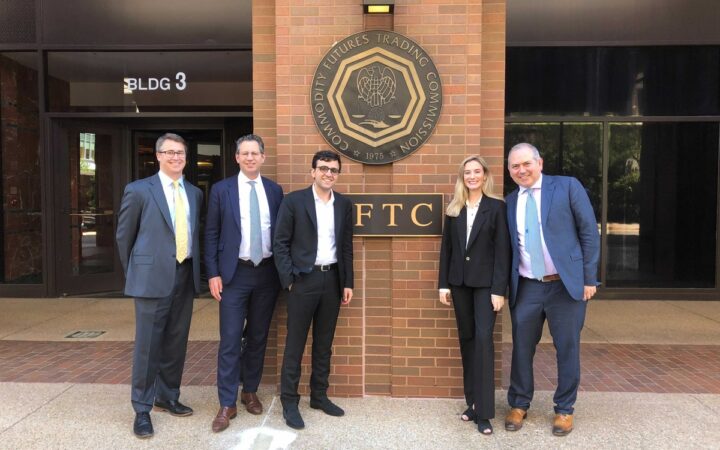
The Commodity Futures Trading Commission’s registration record lists Novig’s exchange entity, Ludlow Exchange LLC, as a designated contract market from June 16. That provides an official record of its federal exchange status.
Novig maintains a minimum participation age of 21, according to its campaign and launch announcements. The company describes that threshold as a deliberate business choice.
At the August launch, Novig reported more than $6 billion in cumulative trading volume. That lifetime measure is separate from the short-term percentage changes disclosed to CNBC and does not show how much revenue the company earned.
Trading Activity and Fee Income Are Different
Novig’s current fee schedule describes a peer-to-peer exchange, where users trade against one another rather than the platform taking the opposing position.
Pre-game straight trades are fee-free under the published schedule. Some live trades, longer-dated sports contracts and parlays carry fees, with the amount depending on the product and contract price. Makers whose resting orders provide liquidity pay no trading fee under that schedule.
This distinction matters when assessing growth. More trading volume can support a larger business, but the mix of fee-free activity and fee-bearing transactions affects monetization. A near-doubling of volume does not imply a matching increase in revenue.
Funding Interest Adds a Financial-Market Dimension
Novig announced a $75 million Series B on February 18, led by Pantera Capital. Participants included Multicoin Capital, Makers Fund and Edge Equity, alongside existing investors. Total capital raised exceeded $105 million at that point.
The company said the financing would support product development, more markets, liquidity and trading tools. Those priorities show that scaling the business involves exchange infrastructure as well as customer acquisition.
The February announcement also put its workforce above 50, including engineers, operators and traders, reflecting the staffing demands of building and running a trading venue.
The Wall Street Journal subsequently reported new funding at a $2 billion valuation, citing people familiar with the matter. That reported figure is four times the $500 million valuation from an earlier round; it represents a company valuation, not the amount of new money raised.
Competition for investment is expanding across the sector. MarketSpeaker recently covered Kalshi’s funding talks at a roughly $40 billion valuation as that platform pursues a broader exchange business.
Novig is taking a narrower route through sports. Its latest activity figures indicate stronger customer engagement, while retention, transaction mix and eventual financial results will determine how much of that attention becomes durable business growth.