AI chip startup Groq has raised $350 million at a valuation of approximately $3.5 billion, marking a dramatic reset for a company that was valued at $6.9 billion less than a year ago.
The new financing comes after a major restructuring triggered by Groq’s licensing agreement with Nvidia, which reportedly paid as much as $20 billion for access to the startup’s inference technology while also hiring away founder Jonathan Ross and other senior executives.
The deal delivered substantial liquidity to Groq investors, but it also changed how the market values the remaining business.
Groq’s Valuation Has Fallen Sharply
Groq reached a $6.9 billion post-money valuation in September 2025 after raising $750 million in a round led by Disruptive.
Since then, the company has undergone a significant transformation. Nvidia entered into a non-exclusive licensing agreement for Groq’s inference technology and hired several members of its leadership team, including Ross. That transaction forced investors to reassess the value of the standalone company.
The latest reported $3.5 billion valuation would represent a decline of roughly 49% from Groq’s previous peak.
Nvidia Becomes an Investor
One unusual aspect of the new round is that Nvidia itself is participating as an investor, despite being both Groq’s largest strategic partner and one of its most direct competitors.
The relationship between the two companies became much closer after Nvidia licensed Groq’s technology and recruited several key employees. Groq had built its reputation around its Language Processing Unit, or LPU, an inference-focused architecture designed to generate AI responses with low latency.
After the licensing transaction, Groq shifted its focus toward expanding its AI inference cloud rather than competing solely as a chip developer.
That strategy had already become visible earlier in 2026, when Groq announced a separate $650 million growth capital round aimed at scaling its inference cloud business.
Investors Reprice the Remaining Business
The lower valuation does not necessarily mean investors believe Groq’s technology has become less valuable.
Instead, much of the startup’s intellectual property value and leadership talent has effectively been transferred into its relationship with Nvidia. Existing investors also received large cash distributions tied to the licensing agreement, changing the economic profile of the remaining company.
Groq is now increasingly positioned as an AI inference cloud provider, operating data centers and serving developers and enterprises rather than relying primarily on proprietary chip sales.
The company says its platform is used by millions of developers and processes trillions of tokens each week.
Cerebras Shows How Wide the Valuation Gap Has Become
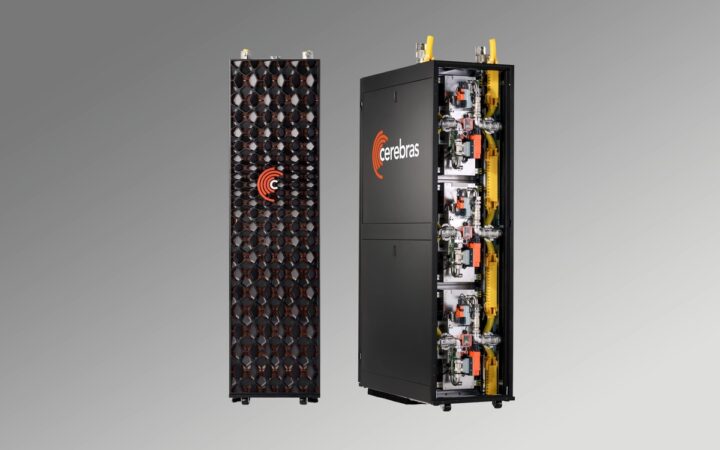
The reset is particularly striking when compared with rival AI hardware company Cerebras, whose public-market valuation has risen dramatically amid investor enthusiasm for alternative AI compute providers.
That contrast highlights the premium investors currently place on companies that retain full control over their hardware, intellectual property, and management teams.
Groq, by comparison, is rebuilding around cloud infrastructure after monetizing a significant portion of its core technology through the Nvidia deal.
Groq Enters Its Second Act
The new funding gives Groq additional capital to expand capacity, recruit new leadership, and compete in one of the fastest-growing segments of AI infrastructure.
Demand for inference – the process of running already-trained AI models – is expanding rapidly as businesses move from experimentation to large-scale deployment.
For investors, Groq has effectively become a different company from the one valued at $6.9 billion in 2025: less of a pure-play chip challenger to Nvidia and more of an AI infrastructure and inference cloud provider.
Whether that strategy can rebuild the company’s valuation will depend on how quickly Groq can scale its cloud business and differentiate itself in an increasingly competitive AI compute market.