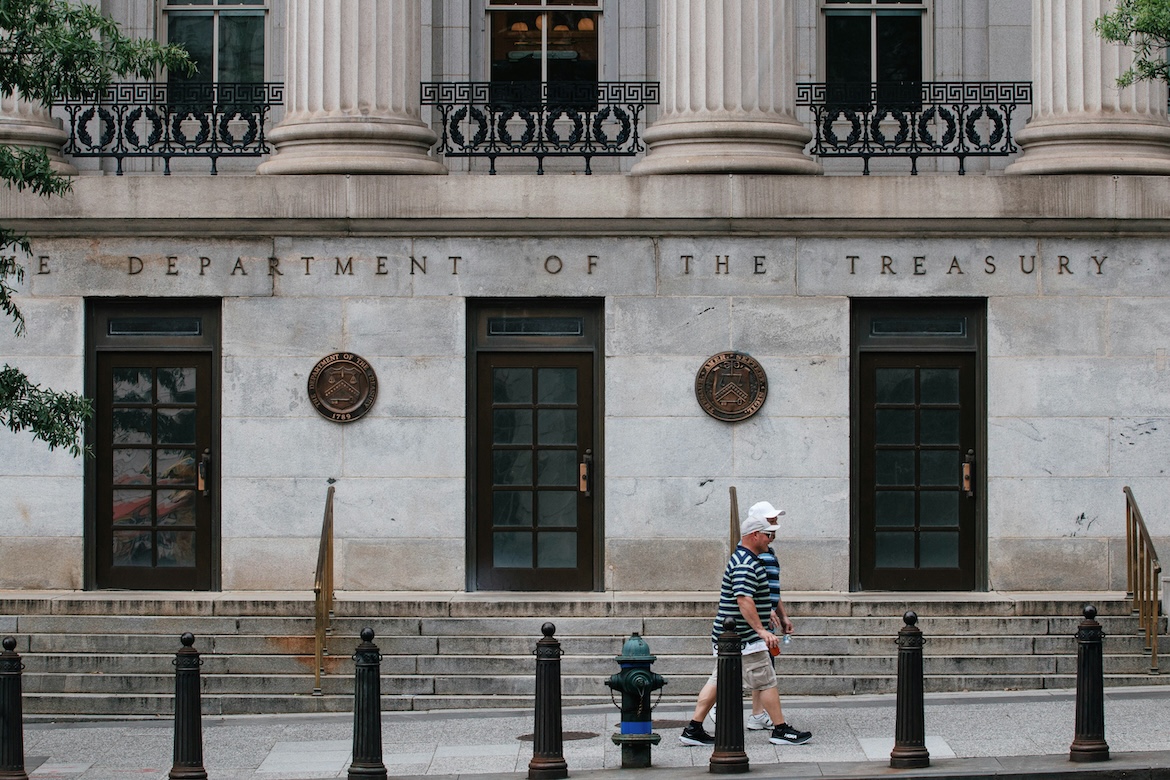
The U.S. Treasury is preparing to increase the size of its government debt buybacks as Secretary Scott Bessent seeks to calm a Treasury market shaken by rising long-term yields.
Wall Street dealers expect the Treasury’s upcoming liquidity-support operation for longer-dated securities to exceed the previously indicated $4 billion minimum, according to Bloomberg. Morgan Stanley strategists believe the department could go substantially further, potentially buying back as much as $10 billion in a single operation.
The decision is being closely watched because the Treasury market has experienced renewed pressure at the long end of the yield curve. Bessent has characterized the intervention as an effort to cool the market’s recent “fever,” signaling the administration’s concern about disorderly moves in borrowing costs.
Morgan Stanley Sees Buybacks Reaching $10 Billion
The Treasury recently increased the scale of liquidity-support buybacks for bonds with maturities of 10 years and longer, establishing a minimum purchase amount of $4 billion for individual operations through early November.
The next question is how aggressively officials are willing to use that capacity.
Morgan Stanley estimates that a $10 billion buyback could absorb roughly 55% of the net supply of Treasury securities with maturities longer than 20 years during the relevant period, according to Bloomberg. Such an operation would represent a significant intervention in one of the most closely watched areas of the U.S. government bond market.
The program does not reduce the federal government’s overall debt burden. The Treasury finances the purchases by issuing other securities, meaning the operation effectively changes the composition of outstanding government debt rather than eliminating it.
Its purpose is instead to improve liquidity in older, less frequently traded securities and help the market function more efficiently.
Long-Term Treasury Yields Are Under Pressure
The possibility of larger buybacks comes after long-term Treasury yields surged, increasing borrowing costs across financial markets.
Higher yields on government debt can ripple through the economy by raising financing costs for mortgages, corporations and consumers. They also make bonds more competitive with stocks and other risk assets.
That makes the Treasury’s strategy particularly important for investors.
An expanded buyback program focused on longer-dated bonds could provide an additional source of demand for securities that have experienced selling pressure. By removing some supply from the market, purchases could help stabilize prices and limit disorderly increases in yields.
However, dealers are also watching for potential unintended consequences. A substantially larger intervention could affect market expectations about how actively the Treasury is prepared to respond when long-term yields rise sharply.
Lower Yields Could Support Risk Assets
The implications extend beyond the bond market.
Treasury yields represent a fundamental benchmark for the pricing of financial assets globally. When yields rise, investors can earn more from relatively low-risk government securities, potentially reducing the appeal of equities, cryptocurrencies and other higher-risk investments.
The reverse can occur when yields decline.
If larger Treasury buybacks contribute to lower long-term yields and improved market liquidity, financial conditions could become more supportive for risk assets. Bitcoin and other cryptocurrencies could benefit from that environment, particularly if the move coincides with stronger liquidity across financial markets.
But the effect is not automatic. Crypto prices remain influenced by monetary policy expectations, the dollar, investor positioning and broader risk sentiment, while Treasury buybacks are primarily designed to improve market functioning rather than directly stimulate asset prices.
The immediate focus is therefore on the Treasury itself.
With Wall Street expecting an operation above $4 billion and Morgan Stanley seeing the possibility of $10 billion, Bessent’s next move could provide an important signal about how aggressively the government is prepared to use its buyback program to address stress in the world’s largest bond market.