A sharp selloff in U.S. semiconductor stocks spread across Asian markets, triggering steep declines in some of the world’s largest AI hardware companies and raising fresh concerns about the sustainability of the artificial intelligence investment boom.
The correction followed heavy losses in U.S. chipmakers, where NVIDIA fell around 5%, SanDisk dropped 11%, and ASML lost nearly 6%. The pressure quickly extended to Asia, with Japan’s Nikkei 225 falling more than 4%, while South Korea’s KOSPI plunged by more than 10%, forcing the exchange to temporarily halt program trading after volatility surged.
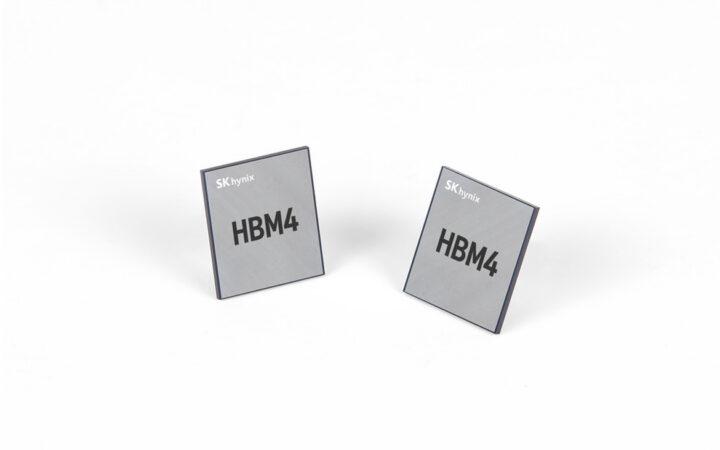
The biggest losses were concentrated in memory manufacturers. Samsung Electronics and SK Hynix, the world’s leading suppliers of high-bandwidth memory (HBM) used in AI accelerators, each declined by roughly 9–10% as investors questioned whether the industry’s exceptional profitability can be sustained.
One of the main catalysts behind the selloff was news that Chinese memory manufacturer CXMT had raised at least $8.6 billion to rapidly expand production capacity. At the same time, China reportedly began manufacturing its own DUV lithography machines, a move that could gradually reduce the country’s dependence on Western semiconductor equipment suppliers. Investors fear that a rapid increase in memory production could eventually shift the industry from today’s supply shortages toward oversupply, putting pressure on prices and profit margins for companies such as Samsung, SK Hynix, and Micron.
Sentiment was further weakened by reports that NVIDIA is discussing up to $250 billion in financing guarantees for OpenAI’s planned AI data center project, alongside a separate potential agreement worth as much as $350 billion for AI chip purchases. Although neither transaction has been finalized, some investors expressed concern about what they described as a potential “circular financing” structure, in which a chip supplier helps finance a customer that ultimately purchases its own hardware. The reports fueled debate over whether current demand for AI infrastructure is entirely organic or increasingly supported by complex financing arrangements.
Risk aversion also spread beyond equities. Bitcoin briefly fell toward $63,000 as investors reduced exposure to risk assets ahead of the upcoming Federal Reserve policy decision. While markets still broadly expect the Fed to leave interest rates unchanged, expectations of another rate hike have recently increased, adding further uncertainty for growth-oriented technology stocks.
Attention is now turning to earnings from Microsoft, Meta, Apple, and Amazon. Investors will closely examine whether continued growth in AI-related revenue is sufficient to justify rapidly rising capital expenditures. If spending continues to outpace returns, the recent correction could extend beyond semiconductor stocks and evolve into a broader reassessment of AI-related valuations across the technology sector.