Key Notes
- Apple’s 14-inch M6 MacBook Pro starts at $1,999, with preorders October 28 and deliveries November 6.
- Mac revenue rose 29% to $10.35 billion in the latest reported quarter, representing about 9.5% of Apple sales.
- The refresh adds to Apple’s holiday lineup ahead of November 2 earnings, without confirming earlier touchscreen reports.
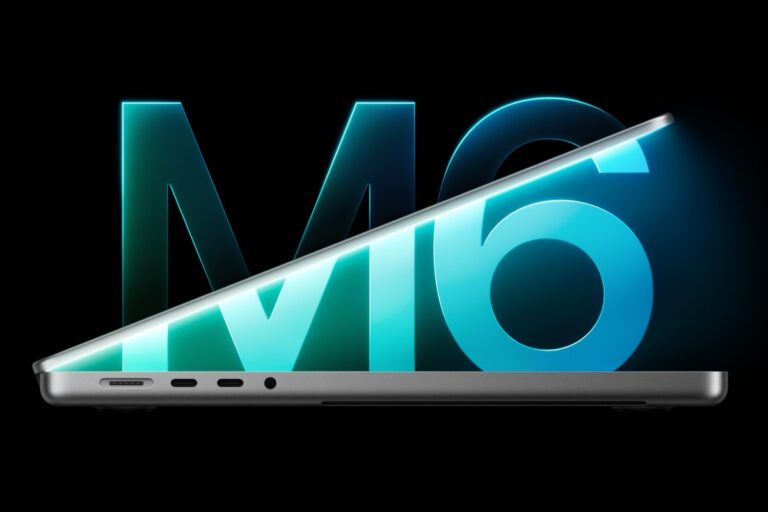
Apple (NASDAQ: AAPL) introduced a new 14-inch MacBook Pro powered by its M6 chip on October 27, adding another premium hardware launch to its holiday lineup. The laptop starts at $1,999 in the United States, with preorders opening October 28 and deliveries beginning November 6.
For Apple stock investors, the announcement puts the Mac upgrade cycle alongside the recently launched iPhone Duo as a source of potential holiday demand. The immediate question is how much the refreshed lineup can contribute to sales and margins, rather than whether a faster processor alone changes the earnings outlook.
Apple’s announcement does not provide an order forecast or new financial guidance. It also separates the product’s unveiling from its retail debut: customers cannot take delivery of the new M6 model today.
M6 Adds Performance Ahead of Holiday Sales
The M6 combines a 12-core CPU and 12-core GPU. Apple says graphics performance is up to 30% faster than M5, while certain AI workloads run up to 25% faster. Those are company benchmarks for selected tasks, rather than an independently established improvement across every application.
The commercial pitch is straightforward: users doing development, creative work or local AI processing have another reason to consider replacing an older laptop. Whether that translates into additional purchases depends on the performance customers actually need, their existing equipment and their willingness to pay for an upgrade.
The US education starting price is $1,899, and the initial rollout covers 35 countries and regions. Availability ahead of the main holiday shopping period gives the model time to compete for both individual purchases and business equipment budgets.
What Changes in the MacBook Pro Lineup
Apple’s product page lists the new M6 alongside M5 Pro and M5 Max configurations for the 14-inch MacBook Pro. The 16-inch lineup continues to show M5 Pro and M5 Max, so this announcement should not be read as a replacement of every professional MacBook configuration.
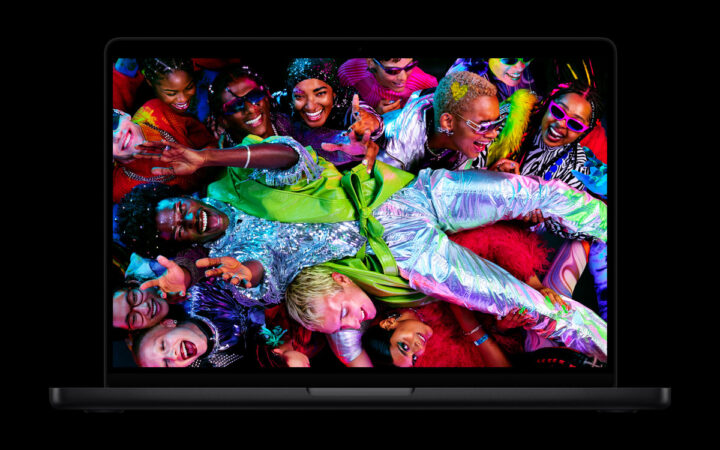
The new model retains a Liquid Retina XDR display, with an optional nano-texture finish. Wireless connectivity moves to Wi-Fi 7 and Bluetooth 6, while Apple advertises battery life of up to 24 hours. Actual endurance varies with use; sustained AI processing or demanding creative work should not be assumed to deliver that maximum.
These details matter because buyers are choosing between different combinations of screen size, performance and price. A new chip at the entry point of the professional range can attract upgrades without eliminating demand for the more expensive Pro and Max configurations.
Mac Growth Supports the AAPL Investment Case
Mac was already growing before this launch. Apple’s latest quarterly filing shows Mac revenue of $10.35 billion in the June quarter, up 29% from a year earlier. The company attributed the increase primarily to higher laptop sales.
That represented about 9.5% of Apple’s $109.42 billion in total quarterly revenue. By comparison, iPhone generated $54.25 billion and Services contributed $30.74 billion. Mac can strengthen growth and diversify the product mix, but its scale remains substantially below the two largest revenue streams.
Apple’s June-quarter results showed overall revenue rising 16%, with record June-quarter sales for Mac, iPhone and Services. The M6 launch therefore follows an established period of expansion rather than demonstrating, by itself, that another acceleration is under way.
The filing also flags supply constraints and increasing costs for advanced semiconductors and memory. For investors, sales growth must be considered alongside the cost of delivering those devices: stronger demand does not automatically mean a proportionate increase in profit.
Confirmed Launch Differs From Touchscreen Reports
Bloomberg’s earlier reporting pointed to a potential OLED touchscreen MacBook Pro redesign, as we previously reported. Apple’s M6 announcement specifies a Liquid Retina XDR display and does not confirm those touchscreen or OLED features.
Keeping those developments separate avoids treating an unconfirmed design report as a specification for the laptop announced today. Any further MacBook announcement would need to be assessed on its own details and availability.
The Mac refresh also follows the worldwide retail debut of iPhone Duo. The two launches broaden Apple’s premium holiday offering, but launch-day interest and product specifications are not substitutes for disclosed shipment volumes or recognized revenue.
Earnings Will Put the Launch in Context
Apple’s earnings call is scheduled for November 2. The results cover the completed September quarter, before M6 MacBook Pro deliveries begin, making management’s discussion of demand and the coming quarter more relevant to this particular launch than the historical sales figures alone.
Apple’s fiscal calendar places the November release in fiscal 2027. The next financial test for the product is its contribution to the holiday quarter, alongside the iPhone lineup, supply availability and margins. The announcement establishes what Apple will sell and when; it does not yet establish how strongly customers will buy it.