Key Notes
- GPT-6.1 Terra targets computer use and coding with standard API rates of $1 for input and $5 for output per million tokens, half Sol’s rates.
- OpenAI reports faster task execution and stronger coding results in its evaluations, with real-world outcomes depending on the workflow.
- Business savings depend on reliable completion and review costs, while access is available through ChatGPT Work, Codex and the API.
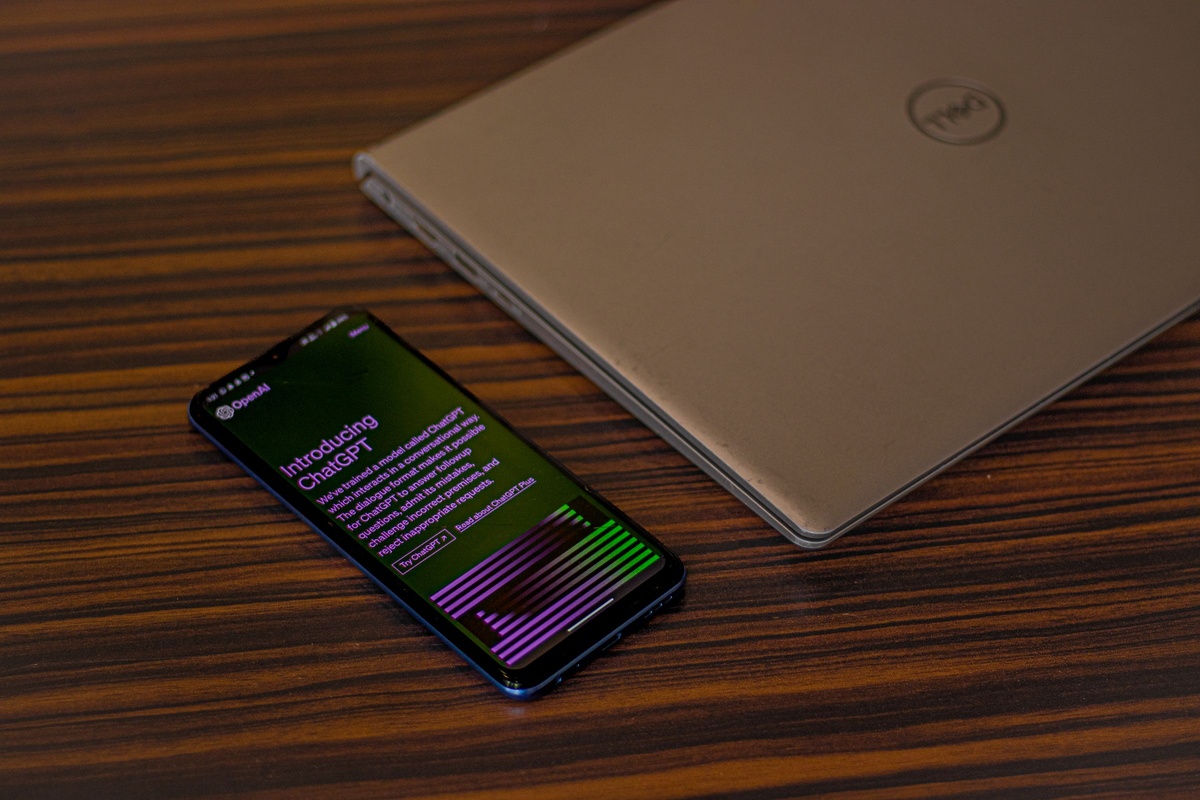
OpenAI has launched GPT-6.1 Terra, adding a lower-priced model for computer use, visual reasoning and everyday coding as competition shifts toward how much useful work businesses can obtain from an AI budget.
The company announced the model on October 26 with standard API prices of $1 per million input tokens and $5 per million output tokens. Those rates are half GPT-6.1 Sol’s, creating a cheaper option for applications that repeatedly process information and act on it.
Terra is available through ChatGPT Work, Codex and the API, as AIstify reported. For business buyers, the question is whether lower token prices and faster execution translate into a lower cost for a correctly completed job.
API Pricing Cuts the Cost of Repeated Work
OpenAI’s model documentation lists three headline rates per million tokens:
- Input: $1 for standard, uncached input.
- Cached input: $0.05.
- Output: $5.
GPT-6.1 Sol’s corresponding standard input and output rates are $2 and $10. As a simple illustration, one million uncached input tokens and one million output tokens, spread across standard short-context requests, would cost $6 with Terra versus $12 with Sol.
That calculation excludes tools, cache writes and other charges. It assumes both models consume the same amount of input and output. An application requiring extra attempts or longer reasoning could end up with a different bill, even when the published unit price is lower.
Long requests also change the comparison. Terra’s documentation says requests exceeding 272,000 input tokens carry double input and cache rates and a 50% higher output rate for the full request. The headline prices therefore should not be treated as a flat rate for every workload.
Computer Use Moves AI Into Business Workflows
The commercial opportunity extends beyond generating an answer. An agent that can interpret a document, locate the right record and make an authorized update could reduce the administrative work left to a person after a chatbot conversation.
OpenAI’s product notes describe tasks such as matching product photographs to catalog entries and checking campaign assets for cropping or text placement. These combine visual judgment with actions across software, rather than treating image understanding as an isolated feature.
For a retailer or service business, the value would depend on the accuracy of the saved record or finished file. A fast response that leaves incorrect information in an application can create more work for staff. That makes successful completion, review time and repeatability central to the financial comparison.
OpenAI Reports Faster Tasks and Stronger Coding Results
OpenAI says Terra completed tasks more than three times faster than GPT-6 Astra and GPT-6.1 Sol in its evaluations. On Agents’ Last Exam, it reports performance comparable to Astra at medium reasoning effort while charging one-tenth Astra’s price per token.
For coding, OpenAI reports a 50.3% score on Terminal-Bench 4.0 at maximum reasoning effort, compared with GPT-5.6 Terra’s published 21.5%. The company continues to position Sol and Astra as better choices for the most demanding coding tasks.
These are company-reported evaluation results. They do not establish a universal speed advantage or the same savings on every customer’s software and data. Price per token, tokens needed per attempt and cost per acceptable result measure different things.
Work and Codex Access Comes With Its Own Conditions
OpenAI’s current product notes list Terra for ChatGPT Work and Codex on Plus, Pro, Business, Enterprise and Edu plans. Developers can access the model as gpt-6.1-terra through the API.
The model is not available in ordinary Chat, and enterprise access depends on workspace availability and administrator controls. Browser and computer-use features also have separate setup and access requirements.
The distinction matters for budgeting. API token prices describe usage-based developer charges; they are not a new monthly subscription price. Similarly, selecting a model does not by itself connect a company’s internal applications or determine which actions an agent is authorized to take.
The Business Test Is Cost per Completed Task
Lower model prices can make smaller, repetitive jobs economical to automate. They can also encourage customers to run more tasks, which means a lower price per unit does not necessarily produce a smaller total budget.
As we previously reported, spending through OpenRouter offers one window into competition between model providers. That channel’s figures also illustrate why token consumption and revenue cannot be treated as the same measure.
The same distinction applies to productivity. Our earlier reporting examined how AI can help workers and entrepreneurs earn more while separating demonstrable output from broad claims about automatic wealth creation.
Terra gives buyers another price point for that calculation. Its business impact will depend on whether companies can turn cheaper requests into reliable finished work, with enough value left after implementation, supervision and correction costs.